Sea kayaking in Phang Nga Bay: A Complete Guide to Exploring Sea Caves and the Hong Islands
- Sea kayaking in Phang Nga Bay: A Complete Guide to Exploring Sea Caves and the Hong Islands
- Why Phang Nga Bay is a Kayaker’s Paradise
- Essential Pre-Trip Planning: Logistics and Timing
- Navigating the Hong Islands: Must-See Kayaking Destinations
- Guided Tours vs. Self-Paddling: Making the Right Choice
- Safety and Etiquette for Sea Cave Exploration
- Sample Kayaking Itinerary (Phuket Departure)
- คำถามที่พบบ่อย (FAQ)
Phang Nga Bay, nestled between Phuket and Krabi, is a geological marvel. Its towering karsts, sculpted by millennia of wind and water, create an ethereal landscape unlike anywhere else in Southeast Asia. While many tourists see this area from the deck of a speedboat heading to James Bond Island (Ko Tapu), the true magic unfolds when you trade the engine noise for the gentle dip of your paddle. This comprehensive guide offers everything you need to know for an unforgettable experience exploring the sea caves and the secluded Hong Islands through Sea kayaking in Phang Nga Bay.
Why Phang Nga Bay is a Kayaker’s Paradise
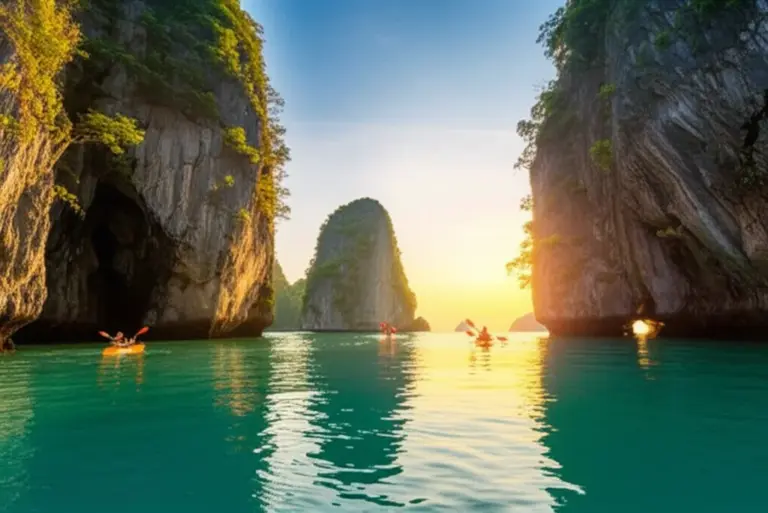
The topography of Phang Nga Bay is defined by its unique karst formations—sheer limestone cliffs rising hundreds of feet from the emerald water. These formations have created two distinct, yet equally fascinating, features for kayakers: the ‘Hongs’ and the ‘Sea Caves’.
The Secret World of Hongs (Lagoons)
A ‘Hong’ in Thai refers to an inner chamber or lagoon, often completely enclosed by limestone cliffs, accessible only through narrow, low-ceilinged sea caves (or ‘hongs’ themselves). When the tide is right, you paddle through the dark passage, and suddenly, you emerge into a sunlit, silent amphitheater of nature. The most famous Hongs are found among the Ko Hong group, offering breathtaking photo opportunities and a profound sense of discovery.
The caves themselves are natural wonders. Some are short and easy, while others require careful maneuvering, especially when the water level fluctuates. Expert local guides are invaluable here, as they know the precise tidal windows required to enter and exit safely. This geological structure is what makes Sea kayaking in Phang Nga Bay such a sought-after experience.
Essential Pre-Trip Planning: Logistics and Timing
Proper planning ensures your kayaking trip is safe and maximizes exploration time. Here are the critical logistical considerations for your Phang Nga adventure.
Best Time of Year to Visit
Phang Nga Bay enjoys relatively calm waters year-round, but seasonality matters for comfort and visibility:
| Season | Months | Conditions |
|---|---|---|
| Dry/Peak Season | November – February | |
| Hot Season | March – May | |
| Wet/Monsoon Season | June – October |
While the monsoon season brings dramatic skies, heavy rain can sometimes lead to tour cancellations or rougher paddling conditions. The peak season offers the most reliably calm seas, ideal for first-time kayakers.
Choosing Your Departure Point
Most kayaking tours operate out of two main hubs, each offering access to different parts of the bay:
- Phuket: Offers the quickest access to the main islands and James Bond Island. Tours here are often high-volume but efficient.
- Krabi/Ao Nang: Provides access to the more remote Hong Islands chain and often allows for a slightly longer paddling experience away from the busiest traffic lanes.
To truly appreciate the scale of the bay, you need to get off the main tourist routes. Here are the key areas for kayaking exploration.
Ko Hong Group Exploration
The Ko Hong archipelago features several navigable Hongs. The most famous one is reachable via a narrow passage that opens into a vast, circular lagoon. When paddling through this passage, remember to look up—the sheer scale of the limestone walls is humbling. Many operators use inflatable kayaks here, which are soft-sided and safer when bumping against the rocks during high tide.
A Glimpse into the Adventure
The Caves Near James Bond Island
While Ko Tapu itself is off-limits for landing, the surrounding islands offer incredible cave systems. Look for tours that focus on the lesser-known caves in the vicinity of Khao Phing Kan. These often involve paddling beneath low overhangs where ancient stalactites drip into the water—a truly immersive experience.
Guided Tours vs. Self-Paddling: Making the Right Choice
For the vast majority of visitors, a reputable guided tour is the superior choice when considering Sea kayaking in Phang Nga Bay. The complexity of navigation and tidal knowledge necessitates local expertise.
- Guided Advantage: Guides carry waterproof radios, know the exact timing for cave entry (which can close completely at high tide), and provide high-quality, stable equipment.
- Self-Paddling Reality: Renting kayaks independently is possible near the main piers (like Bang Rong), but access to the best Hongs is limited by distance and requires significant navigational skill and an understanding of local boat traffic rules.
Safety and Etiquette for Sea Cave Exploration
As an expert explorer, you understand that preserving these fragile environments is paramount. Adherence to safety protocols is non-negotiable.
Tide Awareness and Weather Checks
The tidal range in the Andaman Sea can be significant, sometimes exceeding 3 meters. Always confirm the tide schedule with your guide. Entering a cave when the tide is rising can trap you inside, while entering too early on a receding tide might leave you unable to paddle out.
Respecting the Environment
Do not touch the cave walls, as the limestone is soft and easily damaged. Never leave any trash behind. Many tour operators provide dry bags, but ensure you carry out everything you bring in. The integrity of these geological formations depends on responsible tourism.
Sample Kayaking Itinerary (Phuket Departure)
A typical, efficient day trip maximizing exploration time looks like this:
| Time | Activity | Focus |
|---|---|---|
| 07:30 | Hotel Pickup | Transfer to pier (e.g., Bang Rong) |
| 09:00 | Speedboat transfer | Journey towards the outer islands |
| 10:00 | First Kayak Session | Exploring smaller, accessible sea caves |
| 12:30 | Lunch | Floating restaurant or beach stop |
| 14:00 | Second Kayak Session | Entry into the main Hong Lagoon (tide dependent) |
| 16:30 | Return by Speedboat | Transfer back to Phuket |
This structured approach ensures you get the most out of your day without feeling rushed, balancing travel time with actual paddling time. Always confirm the itinerary details when booking your tour.
คำถามที่พบบ่อย (FAQ)
What is the best way to see the sea caves in Phang Nga Bay?
The best way is via a guided sea kayaking tour that specializes in navigating the specific tidal windows required to safely enter and exit the sea caves and Hong lagoons.
Do I need prior kayaking experience for Phang Nga Bay tours?
No, most standard tours use stable sit-on-top kayaks and beginner-friendly routes. Guides provide full instruction before entry. However, tours focusing on remote areas may require moderate fitness.
Are there risks associated with kayaking in the sea caves?
The main risks are related to tides and boat traffic. Always follow your guide’s instructions regarding water levels. Never enter a cave if the entrance looks too narrow or if you are unsure of the current.
Can I kayak to James Bond Island (Ko Tapu)?
No, direct kayaking to Ko Tapu is prohibited to protect the base of the fragile formation. However, many tours allow you to kayak around the island viewing it from the water.
References
For further reading on the geology and tourism regulations of the marine park, consult official sources:
- Best times, permits, and getting there for Phang Nga Bay sea kayaking — how to plan your trip and choose guided vs. self-guided tours
- Top sea caves and Hong Islands routes: iconic sites, difficulty levels, distances, and recommended itineraries for half-day to multi-day trips
- Safety, equipment, and eco-conscious practices for sea kayaking in Phang Nga Bay — tides, weather, wildlife, and how to kayak responsibly