Best times, permits, and getting there for Phang Nga Bay sea kayaking — how to plan your trip and choose guided vs. self-guided tours
- Best times, permits, and getting there for Phang Nga Bay sea kayaking — how to plan your trip and choose guided vs. self-guided tours
- Why Phang Nga Bay is the Ultimate Sea Kayaking Destination
- Timing Your Adventure: The Best Months for Phang Nga Bay Sea Kayaking
- Navigating Logistics: Permits, Fees, and Getting to the Bay
- The Crucial Choice: Guided vs. Self-Guided Phang Nga Bay Sea Kayaking
- Essential Planning Tips for Kayakers
- คำถามที่พบบ่อย (FAQ)
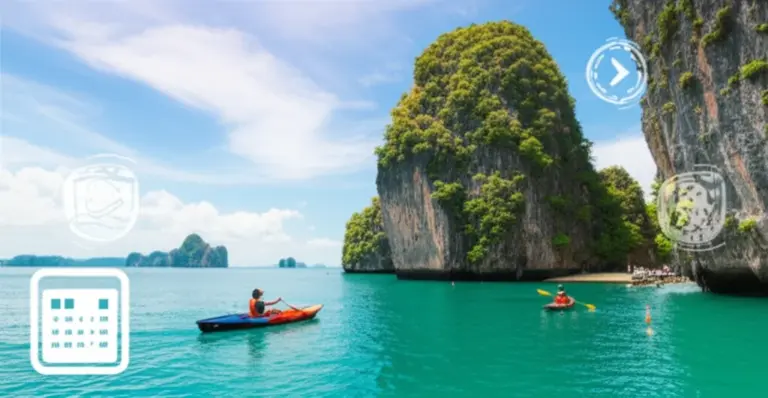
Phang Nga Bay, with its dramatic limestone karsts jutting vertically from emerald waters, is one of Thailand’s most iconic landscapes. While speedboat tours offer a glimpse, the true magic of this geological wonder is unlocked when you glide silently through its hidden lagoons and sea caves. Mastering Phang Nga Bay sea kayaking requires more than just paddling skill; it demands precise planning regarding timing, logistics, and tour selection. This comprehensive guide provides the expert insight needed to plan your perfect kayaking adventure, whether you prefer the security of a guided expedition or the freedom of self-guided exploration.
Why Phang Nga Bay is the Ultimate Sea Kayaking Destination
The bay’s unique appeal lies in its geology. Over millennia, water erosion has carved out spectacular hidden chambers known as ‘hongs’—collapsed sea caves accessible only by kayak during specific tidal conditions. Paddling allows you to bypass the crowds that congregate around major landmarks like James Bond Island (Khao Phing Kan) and enter these pristine, secret worlds. The sheer scale of the surrounding karsts, often covered in dense tropical foliage, provides an atmosphere of ancient discovery that motorized boats simply cannot replicate.
Timing Your Adventure: The Best Months for Phang Nga Bay Sea Kayaking
Selecting the right time of year significantly impacts water conditions, visibility, and the overall crowd level. The weather dictates safety and enjoyment, especially when navigating tight sea cave entrances.
High Season (November to April)
This is the peak season for visiting Phang Nga Bay. Expect dry weather, minimal rainfall, and the calmest seas. The visibility is excellent, making photography superb. However, this predictability comes with higher prices and significantly larger tourist volumes, particularly around Christmas and New Year. If you opt for guided Phang Nga Bay sea kayaking during these months, book well in advance.
Green Season (May to October)
The monsoon season brings afternoon downpours, but rarely all-day rain. The upside? Fewer tourists mean a more intimate experience. The landscape is intensely green, and tour operators often offer better rates. The primary risk is rougher seas, which can lead to tour cancellations or shorter routes for safety reasons. Always check the marine forecast if traveling during this period.
Logistical planning is where many independent travelers stumble. Phang Nga Bay is protected as a National Park, meaning official entry requires payment.
Understanding National Park Entrance Fees
Departure Points: Krabi vs. Phuket
Most kayaking excursions depart from either Phuket or Krabi (Ao Nang/Krabi Town).
| Departure Point | Travel Time to Kayaking Hubs | Pros |
|---|---|---|
| Phuket (East Coast) | 45 – 90 minutes to pier | Abundant tour options, easy logistics. |
| Krabi (Ao Nang/Krabi Town) | 20 – 40 minutes to pier | Closer proximity to prime kayaking spots like Hong Island. |
The Crucial Choice: Guided vs. Self-Guided Phang Nga Bay Sea Kayaking
This is the most significant decision affecting your experience. Your choice should hinge on your comfort level with navigation, current conditions, and knowledge of the hidden areas.
The Case for Guided Tours (Recommended for First-Timers)
Guided tours offer unparalleled access and safety. Experienced local guides know the intricate network of sea caves (hongs) and, critically, the exact tidal windows required to enter them. They use specialized, stable kayaks designed for sea conditions and carry safety equipment. Most quality tours focus heavily on the kayaking component, often limiting speedboat time to maximize paddling in secluded areas.
Self-Guided Kayaking: Freedom with Caveats
If you are an experienced sea kayaker with navigational skills, renting a kayak directly from a local pier (like those near James Bond Island or in Ao Thalane) offers flexibility. However, the risks are substantial:
- Tidal Knowledge: Without local knowledge, you risk getting trapped inside a sea cave when the tide rushes in.
- Navigation: The bay is vast; without GPS or detailed charts, locating the best hongs is difficult.
- Safety Net: You have no immediate support if equipment fails or weather turns suddenly.
Essential Planning Tips for Kayakers
Understanding the Tides (Crucial for Sea Caves)
This is arguably the single most important factor. Sea caves, or hongs, are formed by the tide. At high tide, the entrance may be completely submerged or too turbulent to enter safely. At low tide, the entrances become exposed, allowing passage. Always confirm the tidal charts for your intended day and ensure your tour operator plans entry times accordingly.
What to Pack for Your Kayak Trip
- Waterproof dry bag for electronics and valuables.
- Reef-safe sunscreen and a wide-brimmed hat.
- Rash guard or quick-dry clothing (less fabric chafing).
- Waterproof camera or phone case.
- Snacks (most tours provide lunch, but extra energy is always welcome).
To truly appreciate the scale and silence of these magnificent formations, watching others navigate the caves provides excellent context for your own planning. Pay attention to how guides manage the kayaks near the karst walls.
Experience the Kayaking Magic Live
A look inside the hidden lagoons accessible only by kayak.
By carefully considering the season, understanding the necessary park fees, and making an informed decision between guided versus self-guided options, your journey into Phang Nga Bay will transition from a simple boat trip to an unforgettable, intimate exploration of one of Southeast Asia’s most breathtaking natural harbors.
คำถามที่พบบ่อย (FAQ)
References
- Official Tourism Authority of Thailand – Phang Nga
- Department of National Parks, Wildlife and Plant Conservation (Fees & Status)
- Sea kayaking in Phang Nga Bay: A Complete Guide to Exploring Sea Caves and the Hong Islands
- Top sea caves and Hong Islands routes: iconic sites, difficulty levels, distances, and recommended itineraries for half-day to multi-day trips
- Safety, equipment, and eco-conscious practices for sea kayaking in Phang Nga Bay — tides, weather, wildlife, and how to kayak responsibly