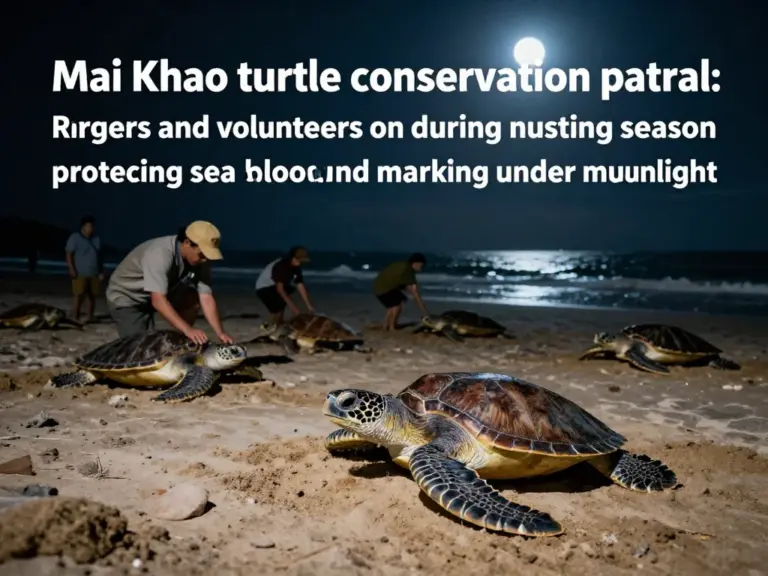
How the patrols work: daily ranger routines, nesting season schedules, and volunteer roles in Mai Khao turtle protection
Mai Khao Beach, the longest stretch of sand in Phuket, is more than just a scenic getaway for travelers. It serves as a vital sanctuary for several species of endangered sea turtles, including the majestic Leatherback and Olive Ridley turtles. The success of Mai Khao turtle protection relies on a sophisticated and tireless network of patrols, scientific monitoring, and community involvement. For those interested in Thailand tourism with a purpose, understanding the mechanics of these conservation efforts offers a deep dive into the intersection of nature and human responsibility.
Daily Ranger Routines: The Guardians of the Shore
The backbone of the conservation effort is the dedicated team of park rangers. Their daily routine is a blend of rigorous physical activity and meticulous data collection. Every morning before dawn, rangers traverse the length of the beach. They look for the distinctive ‘tractor-tire’ tracks left by mother turtles ascending from the Andaman Sea. These tracks are the first indicator that a nesting event has occurred overnight.
Once a nest is located, the rangers’ technical expertise comes into play. They must determine if the nest is in a ‘safe zone’—high enough above the tide line to prevent drowning of the eggs but far enough from human foot traffic. If a nest is deemed at risk from erosion or poachers, the rangers carefully relocate the eggs to a protected hatchery. This process requires extreme precision; the eggs must be kept in the same orientation they were laid to ensure the embryo’s survival.
Nesting Season Schedules: Timing is Everything
Understanding the rhythm of nature is crucial for Mai Khao turtle protection. The nesting season typically runs from November to February, coinciding with the cooler, drier months in Phuket. During this peak window, patrol frequency increases significantly. Rangers and local volunteers operate on a 24-hour cycle, with specialized night patrols using infrared flashlights to avoid disturbing the sensitive vision of the nesting females.
| Month | Activity Level | Primary Focus |
|---|---|---|
| November – December | High | Monitoring for first arrivals and track identification. |
| January – February | Peak | Active nesting, egg relocation, and nest security. |
| March – May | Moderate | Hatchling emergence and release programs. |
As the season transitions into March and April, the focus shifts from protection to observation. This is the ‘hatching window,’ where the temperature of the sand determines the sex of the hatchlings. Rangers monitor the nests for ‘boiling’—the moment dozens of tiny turtles emerge simultaneously. In Mai Khao, many of these hatchlings are monitored to ensure they reach the ocean safely, away from the predatory birds and light pollution that can disorient them.
Volunteer Roles: Engaging the Community
While rangers provide the technical oversight, volunteers are the lifeblood of the Mai Khao turtle protection outreach. Local and international volunteers play diverse roles that support the long-term sustainability of the ecosystem. One of the most critical volunteer tasks is beach cleaning. Marine debris, particularly plastic waste, is a major threat to turtles who often mistake plastic bags for jellyfish.
- Public Education: Volunteers staff information kiosks, explaining the importance of keeping the beach dark and quiet at night to tourists.
- Patrol Assistance: Under the supervision of rangers, experienced volunteers help walk the beaches during peak season to expand the coverage area.
- Fundraising & Awareness: Many volunteers work with the Mai Khao Marine Turtle Foundation to organize annual hatchling release events, which raise funds for medical supplies and hatchery maintenance.
For visitors participating in Thailand tourism, volunteering offers a way to give back. Even small actions, such as reporting a turtle sighting to the foundation or participating in a morning beach sweep, contribute to the survival of these ancient mariners.
คำถามที่พบบ่อย (FAQ)
References
- Mai Khao Marine Turtle Foundation Official Site
- Tourism Authority of Thailand (TAT)
- Department of National Parks, Wildlife and Plant Conservation
- Sea turtle conservation patrol at Mai Khao Phuket with rangers: A complete visitor’s guide to joining, observing, and supporting turtle protection efforts
- Why people join sea turtle conservation patrols at Mai Khao Phuket: motives, best times to visit, and what to expect
- What to do and bring when participating: rules, safety, essential gear, and etiquette for observing nesting turtles responsibly