What to do and bring when participating: rules, safety, essential gear, and etiquette for observing nesting turtles responsibly
Witnessing a sea turtle emerge from the ocean depths to lay her eggs under the moonlight is a profound experience that connects us to the ancient rhythms of nature. In Thailand, coastal areas like Phang Nga and Phuket serve as vital nesting grounds for Leatherback and Green turtles. However, this moment is incredibly fragile. To ensure these majestic creatures continue to thrive, observing nesting turtles responsibly is not just a suggestion—it is a conservation necessity. By following strict etiquette and safety protocols, travelers can enjoy this spectacle without causing distress to the animals.
Understanding the Rules and Safety Protocols
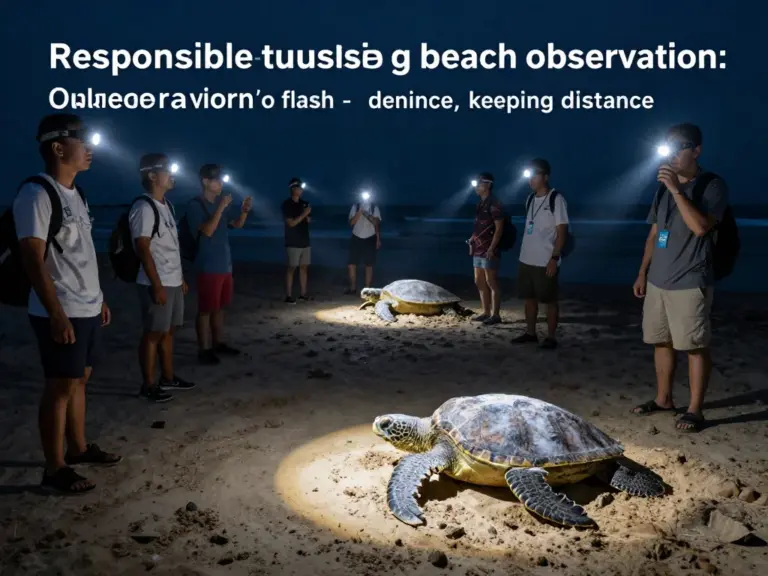
The primary rule when observing nesting turtles responsibly is to maintain a respectful distance. Sea turtles are highly sensitive to light and movement. If a mother turtle feels threatened or distracted before she begins the nesting process, she may perform a ‘false crawl,’ returning to the sea without laying her eggs. Safety protocols are designed to protect both the turtle and the observer, ensuring that the nesting site remains undisturbed for the duration of the incubation period.
- Keep a minimum distance of 10-15 meters from the turtle.
- Stay behind the turtle’s line of sight; never approach from the front.
- Remain quiet and move slowly to avoid startling the creature.
- Never touch the turtle or the eggs under any circumstances.
Essential Gear for Responsible Observation
When preparing for a night on the beach, your gear list should focus on low-impact tools. The most critical item is a red-light flashlight. Sea turtles are less sensitive to long-wavelength red light compared to white or blue light, which mimics the moon and can disorient them. Carrying the right equipment ensures you stay comfortable while adhering to the principles of observing nesting turtles responsibly.
| Category | Essential Item | Reason for Use |
|---|---|---|
| Lighting | Red-light Headlamp | Prevents disorientation of the turtle. |
| Clothing | Dark, Long-sleeved Gear | Camouflages your presence and protects against insects. |
| Footwear | Sturdy Sandals/Water Shoes | Safely navigating uneven sand in the dark. |
| Utility | Reusable Water Bottle | Stay hydrated without leaving plastic waste. |
Etiquette: The Do’s and Don’ts
Etiquette is the cornerstone of eco-tourism. When you are on the beach, you are a guest in a wild habitat. Flash photography is strictly forbidden as it can temporarily blind the turtle and lead her away from the sea. Furthermore, if you encounter hatchlings, do not assist them to the water unless explicitly instructed by a professional conservationist. They need to crawl across the sand to ‘imprint’ on the beach, which helps them return to the same spot decades later to nest.
Where to Observe in Thailand
Thailand offers several protected areas where conservation is the priority. Khao Lampi-Hat Thai Mueang National Park in Phang Nga is famous for its ‘Turtle Release Festival’ and monitored nesting beaches. For those visiting these areas, it is vital to follow the guidance of local authorities who manage the crowds to ensure the turtles are not overwhelmed.
คำถามที่พบบ่อย (FAQ)
Why is white light harmful to nesting turtles?
Can I take photos of the turtles?
What should I do if I find a turtle nest?
When is the best time to see nesting turtles in Thailand?
References
National Geographic: Sea Turtle Facts and Conservation
World Wildlife Fund: Marine Turtle Protection
- Sea turtle conservation patrol at Mai Khao Phuket with rangers: A complete visitor’s guide to joining, observing, and supporting turtle protection efforts
- Why people join sea turtle conservation patrols at Mai Khao Phuket: motives, best times to visit, and what to expect
- How the patrols work: daily ranger routines, nesting season schedules, and volunteer roles in Mai Khao turtle protection