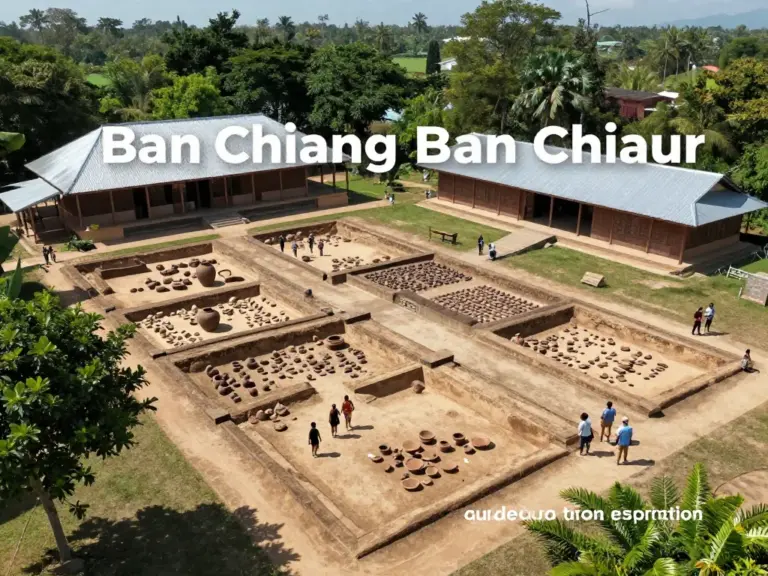
Exploring Ban Chiang Archaeological Site: History, Must-See Artifacts, Museum Hours, and Guided Tour Options
- Exploring Ban Chiang Archaeological Site: History, Must-See Artifacts, Museum Hours, and Guided Tour Options
- The Historical Significance of Ban Chiang
- Must-See Artifacts: Pottery and Beyond
- Museum Hours and Practical Information
- Guided Tour Options
- Location and How to Get There
- คำถามที่พ่อยบ่อย (FAQ)
- Is Ban Chiang Archaeological Site worth visiting?
- How much time should I spend at Ban Chiang?
- Can I take photos inside the museum?
Exploring Ban Chiang Archaeological Site is like stepping through a portal into a prehistoric world that reshaped our understanding of human history in Southeast Asia. Located in the Udon Thani province of Northeast Thailand, this UNESCO World Heritage site serves as a testament to a sophisticated ancient civilization that thrived over 5,000 years ago. Whether you are a history buff, an archaeology enthusiast, or a curious traveler, Ban Chiang offers a profound look at the innovation of the Bronze Age, from intricate pottery to advanced metallurgy.
The Historical Significance of Ban Chiang
The discovery of Ban Chiang in the 1960s sent shockwaves through the global archaeological community. Prior to this find, it was widely believed that Southeast Asia was a cultural backwater during the Bronze Age. However, the artifacts found here—dating back as far as 2100 BCE—proved that the region had an independent and highly advanced center of bronze production and agriculture. In 1992, UNESCO officially recognized its importance by naming it a World Heritage Site, highlighting its role as a major milestone in human evolution and social development.
Must-See Artifacts: Pottery and Beyond
When exploring Ban Chiang Archaeological Site, the pottery is undoubtedly the star of the show. The site is world-famous for its ‘red-on-buff’ pottery, characterized by intricate red swirl patterns painted on a cream-colored background. These designs are not just decorative; they represent the artistic peak of a culture that flourished millennia ago. Beyond the ceramics, visitors can marvel at:
- Bronze Ornaments: Exquisite bracelets, anklets, and bells that showcase early metallurgical skills.
- Tools and Weapons: Spearheads and axes that illustrate the transition from stone to metal.
- Glass Beads: Colorful beads that suggest early trade routes with other civilizations.
The Ban Chiang National Museum houses these treasures in modern, climate-controlled galleries, providing a comprehensive timeline of the site’s three main periods: the Early, Middle, and Late Periods.
Museum Hours and Practical Information
Planning your visit is essential to ensure you have enough time to absorb the wealth of information available. The Ban Chiang National Museum is the primary hub for visitors. Below is the essential information for your trip:
| Information | Details |
|---|---|
| Opening Hours | Wednesday – Sunday, 09:00 AM – 04:00 PM |
| Closed Days | Mondays, Tuesdays, and National Holidays |
| Entrance Fee | 150 THB for Foreigners / 30 THB for Thai Nationals |
It is recommended to arrive early in the morning to avoid the midday heat, especially if you plan to visit the open-pit excavation site at Wat Pho Si Nai, which is located a short walk from the main museum building.
Guided Tour Options
While the museum is well-labeled in both Thai and English, exploring Ban Chiang Archaeological Site with a professional guide can significantly enhance the experience. There are several ways to arrange a tour:
- Local Museum Guides: Often available at the entrance, these guides offer deep local insights and can explain the nuances of the excavation process.
- Udon Thani Day Tours: Many travel agencies in Udon Thani city offer full-day packages that include Ban Chiang, the Red Lotus Lake, and local weaving villages.
- Private Academic Tours: For those with a deep interest in archaeology, private tours led by historians can be booked through specialized travel platforms.
Location and How to Get There
Ban Chiang is located in the Nong Han District, approximately 55 kilometers east of Udon Thani city. You can reach the site via a rented car, motorbike, or by taking a local bus from the Udon Thani bus station heading towards Sakon Nakhon and asking to be dropped off at the Ban Chiang junction.
คำถามที่พ่อยบ่อย (FAQ)
References
- UNESCO World Heritage Centre – Ban Chiang Archaeological Site
- Fine Arts Department of Thailand
- Tourism Authority of Thailand (TAT)