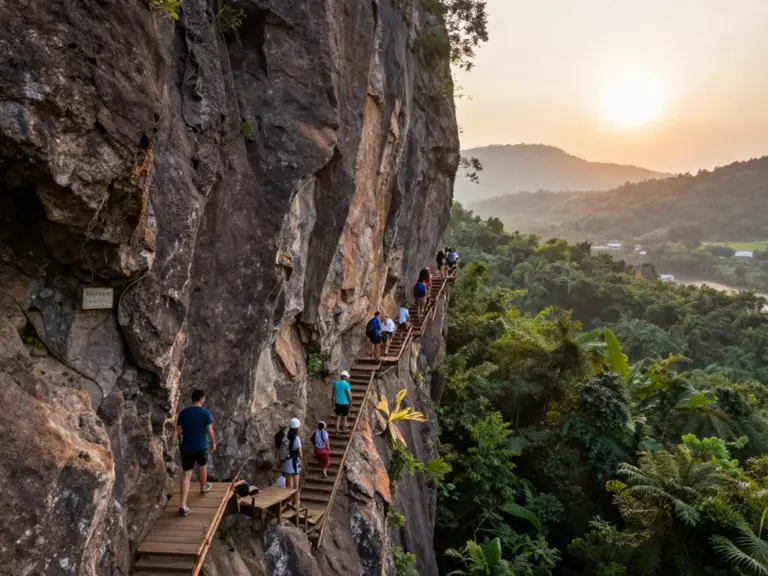
Why visitors choose Wat Phu Tok: overview of location, best times to go, and what makes the cliff stairway unique
Wat Phu Tok, located in the serene province of Bueng Kan, is one of Thailand’s most breathtaking spiritual and architectural wonders. Known formally as Wat Chetiya Khiri Wihan, this ‘Mountain of Light’ offers a profound journey that blends Buddhist philosophy with daring physical exertion. For travelers seeking more than just a typical temple visit, Wat Phu Tok provides a transformative experience high above the Isan landscape.
The Remote Beauty: Location of Wat Phu Tok
Situated in Na Saeng Sub-district, Si Wilai District, Bueng Kan Province, Wat Phu Tok is tucked away in the northeastern corner of Thailand. It is approximately 185 kilometers from Nong Khai and about 50 kilometers from Bueng Kan city center. The location is characterized by a massive sandstone outcrop that rises majestically from the flat plains, making it a landmark visible from miles away. This isolation contributes to the temple’s reputation as a place of deep meditation and peace.
What Makes the Cliff Stairway Unique?
The defining feature that draws visitors to Wat Phu Tok is its incredible seven-level wooden staircase. This isn’t just a means of ascent; it is a symbolic representation of the seven stages of Buddhist enlightenment. Built entirely out of wood and anchored into the sheer rock face, the stairway circles the mountain, offering panoramic 360-degree views.
As you climb, the levels transition from lush forest surroundings to narrow wooden planks suspended over hundred-meter drops. Levels 5 and 6 are particularly famous for their shrines and meditation huts (kutis) nestled into caves, while Level 7 represents the spiritual peak—though it is often left in a more natural, wild state to signify the unpredictability of the afterlife.
Best Times to Go
Timing is crucial for the best experience at Wat Phu Tok. The cool season (November to February) is the most popular time to visit. During these months, the temperatures are manageable, and the skies are usually clear, providing the best visibility for the stunning views over the Mekong valley.
- November – February: Ideal weather, cool breeze, and safe climbing conditions.
- June – October: The rainy season makes the wooden planks slippery and potentially dangerous. Expect mist and lush greenery.
- March – May: Very hot; climbing all seven levels can be physically exhausting in the heat.
Visitor Guidelines and Etiquette
Because Wat Phu Tok is a sacred site and a place of meditation, visitors are expected to adhere to strict rules. Modest dress is mandatory (shoulders and knees covered). Silence is encouraged to respect the monks residing on the cliffs. Additionally, the temple is closed annually from April 10th to 16th during the Songkran festival to allow the monks a period of quiet and to prevent overcrowding during the holiday.
คำถามที่พบบ่อย (FAQ)
Is there an entrance fee for Wat Phu Tok?
No, there is no official entrance fee for Wat Phu Tok, but donations for the maintenance of the wooden stairs and temple grounds are greatly appreciated.
How long does it take to climb to the top?
Depending on your fitness level and how long you spend taking photos, it typically takes 1.5 to 3 hours to complete the circuit of the seven levels.
Is it safe for people with a fear of heights?
The higher levels (5 and 6) feature narrow wooden walkways with steep drops. While generally safe, those with severe vertigo or a phobia of heights may find these sections challenging.
Can I visit Wat Phu Tok during the rainy season?
Yes, but you must be extremely careful. The wooden stairs become very slippery when wet, and some sections may be closed if weather conditions are deemed hazardous.