Top low-carbon destinations reachable by train: routes, travel times, and what to see (Ayutthaya, Kanchanaburi, Amphawa, Lopburi)
- Top low-carbon destinations reachable by train: routes, travel times, and what to see (Ayutthaya, Kanchanaburi, Amphawa, Lopburi)
- Destination 1: Ayutthaya – The Ancient Capital by Rail
- Destination 2: Kanchanaburi – History and Nature on the Western Line
- Destination 3: Amphawa – The Authentic Floating Market Experience
- Destination 4: Lopburi – The City of Monkeys and Ancient Khmer Ruins
- Planning Your Green Journey: Essential Train Travel Tips
- คำถามที่พบบ่อย (FAQ)
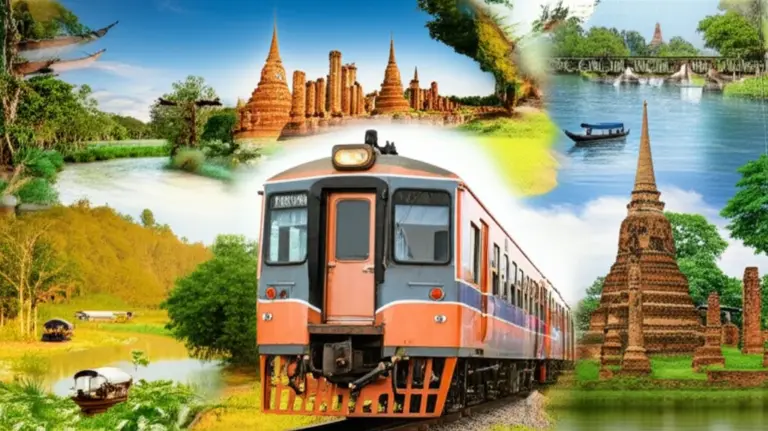
As global consciousness shifts towards sustainability, travelers are seeking ways to reduce their carbon footprint without sacrificing rich cultural experiences. Thailand, with its extensive and charming railway network, offers an exceptional alternative to domestic flights and long-distance driving. Discovering the **low-carbon train travel destinations in Thailand** allows you to slow down, observe the changing landscapes, and connect more deeply with local life. This guide focuses on four essential, accessible hubs near Bangkok: the historical grandeur of Ayutthaya, the natural beauty of Kanchanaburi, the authentic markets of Amphawa, and the ancient ruins of Lopburi.
The Green Advantage
Train travel inherently produces significantly less CO2 per passenger kilometer compared to flying or driving, making these journeys a cornerstone of responsible tourism in the Kingdom.
Destination 1: Ayutthaya – The Ancient Capital by Rail
Ayutthaya, a UNESCO World Heritage Site, served as Siam’s glorious capital for over 400 years. Traveling here by train is not just transportation; it’s a historical journey back in time, arriving directly near the core historical park.
Route & Travel Time
The Northern Line from Hua Lamphong (or Krung Thep Aphiwat Central Terminal for high-speed services) is direct and frequent. The standard commuter or second-class service is the most eco-friendly option.
- Departure Point: Hua Lamphong (for older services) or Krung Thep Aphiwat Central Terminal (for faster services).
- Travel Time: Approximately 1.5 to 2 hours, depending on the service class (Ordinary/Commuter trains take longer but are cheaper and more atmospheric).
- Arrival Station: Ayutthaya Station (located across the river from the main historical park).
Highlights & Low-Carbon Activities
Once you arrive, leave motorized transport behind. Ayutthaya is best explored by bicycle or on foot. Rent a bike near the station and spend the day cycling between the magnificent, crumbling prangs (towers) and wats (temples).
- Cycling the Ruins: Renting a bicycle is the ultimate low-impact way to cover the vast historical park.
- Wat Mahathat: Home to the iconic Buddha head entwined in tree roots.
- Sunset River Cruise (Non-motorized or low-emission boat): Witness the illuminated temples reflected on the Chao Phraya River.
Destination 2: Kanchanaburi – History and Nature on the Western Line
Kanchanaburi offers a sobering look at wartime history coupled with stunning natural scenery, particularly the River Kwai area. The journey itself is highly scenic, winding through rural landscapes, making it a favorite among slow travelers.
Route & Travel Time
This route utilizes the historic Western Line. It’s a longer journey, but the atmosphere on the train is unparalleled.
| Service Type | Approx. Travel Time | Notes |
|---|---|---|
| Rapid/Express (3rd Class Fan) | 2.5 – 3 hours | More comfortable seating available. |
| Ordinary (3rd Class Fan) | 3.5 – 4 hours | The most authentic, budget-friendly option. |
Highlights & Low-Carbon Activities
Kanchanaburi encourages exploration via walking, local songthaews (shared taxis), or even renting a scooter for short distances outside the main town center.
- The Death Railway & Bridge Over the River Kwai: A powerful historical site. Walk across the bridge for reflection.
- Erawan National Park: While accessible via shared transport, hiking the seven tiers of the waterfall is entirely carbon-neutral once you reach the entrance.
- Hellfire Pass: Though slightly further afield, utilizing local transport from the main town is advisable.
Destination 3: Amphawa – The Authentic Floating Market Experience
While Amphawa is famous for its weekend evening market, reaching it requires a slight modification to the pure train journey, perfectly illustrating multimodal sustainable travel. We combine rail with local public transport.
Route & Travel Time (Multimodal)
The train journey terminates at Maha Chai (Samut Sakhon Province), from where local transport takes over.
- Train Leg: Bangkok (Wongwian Yai Station) to Maha Chai Station. (Approx. 1 hour).
- Bus/Van Connection: From Maha Chai, take a local minivan or bus heading towards Amphawa. (Approx. 1 hour 15 minutes).
This combination keeps the majority of the travel footprint low, relying on the highly efficient railway for the longest leg.
Highlights & Low-Carbon Activities
Amphawa is about experiencing local life, which is inherently slow-paced.
- Weekend Market Stroll: Sample local seafood and snacks sold directly from boats.
- Wat Amphawan: Visit the local temple complex.
- Firefly Boat Tour: Opt for a small, quieter boat tour in the evening to spot fireflies along the canals.
Destination 4: Lopburi – The City of Monkeys and Ancient Khmer Ruins
Lopburi offers a fascinating blend of nature (the famous macaque population) and history, being one of Thailand’s oldest cities. It is easily accessible via the Northern Line, similar to Ayutthaya.
Route & Travel Time
Lopburi is a major stop on the Northern Line, meaning many services call there.
| Station | Approx. Travel Time (from BKK) |
|---|---|
| Lopburi Station | 2.5 – 3 hours |
Highlights & Low-Carbon Activities
The main historical sites are clustered near the old town, making walking the preferred method of exploration.
- Phra Prang Sam Yot: The iconic Khmer-style prang, shared with hundreds of long-tailed macaques. (Observe wildlife respectfully from a distance.)
- Phra Narai Ratchaniwet (King Narai’s Palace): Explore stunning Thai and French architectural influences.
- Wat Phra Si Rattana Mahathat: Ancient Khmer and Sukhothai era architecture.
Experience the Journey
To get a true feel for the scenic routes available on these low-carbon journeys, watch this overview of rail travel across Thailand:
Planning Your Green Journey: Essential Train Travel Tips
To maximize the environmental benefits and ensure a smooth trip, preparation is key. Always book non-air-conditioned (fan) carriages when possible for the lowest impact and the most authentic experience. Remember that train schedules, especially for Ordinary services, can be subject to delay.
For orientation on where these destinations fit geographically in relation to Bangkok, use the map tool below:
คำถามที่พบบ่อย (FAQ)
Q: Which of these destinations is the easiest to reach entirely by train?
A: Ayutthaya and Lopburi are the easiest, as the main historical centers are either walkable or easily accessible via short, local transport from the primary train stations.
Q: Are overnight sleeper trains available for any of these routes?
A: While sleeper trains run on the Northern Line (passing Ayutthaya and Lopburi), they are generally scheduled for longer distances north (like Chiang Mai). For these shorter trips, day travel is standard and recommended.
Q: How far in advance should I book tickets for the Kanchanaburi line?
A: For Ordinary (3rd class fan) services, booking is usually possible on the day of travel at the station. For Rapid or Express services, booking a few days ahead is wise, though tickets are rarely sold out for these routes.
Q: Is Amphawa’s market open on weekdays?
A: The main, vibrant market in Amphawa primarily operates on Friday, Saturday, and Sunday evenings. Weekday visits will be significantly quieter.
References
Thailand by Train Official Route Information
UNESCO World Heritage Site: Ayutthaya
Tourism Authority of Thailand – Kanchanaburi Guide
- Low-carbon day trips from Bangkok by train: Sustainable escapes for eco-conscious travelers
- Why choose train travel from Bangkok? Benefits, carbon savings, and how it compares to driving or flying
- Planning your eco-friendly day trip: timetables, ticket tips, packing light, and sustainable local transport options