Top sea caves and Hong Islands routes: iconic sites, difficulty levels, distances, and recommended itineraries for half-day to multi-day trips
- Top sea caves and Hong Islands routes: iconic sites, difficulty levels, distances, and recommended itineraries for half-day to multi-day trips
The Andaman Sea, particularly the region surrounding Krabi and Phang Nga Bay, is a labyrinth of majestic limestone karst formations carved by millennia of tidal action. Among these geological wonders, the sea caves and hidden lagoons of the Hong Islands archipelago stand out as essential destinations for any serious Thailand explorer. Planning the perfect expedition requires knowing the best **Hong Islands sea caves routes**, understanding the varying difficulty levels, and selecting an itinerary that matches your stamina. This comprehensive guide delivers the expertise needed to navigate these aquatic cathedrals successfully.
Understanding the Hong Islands Archipelago
The Hong Islands (Ko Hong) are not a single island but a cluster of dramatic limestone outcrops. The main island, Koh Hong, is the star attraction, famous for its central, open-air lagoon, often referred to as a ‘hidden world.’ While many visitors arrive via large long-tail boats, the true magic of exploring the intricate **Hong Islands sea caves routes** is revealed when you transition to a kayak. Kayaking allows you to slip through narrow openings, often only passable during low or mid-tide, granting access to chambers inaccessible to larger vessels. This shift in transportation directly impacts the difficulty and scope of your chosen route.
The Mechanics of Exploration: Tides and Access
Tidal patterns are the single most crucial factor when planning any sea cave itinerary in this region. Caves that are easily accessible at low tide can become completely submerged and dangerous at high tide. Always confirm the tide charts with your tour operator or local guide. Failure to do so can turn a scenic exploration into a risky situation.
The Must-Visit Sea Caves & Iconic Sites
While the Hong Islands themselves boast numerous smaller grottoes, two main features dominate the experience, alongside the spectacular Hong Lagoon.
Hong Lagoon (Hongs): The Crown Jewel
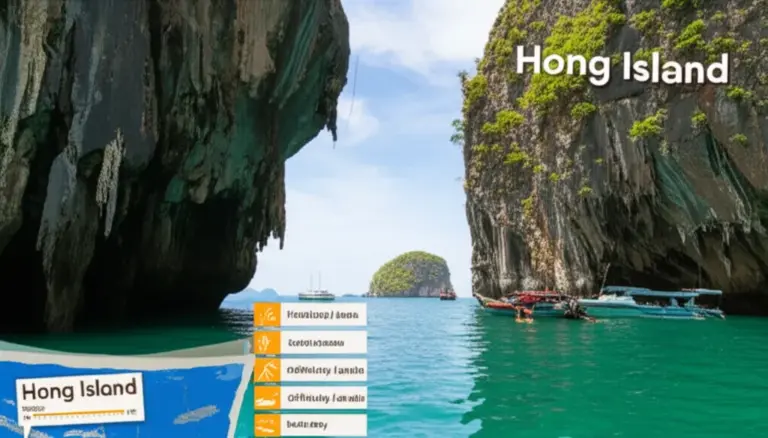
The Hong Lagoon is arguably the most famous ‘cave’ experience, though it’s technically a collapsed sea cave, leaving a stunning, emerald-green, entirely enclosed bay. The entrance is a narrow, winding passage (often just wide enough for one long-tail boat).
- Difficulty: Easy (Boat access) to Moderate (Kayaking the entrance).
- Distance from Ao Nang: Approximately 12-15 km one way.
- Key Feature: The sheer verticality of the limestone walls enclosing the calm water.
Hidden Caves of Koh Hong (East Side)
Along the less-visited eastern shores of the main island, smaller sea caves offer a more intimate exploration experience. These require dedicated kayaking. Guides often utilize headlamps to illuminate the inner chambers where stalactites hang dramatically. These smaller caves are what truly define advanced **Hong Islands sea caves routes**.
Choosing your itinerary depends heavily on how much paddling you are willing to do. The journey from the mainland to the Hong Islands is significant, meaning half-day trips focus primarily on the main lagoon, while full-day trips allow for deeper exploration of peripheral caves.
Half-Day Exploration (Focus: Leisure & Lagoon)
This is the most common tourist package. Boats typically leave around 9:00 AM and return by 2:00 PM. The focus is on getting to the main Hong Lagoon, perhaps a short swim, and a brief paddle around the immediate vicinity. Kayaking time is minimal (30-45 minutes).
| Activity | Estimated Kayak Time | Difficulty |
|---|---|---|
| Main Lagoon Visit | 30 mins | Easy |
| Beach Stop (Koh Hong) | 0 mins (Boat Drop) | Very Easy |
Full-Day Kayaking Adventures (Focus: Extended Routes)
For those serious about charting the **Hong Islands sea caves routes**, a full-day tour (8:00 AM to 5:00 PM) is essential. These tours often include paddling to smaller, unnamed caves on the surrounding satellite islands or exploring the western side of the main island where the water conditions are often rougher, demanding better paddling skills.
This requires moderate fitness. You might paddle for 2-3 hours cumulatively, navigating tidal channels that open and close during the day. This is where the true adventure lies, far from the main tourist throngs.
Multi-Day Island Hopping Itineraries
Multi-day trips usually involve chartering a private speedboat or hiring a liveaboard experience, often combining Hong Islands with Phi Phi or the dramatic cliffs of Phang Nga Bay. This allows you to catch the caves during optimal tidal windows (e.g., early morning or late afternoon) and explore remote sections of the outer Hong Islands chain that day trips cannot reach. This level of access provides the most comprehensive view of the region’s hidden waterways.
Essential Gear and Safety for Cave Exploration
As an authority on Andaman exploration, I emphasize preparation. E-E-A-T demands we prioritize safety alongside adventure.
- Waterproof Dry Bag: Essential for phones, cameras, and snacks.
- Reef-Safe Sunscreen: Protect the delicate coral and limestone ecosystems.
- Waterproof Headlamp/Torch: Even if your guide has one, redundancy is key for dark cave interiors.
- Water Shoes or Booties: Essential for navigating slippery, barnacle-covered cave entrances and rocky beaches.
- Basic First Aid Kit: For minor scrapes from coral or rocks.
Recommended Itineraries for Different Travelers
The Casual Sightseer (Half-Day Focus)
If your time is limited, book a standard 4-Island Tour that includes Koh Hong. You will see the Lagoon via long-tail boat, spend time on the main beach, and likely snorkel. This itinerary prioritizes comfort over deep exploration of the **Hong Islands sea caves routes**.
The Active Adventurer (Full Day Kayaking)
Seek out specialized kayaking operators departing from Ao Nang. Ensure they commit at least 3 hours of dedicated paddling time. They should guide you through at least two smaller, less-frequented sea caves accessible only by paddle power. This trip is physically demanding but offers the highest reward in terms of discovery.
Remember, the beauty of the Hong Islands lies in their isolation and the way the water changes color as you move from the open ocean into the sheltered lagoons. Respect the environment, hire local experts, and enjoy charting your own path through these ancient limestone mazes. For more information on booking reputable local tours, check with the official Krabi Tourism Board website.
คำถามที่พบบ่อย (FAQ)
What is the most famous sea cave in the Hong Islands area?
The Hong Lagoon (Hongs) itself is the most iconic feature, often accessed through a narrow passage, creating a hidden, open-air chamber surrounded by towering cliffs.
Is kayaking required for all Hong Islands sea caves routes?
While many smaller caves require kayaking, the main Hong Lagoon entrance is often accessible by long-tail boat during high tide. Kayaking offers access to tighter passages.
What is the best time of year to explore these sea caves?
The dry season, generally November to April, offers the calmest seas, making navigation safer and more enjoyable for exploring sea caves routes.
References
Official Tourism Authority of Thailand (TAT) Portal
Than Bok Khorani National Park Information
- Sea kayaking in Phang Nga Bay: A Complete Guide to Exploring Sea Caves and the Hong Islands
- Best times, permits, and getting there for Phang Nga Bay sea kayaking — how to plan your trip and choose guided vs. self-guided tours
- Safety, equipment, and eco-conscious practices for sea kayaking in Phang Nga Bay — tides, weather, wildlife, and how to kayak responsibly