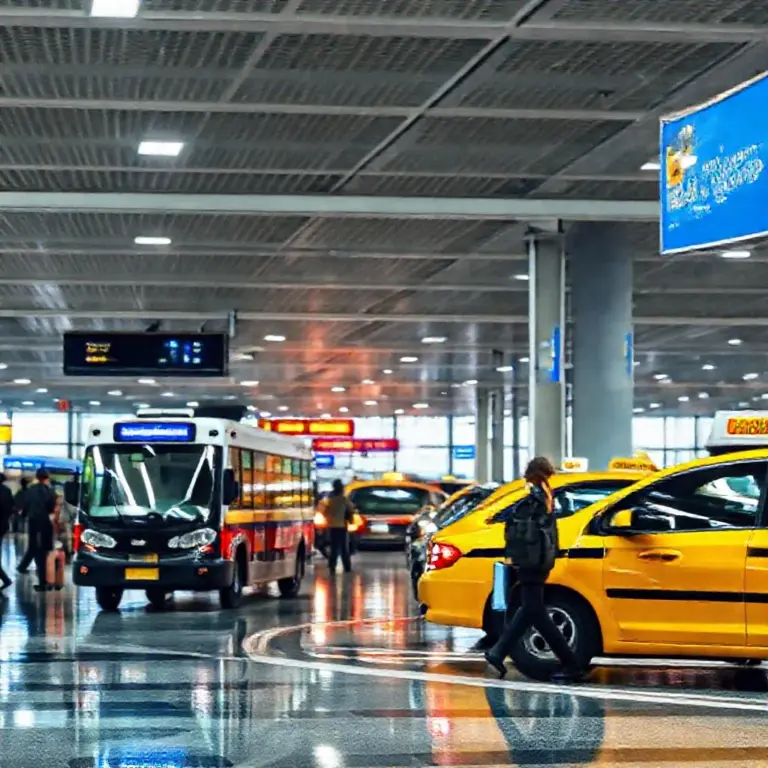
Key survival phrases for arrivals and transportation: airports, taxis, buses, and polite directions
- Key survival phrases for arrivals and transportation: airports, taxis, buses, and polite directions
Welcome to the Land of Smiles! Navigating Thailand for the first time can be exhilarating, but understanding a few Key survival phrases for arrivals and transportation is the secret weapon to transforming potential confusion into smooth, enjoyable travel. While English is spoken in major tourist hubs, knowing basic Thai significantly enhances your experience, especially when dealing with immigration, finding your way around busy airports, haggling respectfully in taxis, or asking for polite directions. This guide provides the essential linguistic toolkit you need for seamless movement from Suvarnabhumi Airport to your final destination.
I. Essential Greetings & Politeness: The Foundation of Thai Communication
Thai culture places immense value on politeness and respect. Beginning any interaction with the correct greeting shows goodwill and opens doors faster than any amount of money. Remember that Thai uses gendered particles at the end of sentences: ‘Krap’ (ครับ) for male speakers and ‘Ka’ (ค่ะ) for female speakers. These particles turn a command into a polite request.
Basic Greetings and Manners
| English Phrase | Thai (Phonetic) | Notes |
|---|---|---|
| Hello / Goodbye | Sawasdee krap/ka (สวัสดี ครับ/ค่ะ) | Always perform the ‘Wai’ (slight bow) when saying this. |
| Thank you | Khop Khun krap/ka (ขอบคุณ ครับ/ค่ะ) | Use constantly! |
| Excuse me / Sorry | Kor Toht krap/ka (ขอโทษ ครับ/ค่ะ) | Use to get attention or apologize. |
| Yes / No | Chai / Mai Chai (ใช่ / ไม่ใช่) | Simple affirmation/negation. |
International airports like Suvarnabhumi (BKK) or Don Mueang (DMK) are busy hubs. Knowing how to ask where things are is crucial for efficiency. Mastering these Key survival phrases for arrivals and transportation will save you time and stress.
Finding Key Areas
- Where is…?: Yoo tee nai krap/ka? (อยู่ ที่ ไหน ครับ/ค่ะ?)
- Immigration: Immigration / Tii tam ruat (ที่ ตรวจ คน เข้า เมือง)
- Baggage Claim: Grà-păo (กระเป๋า)
- Exit/Way Out: Tang Ork (ทาง ออก)
- Information Desk: Bâwng Kâw-moon (ห้อง ข้อมูล)
Once you have your bags, the next step is securing ground transport. Always aim for official queues or designated ride-share pickup spots to ensure safety and fair pricing.
III. Taxi and Ride-Hailing Communication
Taxis in Bangkok and other major cities are generally metered, but confirming the meter usage is essential. If you are negotiating a fare for a longer trip (like from the airport to the city center), clarity prevents misunderstandings.
Essential Taxi Phrases
- “Please use the meter.”: Chái meter krap/ka. (ใช้ มิเตอร์ ครับ/ค่ะ)
- “Please drive straight.”: Bpai trong bpai krap/ka. (ไป ตรง ไป ครับ/ค่ะ)
- “Turn left/right.”: Líao sái / Líao kwăa krap/ka. (เลี้ยว ซ้าย / เลี้ยว ขวา ครับ/ค่ะ)
- “Stop here, please.”: Jòt tee nee krap/ka. (จอด ที่ นี่ ครับ/ค่ะ)
- “How much?”: Gèe bàat krap/ka? (กี่ บาท ครับ/ค่ะ?)
When specifying your destination, it is often easier to show the address written in Thai script to the driver, as many taxi drivers may not be fluent in English spelling. If you use a ride-hailing app like Grab, you can usually input the destination directly, simplifying this step significantly.
Video Guide: Essential Thai Phrases for Travelers
Watch this quick tutorial to perfect your pronunciation before you land!
Public transport, such as the BTS Skytrain or MRT Subway, is often faster and cheaper than taxis in congested areas. While the systems are easy to navigate visually, knowing how to ask about routes is helpful.
Bus and Train Inquiries
- “Does this bus go to [Place Name]?”: Păi [Place Name] mai krap/ka? (ไป [Place Name] ไหม ครับ/ค่ะ?)
- “Where is the nearest BTS station?”: Sa-ta-nee BTS yoo tee nai krap/ka? (สถานี บีทีเอส อยู่ ที่ ไหน ครับ/ค่ะ?)
- “One ticket to [Destination], please.”: Ao nueng dtiiat bpai [Destination] krap/ka. (เอา หนึ่ง ตั๋ว ไป [Destination] ครับ/ค่ะ)
- “How much is the fare?”: Kâa taa-raang tao rai krap/ka? (ค่าทาง เท่าไร ครับ/ค่ะ?)
For buses, always have small denominations of Thai Baht ready, as change can sometimes be an issue. For trains, the ticketing machines are typically intuitive, but staff are available if you need assistance purchasing a top-up card.
V. Asking for Polite Directions
When you are lost, humility and politeness go a long way. Even if the person you ask doesn’t speak English, they will likely appreciate the effort to communicate respectfully. Using the proper tone ensures you receive helpful assistance rather than confusion. These phrases are the core of your Key survival phrases for arrivals and transportation when seeking help.
Directional Commands (Use after asking politely)
| Action | Thai (Phonetic) |
|---|---|
| Go straight | Bpai trong bpai |
| Turn left | Líao sái |
| Turn right | Líao kwăa |
| It’s near here | Yoo gâi tee nee |
| It’s far | Yoo taang |
If you need to ask a local for help, begin with: “Excuse me, can you help me?” (Kor toht, chuay dai mai krap/ka?). This phrase is the golden ticket to assistance. Remember, even if you can’t pronounce the resulting directions perfectly, pointing to the word you learned above (like ‘sái’ for left) will usually get the message across.
Beyond the City: Local Transport
In smaller towns or rural areas, you might rely on songthaews (shared pickup trucks). Always confirm the destination and price before you step in. A simple, “How much to [Your Hotel Name]?” is crucial here.
คำถามที่พบบ่อย (FAQ)
References
For deeper language study, consider resources dedicated to practical Thai communication for travelers. Thai Language Resources can offer comprehensive guides on pronunciation and grammar.
Always check the latest guidelines regarding airport transport services directly with the official airport websites (e.g., Suvarnabhumi Airport Official Site) upon booking your flights for the most current procedures.