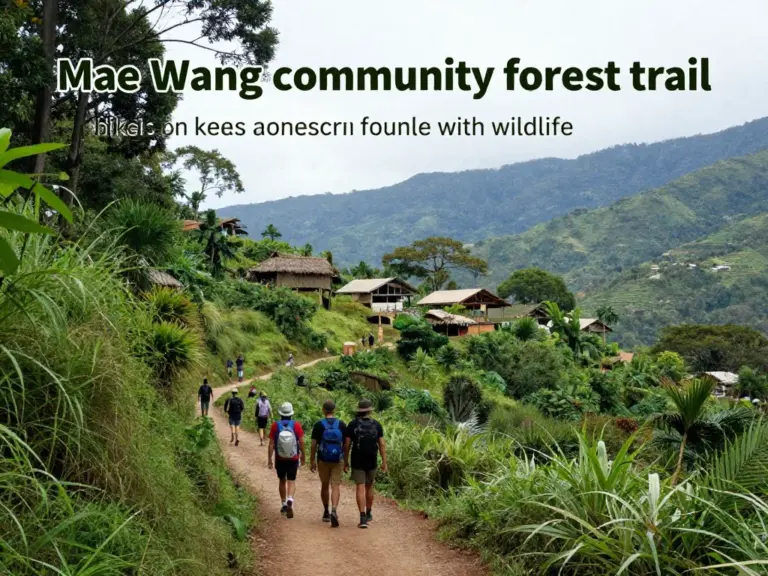
What to expect on the trail — typical itinerary, difficulty, wildlife, and scenic highlights of Mae Wang community forests
Embarking on a journey through the Mae Wang community forests is more than just a hike; it is an immersion into the heart of Northern Thailand’s natural beauty and cultural heritage. Located just an hour’s drive southwest of Chiang Mai, Mae Wang offers a pristine escape from the bustling city, characterized by lush canopies, hidden waterfalls, and the warm hospitality of local Karen hill tribe communities. This guide provides a comprehensive look at what you can expect when you step onto these emerald trails.
The Typical Itinerary: A Day in the Wild
Most excursions into the Mae Wang community forests follow a well-structured yet flexible itinerary designed to showcase the area’s diversity. A typical day trip usually begins with an early morning pickup from Chiang Mai, arriving at the trailhead by 9:30 AM.
Trail Difficulty: Is it Right for You?
The trails within the Mae Wang community forests are generally classified as moderate. While you don’t need to be a professional athlete, a basic level of fitness is recommended. The terrain involves a mix of steady inclines, narrow forest paths, and occasional river crossings. During the rainy season (June to October), paths can become slippery, making trekking poles a helpful accessory. Most routes cover between 5 to 8 kilometers over the course of 3 to 4 hours of active walking.
Wildlife and Biodiversity: Nature’s Residents
The Mae Wang area is a haven for biodiversity. As you move quietly through the trees, keep your eyes peeled for the vibrant plumage of the Scarlet Minivet or the Great Barbet. The community forests act as a vital corridor for various species. While larger mammals are elusive, it is common to spot macaques, various species of squirrels, and an incredible array of butterflies. The forest floor is equally alive, featuring unique fungi and rare orchids that bloom in the humidity of the tropical canopy.
Scenic Highlights: The Jewels of Mae Wang
The visual rewards of trekking here are immense. The primary scenic highlights include:
- Hidden Waterfalls: Multiple tiers of falls, such as the Mae Wang Waterfall, offer refreshing pools for a midday dip.
- Rice Terraces: Depending on the season, you will witness the brilliant green or golden hues of community-managed rice paddies carved into the hillsides.
- Karen Villages: Authentic wooden stilt houses and traditional weaving demonstrations offer a glimpse into a lifestyle harmonized with nature.
คำถามที่พบบ่อย (FAQ)
Q1: What is the best time of year to visit Mae Wang?
A: The best time is during the cool, dry season from November to February, when temperatures are pleasant and the trails are dry.
Q2: Do I need a guide for the Mae Wang community forests?
A: Yes, hiring a local guide is highly recommended. Not only do they ensure you don’t get lost, but they also provide invaluable cultural context and support the local economy.
Q3: What should I pack for the hike?
A: Essential items include sturdy hiking shoes, insect repellent, sunscreen, a swimsuit for the waterfalls, and a reusable water bottle.
Q4: Is the water in the waterfalls safe for swimming?
A: Yes, the water in the Mae Wang waterfalls is generally clean and safe for swimming, providing a refreshing break during your trek.
References
Tourism Authority of Thailand (TAT)
Department of National Parks, Wildlife and Plant Conservation
- Community forest trek with Karen guides in Mae Wang Chiang Mai: Complete planning, sustainable experiences, and cultural insights
- Why choose a community forest trek in Mae Wang with Karen guides — benefits, best seasons, and how it supports local communities
- Practical planning and logistics — how to book, what to pack, safety, permits, transport from Chiang Mai, and recommended duration