Community forest trek with Karen guides in Mae Wang Chiang Mai: Complete planning, sustainable experiences, and cultural insights
Embarking on a Community forest trek with Karen guides in Mae Wang Chiang Mai is more than just a walk through the woods; it is a profound journey into the heart of Northern Thailand’s soul. Nestled in the foothills of the Himalayas, Mae Wang offers a rugged landscape where the Karen people have lived in harmony with nature for generations. This guide explores how you can participate in this sustainable adventure, ensuring your visit supports local conservation and provides deep cultural enrichment.
Why Choose Mae Wang for Your Community Forest Trek?
Mae Wang is located approximately 60 kilometers southwest of Chiang Mai city. Unlike the more commercialized routes in Sapa or even parts of Chiang Rai, Mae Wang retains an authentic charm. The Community forest trek with Karen guides in Mae Wang Chiang Mai focuses on ‘Community-Based Tourism’ (CBT). This means the funds generated go directly to the village fund, supporting local schools, healthcare, and forest protection initiatives.
Planning Your Sustainable Trekking Experience
Planning a trek requires more than just booking a ticket. To ensure a high-quality experience, consider the following steps:
- Best Time to Visit: November to February offers cool, dry weather. For lush green landscapes, the rainy season (June to October) is beautiful but requires sturdy boots.
- Difficulty Level: Treks range from easy 3-hour walks to strenuous 3-day expeditions. Most community forest treks in Mae Wang are moderate.
- What to Pack: Eco-friendly sunscreen, insect repellent, a reusable water bottle, and modest clothing for village visits.
| Trek Duration | Focus Area | Best For |
|---|---|---|
| 1-Day Trek | Waterfalls & Foraging | Families & Short stays |
| 2-Day/1-Night | Village Homestay | Cultural Immersion |
| 3-Day+ | Deep Jungle & Summits | Hardcore Adventurers |
Cultural Insights: Life with the Karen People
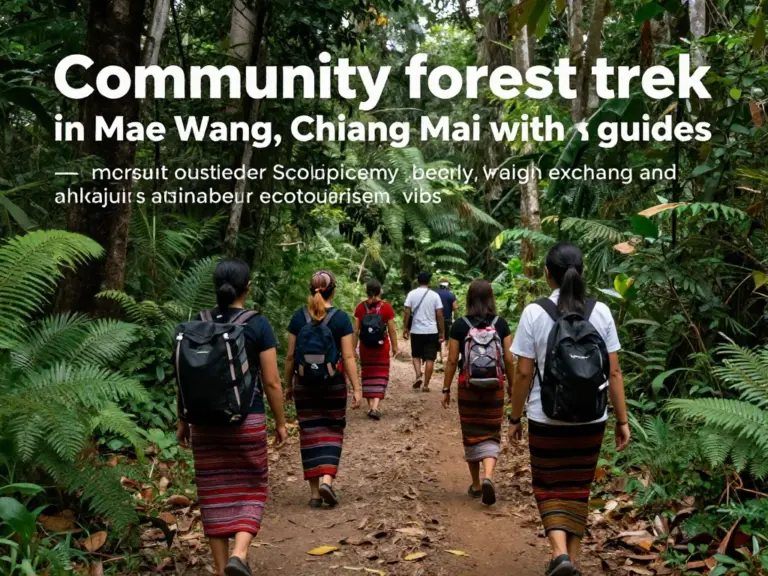
When you join a Community forest trek with Karen guides in Mae Wang Chiang Mai, your guide is your bridge to a different world. You will learn about ‘Hie’—the spiritual belief that every tree, stream, and mountain has a protector. Your Karen guide will likely demonstrate how to identify medicinal herbs, cook rice in bamboo over an open fire, and weave traditional textiles. Engaging with the community respectfully involves asking permission before taking photos and participating in village activities like coffee husking or traditional music sessions.
Sustainable Impact and Conservation
The ‘Community Forest’ model is a vital conservation tool. By allowing the Karen people to manage their ancestral lands, the Thai government helps prevent illegal logging and encroachment. As a visitor, your presence validates the economic value of a standing forest over a cleared one. Your guide will explain the ‘Fire Breaks’ they build annually and the sacred groves where no hunting or cutting is allowed, showcasing a masterclass in indigenous environmental stewardship.
How to Book an Authentic Community Trek
To ensure your money reaches the community, look for operators that specifically mention ‘Community-Based Tourism’ or ‘Karen-led’ tours. Avoid agencies that bundle treks with unethical elephant riding or ‘long neck’ shows that exploit the Kayan people. Instead, seek out local cooperatives in villages like Ban Mae Sapok or Ban Huay Khao Lip.
คำถามที่พบบ่อย (FAQ)
Q1: Is it safe to trek in Mae Wang?
A: Yes, it is very safe. The Karen guides are expert navigators of the terrain and are trained in basic first aid. However, always follow your guide’s instructions regarding wildlife and trail safety.
Q2: Do the guides speak English?
A: Many community guides speak functional English related to the forest and culture. Some treks may include a translator-guide from the city to facilitate deeper conversations.
Q3: What should I wear during the trek?
A: Wear breathable, long-sleeved shirts and long trousers to protect against leeches and thorny plants. Sturdy hiking shoes with good grip are essential.
Q4: Can children participate in these treks?
A: Yes! Many 1-day treks are suitable for children aged 6 and up, as they involve fun activities like waterfall swimming and bamboo rafting.
References
- Tourism Authority of Thailand (TAT)
- RECOFTC – The Center for People and Forests
- UNESCO Sustainable Tourism Resources
- Why choose a community forest trek in Mae Wang with Karen guides — benefits, best seasons, and how it supports local communities
- What to expect on the trail — typical itinerary, difficulty, wildlife, and scenic highlights of Mae Wang community forests
- Practical planning and logistics — how to book, what to pack, safety, permits, transport from Chiang Mai, and recommended duration