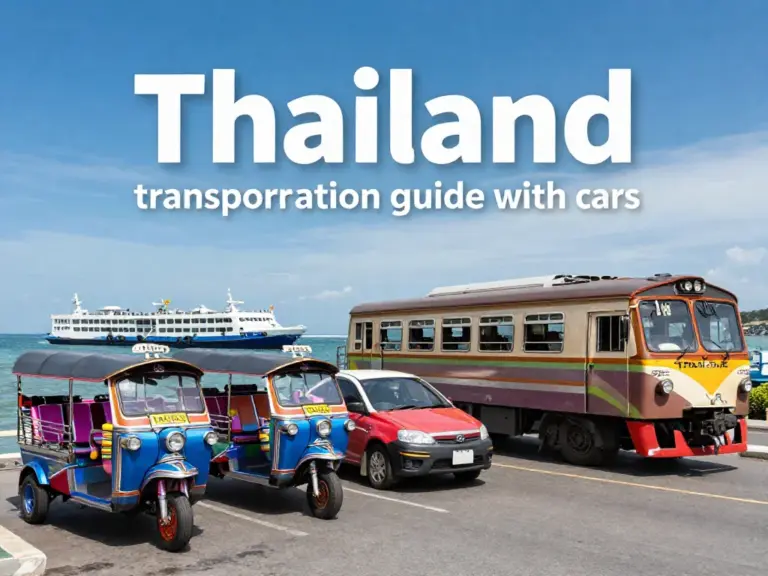
Ultimate Guide to Getting Around Thailand: Transportation Options for Every Traveler
Planning a trip to the Land of Smiles? One of the most common questions travelers face is: Getting Around Thailand efficiently without breaking the bank. Whether you are navigating the chaotic, vibrant streets of Bangkok, hopping between southern islands, or trekking into the northern mountains, understanding your transit options is key to a smooth journey. This guide breaks down every mode of transport available to help you travel like a local.
Understanding Your Options: Getting Around Thailand
Thailand boasts a diverse transportation infrastructure, ranging from ultra-modern metro systems to traditional canal boats. Depending on your budget, time constraints, and destination, you can mix and match these modes of transport. Public buses, trains, domestic flights, and ride-sharing apps all play a vital role in the country’s connectivity.
1. Domestic Flights: The Speed Demon
If you are pressed for time, flying is your best friend. Major carriers like Thai Airways, Bangkok Airways, and budget-friendly options like AirAsia and Nok Air connect all major hubs, including Bangkok, Chiang Mai, Phuket, and Krabi. Domestic flights are surprisingly affordable if booked in advance.
2. Trains: The Scenic Route
Traveling by train in Thailand is an experience in itself. The State Railway of Thailand offers various classes, with the overnight sleeper train from Bangkok to Chiang Mai being a classic traveler rite of passage. It is comfortable, safe, and allows you to wake up in the heart of the mountains. Always book first or second-class sleeper berths for the best experience.
Bangkok’s traffic is legendary, but the city offers excellent alternatives to taxis. The BTS Skytrain and MRT Subway are the most efficient ways to beat gridlock. For a more scenic route, the Chao Phraya Express Boat is a fantastic way to reach historic sites like the Grand Palace and Wat Arun. Avoid the tourist traps of “tuk-tuks” for long distances; they are fun for short rides but often overpriced.
4. Ferries and Speedboats
When exploring the islands, ferries and speedboats are essential. In the Gulf of Thailand (Koh Samui, Koh Phangan, Koh Tao), the ferry network is robust. In the Andaman Sea (Phuket, Krabi, Koh Lanta), speedboats are faster but can be bumpy during monsoon season. Always check weather forecasts before booking sea travel.
5. Renting Vehicles: Scooters and Cars
Renting a scooter is popular, particularly in places like Pai or Koh Phangan. However, exercise extreme caution. Thailand has high rates of road accidents. Only rent if you have a valid motorcycle license and travel insurance that covers scooter accidents. For longer distances, renting a car offers the most freedom, provided you are comfortable driving on the left side of the road.
คำถามที่พบบ่อย (FAQ)
1. Is it safe to use Grab in Thailand?
Yes, Grab is highly regulated and safe. It is widely used by locals and tourists alike for reliable transportation.
2. Should I book trains in advance?
Yes, especially for long-distance sleeper trains, as they sell out days or even weeks in advance during peak season.
3. Are tuk-tuks expensive?
They can be. Always negotiate the price before you get in, or use a ride-hailing app to see the standard market price for a similar distance.
4. Do I need an International Driving Permit?
Yes, if you plan to drive a car or rent a scooter, you are legally required to carry an International Driving Permit along with your home country’s license.