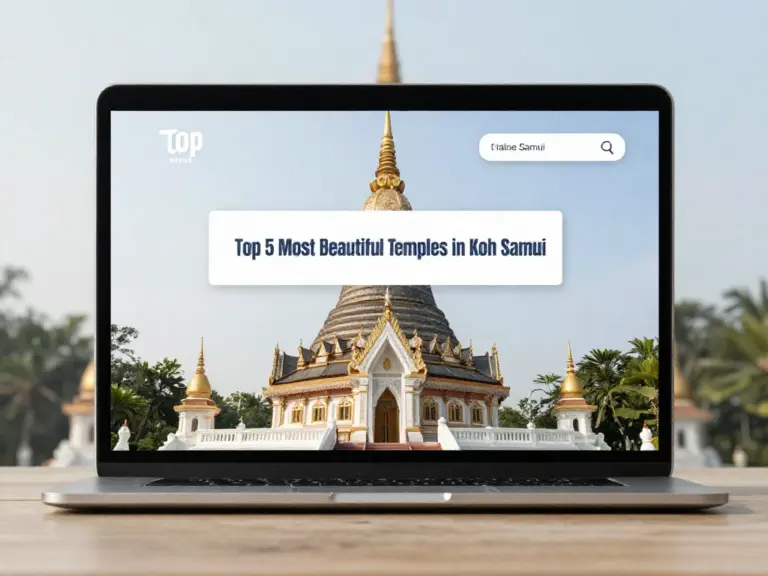
Top 5 Most Beautiful Temples to See in Koh Samui
- Top 5 Most Beautiful Temples to See in Koh Samui
- most beautiful temples to see in Koh Samui: Understanding Temple Etiquette in Thailand
- 1. Wat Phra Yai (The Big Buddha Temple)
- 2. Wat Plai Laem
- 3. Wat Khunaram (The Mummified Monk)
- 4. Wat Ratchathammaram (The Red Temple)
- 5. Wat Khao Hua Jook
- Comparison of Koh Samui Temples
- Practical Tips for Temple Hopping
- Frequently Asked Questions (FAQ)
- Frequently Asked Questions (FAQ)
Koh Samui is widely celebrated for its pristine beaches, vibrant nightlife, and luxurious resorts. However, beneath the surface of this island paradise lies a rich spiritual heritage. If you are looking for more than just sun and sand, visiting the local religious sites offers a profound glimpse into Thai culture and architecture. In this guide, we explore the most beautiful temples to see in Koh Samui, providing you with everything you need to know to plan a culturally enriching visit.
most beautiful temples to see in Koh Samui: Understanding Temple Etiquette in Thailand
Before visiting these sacred sites, it is crucial to understand the expectations. Thai temples are places of worship, not just tourist attractions. Always dress modestly—cover your shoulders and knees. Remove your shoes before entering any temple building (wihan or ubosot) and avoid pointing your feet toward Buddha statues, as this is considered highly disrespectful.
1. Wat Phra Yai (The Big Buddha Temple)
No list of the most beautiful temples to see in Koh Samui would be complete without Wat Phra Yai. Located on a small rocky island connected to the main island by a causeway, this temple is home to a 12-meter-tall golden Buddha statue. Built in 1972, the statue is visible from several kilometers away, especially when arriving by air. The staircases leading up to the Buddha are adorned with intricate dragon sculptures, and the view from the top overlooking the bay is simply breathtaking.
2. Wat Plai Laem
Located just a short drive from the Big Buddha, Wat Plai Laem is a colorful and artistic masterpiece. This temple complex is famous for its 18-armed statue of Guanyin, the Goddess of Mercy and Compassion. Unlike the ancient, weathered aesthetic of some Thai temples, Wat Plai Laem features vibrant, modern colors and detailed craftsmanship. The statues are set in the middle of a large lake, which is filled with fish that visitors can feed, making it a popular spot for families.
3. Wat Khunaram (The Mummified Monk)
For those interested in the deeper, more enigmatic aspects of Theravada Buddhism, Wat Khunaram is a must-visit. This temple is famous for housing the mummified body of Luang Pordaeng, a highly respected monk who passed away in 1973. Remarkably, his body has shown very few signs of decay over the decades. He is displayed in a glass case, sitting in a meditative pose. It is a sobering yet fascinating site that highlights the deep reverence the local community holds for their spiritual leaders.
4. Wat Ratchathammaram (The Red Temple)
Often overlooked by mainstream tours, Wat Ratchathammaram is architecturally unique. Known locally as the “Red Temple,” the entire structure is covered in terracotta-colored carvings depicting scenes from Buddhist mythology and the life of the Buddha. The craftsmanship is incredibly detailed, offering a stark contrast to the gold-and-white color schemes found elsewhere on the island. It is located near the coast, allowing visitors to enjoy the sea breeze while admiring the intricate wall art.
5. Wat Khao Hua Jook
If you are looking for the best panoramic view on the island, Wat Khao Hua Jook is the place to go. Perched atop a hill near Chaweng, this temple offers a stunning 360-degree view of the island, including the airport and the surrounding coastline. The temple itself is quiet, serene, and beautifully maintained. It is the perfect spot to escape the hustle and bustle of the tourist areas and enjoy a moment of peaceful reflection.
Comparison of Koh Samui Temples
| Temple Name | Key Feature | Best For |
|---|---|---|
| Wat Phra Yai | 12m Golden Buddha | Iconic Photography |
| Wat Plai Laem | 18-Armed Guanyin | Art & Architecture |
| Wat Khunaram | Mummified Monk | Cultural Insight |
| Wat Ratchathammaram | Terracotta Carvings | Unique Design |
| Wat Khao Hua Jook | Panoramic Views | Peace & Scenery |
Practical Tips for Temple Hopping
- Timing: Visit temples in the early morning (before 10:00 AM) to avoid the midday heat and large tour groups.
- Transport: Renting a scooter is the most flexible way to visit these temples, but ensure you are an experienced rider. Alternatively, hire a songthaew (local truck taxi) for a half-day tour.
- Donations: Most temples are free to enter, but there are often donation boxes. A small contribution (20-100 THB) is a respectful gesture to help with the upkeep of the grounds.
- Hydration: Always carry water. Walking around temple grounds can be physically demanding in the tropical heat.
Frequently Asked Questions (FAQ)
Frequently Asked Questions (FAQ)
Do I need to pay an entrance fee to visit these temples?
Most temples in Koh Samui, including the ones listed above, are free to enter. However, donations are welcome and encouraged to support the maintenance of the temple grounds.
What should I wear when visiting a temple in Koh Samui?
You should wear clothing that covers your shoulders and knees. Both men and women should avoid tank tops and short shorts. Many temples provide sarongs for rent or loan if you arrive underdressed, but it is better to be prepared.
Are these temples accessible for people with mobility issues?
Accessibility varies. Wat Phra Yai requires climbing a significant number of stairs, while others like Wat Plai Laem are mostly flat and easier to navigate. It is best to check specific locations if mobility is a concern.
Can I take photos inside the temples?
Generally, yes. You are welcome to take photos of the architecture and statues. However, always be respectful—do not pose inappropriately, and avoid taking photos of people while they are praying.