Hidden Towns in Thailand: Off-the-Beaten-Path Destinations You Need to Explore
Thailand is renowned for its bustling night markets, golden temples, and pristine beaches. However, beyond the well-trodden tourist trails of Bangkok, Phuket, and Chiang Mai, there exists a quieter, more authentic side to the Land of Smiles. For travelers seeking solitude and genuine cultural immersion, exploring Hidden Towns in Thailand offers a unique opportunity to witness traditional lifestyles that have remained largely unchanged by mass tourism.
Venturing off the beaten path requires a spirit of adventure and a willingness to trade convenience for discovery. Whether you are navigating the misty mountains of the North or the serene riverbanks of the Central plains, these lesser-known locales provide a refreshing escape from the typical itinerary. In this guide, we will uncover some of the most enchanting, underrated destinations that every traveler should consider adding to their bucket list.
1. Nan: The Northern Cultural Haven
Nestled near the border with Laos, Nan is often overlooked in favor of its northern neighbor, Chiang Mai. This province is a treasure trove of Lanna culture, ancient temples, and breathtaking mountain scenery. The town of Nan itself is remarkably laid-back, featuring the famous Wat Phumin, known for its unique cruciform architecture and exquisite murals depicting local life from centuries ago.
2. Sangkhlaburi: Where Cultures Collide
Located in Kanchanaburi province, Sangkhlaburi is a fascinating border town where Thai, Karen, and Mon cultures intersect. The town is famous for the Mon Bridge (Uttamanusorn Bridge), the longest wooden bridge in Thailand. Walking across it at sunrise offers a spiritual experience as local monks make their morning alms rounds. The serene reservoir setting creates a misty, ethereal atmosphere that feels worlds away from the city.
3. Chiang Khan: Riverside Nostalgia
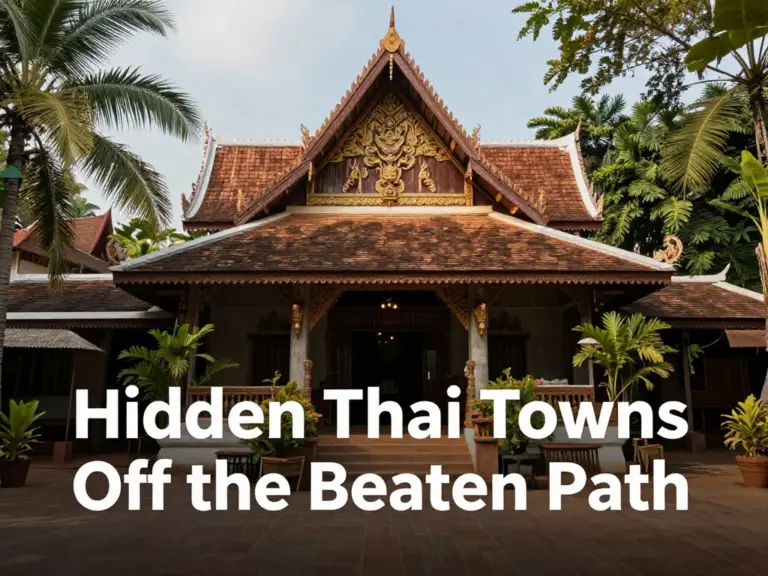
Situated along the Mekong River in Loei province, Chiang Khan is the definition of charm. This town is celebrated for its well-preserved wooden shophouses, which now serve as cozy boutique guesthouses, cafes, and craft shops. The pace of life here is incredibly slow; evenings are best spent strolling along the riverfront promenade, enjoying a local beer while watching the sunset over the mountains of Laos on the opposite bank.
4. Phrae: The Teak City
Often ignored by travelers rushing to Chiang Rai, Phrae is one of the oldest cities in Thailand. It is historically significant for its teak industry, and the architecture reflects this legacy. The Vongburi House Museum is a stunning example of turn-of-the-century teak mansion design. Phrae offers a glimpse into a Thailand that feels frozen in time, with quiet streets, friendly locals, and a distinct lack of souvenir hawkers.
Why Choose Off-the-Beaten-Path Travel?
Choosing to visit Hidden Towns in Thailand is not just about avoiding crowds; it is about sustainable tourism. By visiting these less-frequented areas, you contribute directly to local economies that often struggle to compete with major tourism hubs. Furthermore, you gain a deeper understanding of the Thai way of life—a life centered on community, spirituality, and respect for nature. You will find that the hospitality in these smaller towns is often warmer and more genuine, as locals are genuinely curious about visitors who have taken the time to seek out their home.
| Destination | Best For | Key Attraction |
|---|---|---|
| Nan | Culture & History | Wat Phumin Murals |
| Sangkhlaburi | Scenery & Culture | Mon Wooden Bridge |
| Chiang Khan | Relaxation | Mekong River Views |
| Phrae | Architecture | Teak Mansions |
คำถามที่พบบ่อย (FAQ)
While these towns are less accessible than major cities, Thailand has an extensive bus and minivan network. You may need to plan your connections, but the journey itself is often part of the adventure.
Do I need to speak Thai to visit these areas?
English is less common in remote towns, but basic hand gestures and a smile go a long way. Having a translation app on your phone is highly recommended for navigation and ordering food.
What is the best time of year to explore these regions?
The cool season (November to February) is generally the best time for travel, as the weather is pleasant and comfortable for exploring outdoors.
Are these areas safe for solo travelers?
Yes, Thailand is generally very safe for solo travelers. In smaller towns, the community is tight-knit, and locals are often very helpful and protective of visitors.