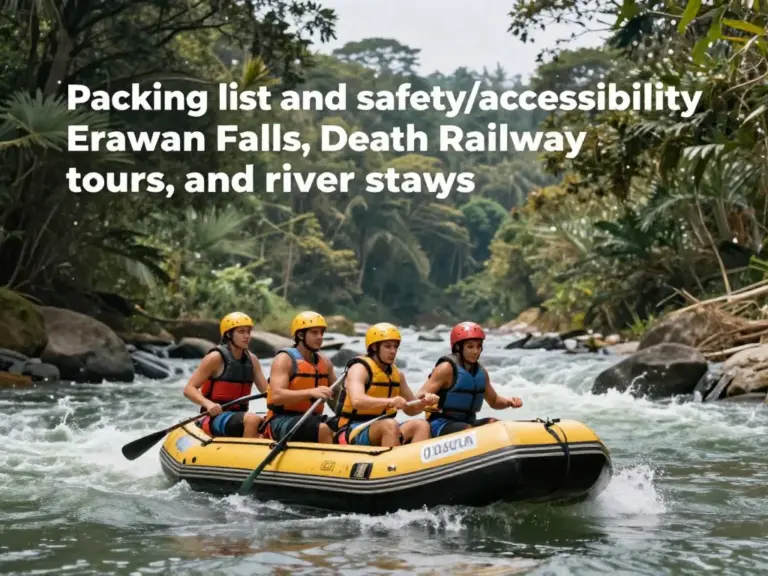
What to Pack, Safety Advice, Permits, and Accessibility for Erawan Falls, Death Railway Tours, and River Raft Stays
- What to Pack, Safety Advice, Permits, and Accessibility for Erawan Falls, Death Railway Tours, and River Raft Stays
- What to Pack for Your Kanchanaburi Adventure
- Safety Advice for Erawan Falls and River Stays
- Permits and National Park Fees
- Accessibility for Travelers
- คำถามที่พบบ่อย (FAQ)
- What is the best time of year to visit Erawan Falls?
- Can I buy food and water inside Erawan National Park?
- How do I get to the Death Railway from Kanchanaburi town?
Kanchanaburi is a province of profound natural beauty and haunting historical significance. For many travelers, the highlights of a visit include exploring the emerald tiers of Erawan Falls and Death Railway Tours, followed by a serene night on a floating raft house. However, to truly enjoy these experiences, proper preparation is key. Whether you are navigating the slippery limestone paths of a national park or reflecting on history at the Bridge over the River Kwai, understanding the logistical requirements—from packing essentials to permit costs—will ensure your journey is seamless and respectful.
What to Pack for Your Kanchanaburi Adventure
Packing for a trip that involves both rugged hiking and water activities requires a balance of utility and comfort. Here is a checklist of essentials for your Erawan Falls and Death Railway Tours:
- Footwear: Sturdy walking shoes or hiking sandals with good grip are non-negotiable. The limestone around Erawan Falls becomes incredibly slippery when wet.
- Swimwear and Quick-Dry Towel: You will want to plunge into the turquoise pools. Wear your swimsuit under light clothes to save time.
- Insect Repellent: The jungle environment and riverside stays are prime territory for mosquitoes, especially at dusk.
- Sun Protection: High-SPF sunscreen, a wide-brimmed hat, and polarized sunglasses are vital for the tropical Thai sun.
- Dry Bag: Essential for protecting your camera and phone during boat transfers to raft stays or while trekking near the falls.
- Modest Clothing: If you plan to visit nearby temples or historical sites like the Hellfire Pass, ensure your shoulders and knees are covered.
Safety Advice for Erawan Falls and River Stays
While Kanchanaburi is generally safe, the natural terrain and historical sites require caution. At Erawan Falls, the higher tiers (5 through 7) involve steep climbs and unstable ladders; only attempt these if you are in good physical condition. Be aware of the ‘fish spa’ effect—the small fish in the pools will nibble at dead skin on your feet, which is harmless but can be startling!
When staying on a river raft, always wear a life jacket if you decide to jump into the River Kwai for a ‘river float.’ The currents can be deceptively strong. Regarding the Death Railway, keep a safe distance from the edge of the tracks, especially on the Wampo Viaduct where there are no railings. Trains still run on these tracks, so stay alert for the whistle.
Permits and National Park Fees
Visiting the natural wonders of Kanchanaburi involves specific fees that contribute to the conservation of the area. As of the latest update, the entry fees for Erawan National Park are:
| Category | Foreigner Fee | Thai National Fee |
|---|---|---|
| Adults | 300 THB | 100 THB |
| Children | 200 THB | 50 THB |
| Vehicle (Car) | 30 THB | 30 THB |
Note that there is also a 20 THB deposit for plastic bottles taken beyond the second tier of the waterfall. This is part of a ‘trash-free’ initiative to keep the park pristine. You will receive your deposit back when you return with the bottle.
Accessibility for Travelers
Accessibility varies significantly across these sites. For Erawan Falls, the first two tiers are relatively accessible via paved or flat paths, making them suitable for families with young children or those with limited mobility. Beyond Tier 2, the path becomes a rugged jungle trek with roots and steep steps.
The Death Railway and the Bridge over the River Kwai are accessible in terms of reaching the locations, but the wooden sleepers on the viaducts are uneven and spaced apart, which is not wheelchair-friendly. Most river raft stays are accessed via long-tail boats; travelers with mobility issues should look for ‘land-based’ resorts that offer raft-style rooms with ramp access.
คำถามที่พบบ่อย (FAQ)
References
- Tourism Authority of Thailand (TAT)
- Department of National Parks, Wildlife and Plant Conservation
- State Railway of Thailand
- Kanchanaburi Weekend Itinerary: Explore the Death Railway, Erawan Falls, and a River-Raft Stay
- Best Time to Visit, How to Get There, and Booking Tips for the Death Railway and Erawan National Park
- Day-by-Day 2‑Day/1‑Night Itinerary: Train to Hellfire Pass, Erawan Waterfall Hikes, and Overnight River Raft Experience