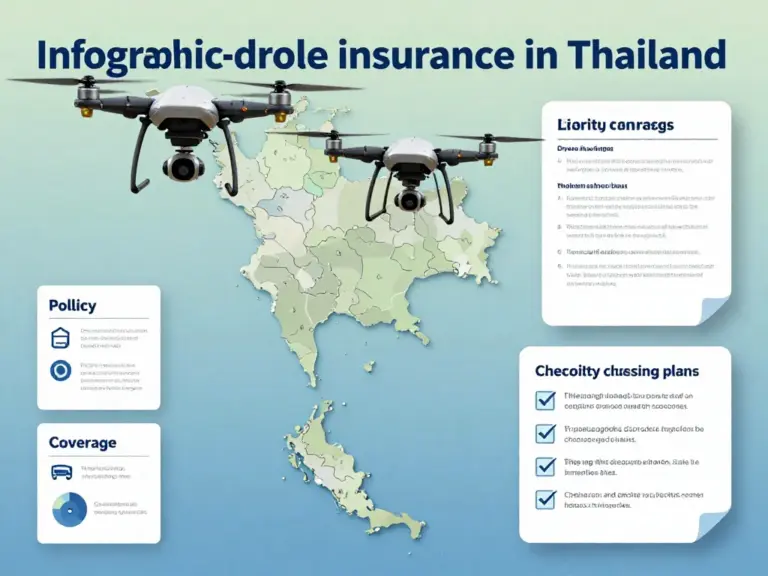
Understanding Mandatory Drone Insurance in Thailand: Coverage Types, Policy Requirements, and How to Choose the Right Plan
- Understanding Mandatory Drone Insurance in Thailand: Coverage Types, Policy Requirements, and How to Choose the Right Plan
- Why is Mandatory Drone Insurance in Thailand Necessary?
- Key Coverage Types for Drone Insurance
- Policy Requirements for CAAT and NBTC Registration
- How to Choose the Right Drone Insurance Plan
- Step-by-Step Guide to Registering Your Drone
- คำถามที่พบบ่อย (FAQ)
- Is drone insurance mandatory for all drones in Thailand?
- What is the minimum coverage required for CAAT registration?
- Can I use my home country’s drone insurance in Thailand?
- How long does it take to get a drone insurance certificate?
Thailand is a dream destination for aerial photographers and videographers. However, before you launch your drone over the turquoise waters of Phuket or the ancient temples of Ayutthaya, you must navigate the legal landscape. The most critical component of this landscape is obtaining mandatory drone insurance in Thailand. This insurance is not just a safety net; it is a legal prerequisite for registration with the Civil Aviation Authority of Thailand (CAAT) and the National Broadcasting and Telecommunications Commission (NBTC).
Why is Mandatory Drone Insurance in Thailand Necessary?
The Thai government enforces strict regulations to ensure public safety and privacy. Under the Air Navigation Act, almost all drones equipped with cameras must be registered. To complete this registration, you must provide proof of a third-party liability insurance policy. This ensures that if your drone causes property damage or bodily injury to others, there is financial coverage to handle the claims. Without valid insurance, your CAAT permit will remain pending, making your flights illegal.
Key Coverage Types for Drone Insurance
When looking for a policy, it is essential to understand what is covered. Most insurance providers in Thailand offer plans tailored specifically for CAAT requirements. Here are the common coverage types:
- Third-Party Liability: This is the mandatory portion. It covers injury, death, or property damage caused by the drone to third parties.
- Personal Accident: Some premium plans include coverage for the pilot in case of accidents during operation.
- Hull Insurance: This covers damage to the drone itself. While not mandatory for registration, it is highly recommended for expensive equipment like the DJI Mavic or Inspire series.
- Legal Defense Costs: Coverage for legal fees if you are sued following a drone-related incident.
Policy Requirements for CAAT and NBTC Registration
To meet the legal standards for mandatory drone insurance in Thailand, your policy must satisfy specific criteria set by the CAAT. If the policy does not meet these, your registration will be rejected.
| Requirement | Specification |
|---|---|
| Minimum Liability Limit | At least 1,000,000 THB per occurrence |
| Language | Must be in English or Thai |
| Policy Details | Must clearly state the drone’s Serial Number and Model |
| Coverage Area | Must explicitly cover the territory of Thailand |
How to Choose the Right Drone Insurance Plan
Choosing the right plan involves balancing cost with coverage depth. For tourists, a short-term policy might be available, but most standard plans in Thailand are annual. Consider the following factors:
- Ease of Claims: Look for insurers with a reputation for quick digital claim processing.
- Speed of Certificate Issuance: Since you need the insurance certificate to apply for CAAT registration (which can take 15-30 days), you need an insurer that provides the policy document immediately.
- Reputation: Stick to known providers like MSIG, Falcon, or local brokers who specialize in expat and tourist drone insurance.
- Comprehensive Options: If you are a professional, ensure the policy covers commercial use, as standard hobbyist insurance may be void if you are filming for profit.
Step-by-Step Guide to Registering Your Drone
Once you have secured your insurance, follow these steps to stay legal:
- Purchase Insurance: Get your policy and ensure the serial number matches your drone exactly.
- NBTC Registration: Register the radio equipment. This can be done at local NBTC offices or online. You usually need photos of the drone and your passport.
- CAAT Registration: Apply via the uav.caat.or.th portal. Upload your insurance certificate, signed self-declaration forms, and photos.
- Wait for Approval: This can take several weeks, so apply well before your travel date.
คำถามที่พบบ่อย (FAQ)
References
- Civil Aviation Authority of Thailand (CAAT) Official Website
- National Broadcasting and Telecommunications Commission (NBTC)
- Thailand Drone Regulations Guide
- Thailand Drone Rules: Complete Guide to Registration, Insurance, and No-Fly Zones for Safe & Legal Flying
- How to Register Your Drone in Thailand: Step-by-Step Process, Required Documents, and Fees for Recreational and Commercial Pilots
- Thailand No-Fly Zones and Airspace Restrictions: Identifying Restricted Areas, Temporary Flight Restrictions, and How to Check Real-Time Maps