- Why travelers choose map apps in Thailand: key search intents, safety, language support, and tourist navigation needs
- Understanding Key Search Intents for Thai Navigation
- The Crucial Role of Language Support and Accessibility
- Safety Features Integrated into Map Applications
- Tourist Navigation Needs vs. Local Needs
- The Future: Augmented Reality and Hyper-Local Data
- คำถามที่พบบ่อย (FAQ)
- Is it safe to use ride-hailing apps like Grab in Thailand?
- Which map app works best offline in rural Thailand?
- How do I input a Thai address if I don’t read Thai script?
- Do map apps accurately reflect local scooter rental locations?
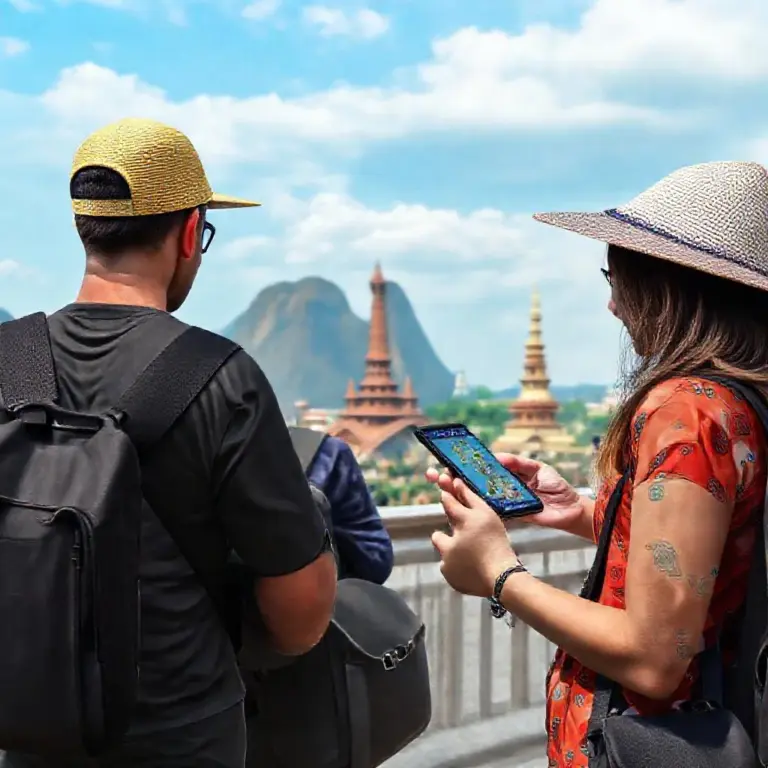
Navigating the vibrant chaos of Bangkok, the ancient ruins of Ayutthaya, or the winding jungle roads of Chiang Mai is infinitely easier thanks to digital mapping solutions. For the modern tourist exploring the Land of Smiles, understanding why travelers choose map apps in Thailand is crucial for seamless travel. It goes beyond simple point-A-to-point-B directions; it’s about safety, language barriers, and accessing local gems. This in-depth guide explores the core search intents driving map app usage and the specific features that make these digital tools indispensable for Thailand tourism.
The sheer volume of tourist activity necessitates reliable navigation. Whether a traveler is hunting for the best street food stall, trying to find their remote Airbnb, or needing emergency assistance, the smartphone, powered by mapping technology, becomes the primary lifeline. We will analyze the specific demands of the Thai travel environment and how top map applications meet these unique challenges.
Travelers arriving in Thailand do not just search for ‘maps’; their search queries reveal deeper, more specific needs tied to their immediate context. Identifying these search intents allows map developers and travel providers to tailor offerings effectively.
1. Real-Time Transit & Public Transport Accessibility
A major intent is finding the quickest, cheapest, and most reliable way to move between locations. This often involves multimodal transport: combining the BTS Skytrain, MRT Subway, river ferries, taxis, and sometimes local buses.
- Intent Focus: Real-time schedules, route optimization across different modes (e.g., walking to the MRT, then taking the train).
- App Requirement: Accurate data on Bangkok’s complex public transit network is non-negotiable.
2. Off-Grid and Local Discovery
Many travelers move beyond tourist hotspots, looking for authentic experiences. This requires mapping obscure alleyways (sois) or highly localized points of interest (POIs) not always listed in standard guidebooks.
3. Safety and Emergency Location Services
Safety is paramount. Travelers frequently search for the nearest police box, hospital, or embassy. Knowing exactly where they are relative to safety infrastructure is a critical, often urgent, search intent.
The Crucial Role of Language Support and Accessibility
The linguistic landscape of Thailand presents a significant challenge for non-Thai speakers. Map apps bridge this gap effectively.
Thai Script Recognition and Input
While major tourist areas often use transliterated English, smaller vendors, local markets, and street signs overwhelmingly use the Thai script. Effective map apps must:
- Accurately display Thai addresses alongside Romanized text.
- Allow users to input destinations using Thai characters (if they know them) or robust phonetic search.
Offline Functionality for Remote Areas
Data coverage, especially in Northern Thailand’s mountainous regions or on smaller islands, can be patchy or prohibitively expensive via roaming. The ability to download maps for offline use is a massive differentiator for travelers.
Safety Features Integrated into Map Applications
When discussing why travelers choose map apps in Thailand, safety features often outweigh pure navigational accuracy. Tourists rely on these tools to mitigate risks associated with unfamiliar environments, particularly regarding transportation.
Apps like Google Maps integrate with local ride-sharing services (like Grab), providing estimated fares and allowing users to track their journey in real-time. This transparency helps prevent overcharging by unmetered taxis.
- Fare Transparency: Comparing fixed app prices against metered taxi estimates.
- Route Monitoring: Ensuring the driver follows the most logical route.
- Emergency Contact Sharing: Easily sharing live locations with friends or family.
Landmark Recognition and Orientation
In dense urban centers like Bangkok, orientation can be difficult when street names are confusing. Map apps excel by using high-visibility landmarks (temples, major malls, river piers) as navigational anchors, enhancing the traveler’s sense of security.
The data used by tourists differs significantly from that used by residents. Map apps succeed when they cater to the tourist’s unique priorities:
| Tourist Need | Map App Solution |
|---|---|
| Finding Highly Rated Restaurants | POI filtering by user ratings (4.5+ stars). |
| Navigating Complex Markets (Chatuchak) | Pedestrian routing and satellite imagery overlay. |
| Locating ATMs/Currency Exchange | Proximity search linked to verified financial institutions. |
| Booking Accommodation Check-in | Integration with booking confirmation addresses/GPS pins. |
Embedding Essential Visual Content
To provide comprehensive guidance on navigating Bangkok’s public transport, here is a highly relevant video tutorial:
This video demonstrates how to effectively use common map applications to master the BTS and MRT systems, a key component of daily navigation for visitors.
The Future: Augmented Reality and Hyper-Local Data
The ongoing evolution of map technology continues to solidify its place in the Thai travel ecosystem. Augmented Reality (AR) navigation, which overlays directions onto the live camera feed, is becoming increasingly valuable in confusing intersections or crowded pedestrian zones. Furthermore, integrating hyper-local data—such as current opening hours for small temples or temporary road closures—will further enhance user trust.
In summary, the choice of map application in Thailand is driven by a combination of necessity (language, complex transit) and desire (discovery, safety). The apps that provide the most accurate, offline-capable, and locally nuanced data will always be the preferred tool for tourists exploring this incredible country.
คำถามที่พบบ่อย (FAQ)
Here are common questions travelers have regarding map app usage in Thailand.
References
For further reading on digital navigation trends in Southeast Asia, consult these resources:
- Analysis of Thailand’s Evolving Digital Mobility Landscape
- Official Updates on Tourist Safety and Technology
- Using travel apps in Thailand: maps — Ultimate Guide to Navigating Thai Cities and Rural Areas with Offline & Live Map Features
- Choosing the best map app for Thailand: Google Maps vs. HERE WeGo vs. Maps.me vs. local apps, offline maps, transit, and cycling routes
- How to prepare and use map apps in Thailand: downloading offline maps, setting data plans, enabling location services, and understanding Thai addresses