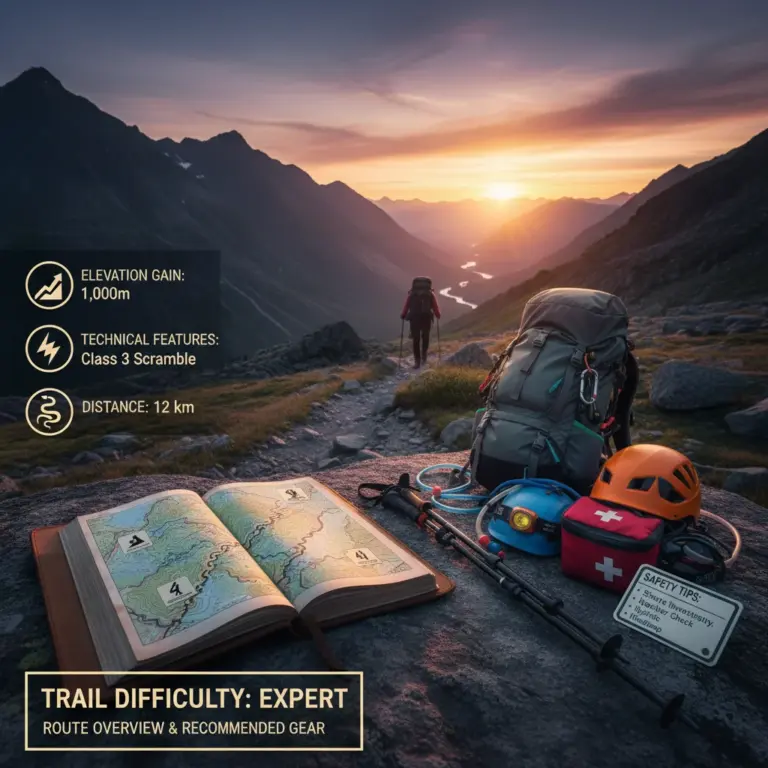
Trail difficulty, route descriptions, and recommended gear — distance, elevation, technical features, and safety tips
- Trail difficulty, route descriptions, and recommended gear — distance, elevation, technical features, and safety tips
Thailand, often synonymous with beaches and temples, hides a rugged, verdant interior perfect for trekking. From the misty peaks of the North to the dense jungles of the South, the terrain varies wildly. Success on these trails hinges on preparation, particularly knowing the expected difficulty, distance, and the specific gear needed to handle the tropical climate and elevation changes.
Understanding Thailand’s Trekking Terrain
The geography dictates the challenge. Northern Thailand (Chiang Mai, Chiang Rai) offers significant elevation gain, cooler temperatures at altitude, and multi-day routes often involving river crossings and remote villages. Southern and Central Thailand trails, while sometimes challenging due to humidity and dense undergrowth, generally feature lower overall elevation, often focusing on coastal views or karst formations.
Decoding Trail Difficulty Ratings in Thailand
Unlike established Western systems, Thailand lacks a universal rating scale. However, local guides and established park systems often use these general benchmarks:
| Rating | Characteristics | Elevation Gain | Best For |
|---|---|---|---|
| Easy (Nature Walk) | Paved or well-maintained paths, minimal incline. | Under 100m | Families, beginners. |
| Moderate (Day Hike) | Uneven terrain, some steep sections, 4-6 hours duration. | 200m – 500m | Fit beginners, regular hikers. |
| Strenuous (Trekking) | Long distances (>10km), significant elevation, potential for mud, bushwhacking, or river crossings. | 500m+ | Experienced trekkers, guided multi-day trips. |
Featured Routes: Distance, Elevation, and Technical Features
Understanding the specific route profile is key to managing your **Thailand hiking trail difficulty and gear** strategy.
Northern Gem: Doi Inthanon National Park (Chiang Mai)
As Thailand’s highest peak (2,565m), Doi Inthanon offers cooler temperatures, but the trails near the summit can be challenging due to altitude acclimatization and occasional slick boardwalks or muddy slopes after rain. The Kew Mae Pan Nature Trail is highly recommended, requiring a local guide. Distance is typically short (around 3.2 km loop), but the technical features involve navigating dense cloud forest paths.
Jungle Immersion: Northern Thailand Multi-Day Treks (e.g., Chiang Mai/Pai Loop)
These treks are inherently strenuous. Expect daily distances between 10-18 km. Elevation changes are constant, often involving ascents and descents into valleys. Technical features include crossing swift streams (requiring waterproof footwear or wading capability) and navigating trails that may only be faint paths used by local hill tribes. This requires full multi-day backpacking gear.
Southern Exploration: Island and Coastal Hikes (e.g., Koh Lanta)
Southern hikes often involve scrambling over limestone karst formations or navigating steep, slippery jungle paths leading to secluded beaches. While elevation might not rival the North, the humidity is intense, and the technical challenge comes from unstable footing and exposure to the sun. Distances are usually shorter (3-7 km), but the pace is slower.
Essential Gear Checklist for Thai Adventures
Your gear must combat heat, humidity, torrential rain, and insects. Weight management is crucial, as carrying heavy packs in 30°C heat is draining.
Clothing & Footwear
- Footwear: Sturdy, broken-in waterproof hiking boots (for the North) or high-grip trail runners (for the South).
- Clothing: Lightweight, quick-drying, synthetic fabrics. Long sleeves and pants are essential for sun and insect protection.
- Rain Gear: A high-quality, lightweight rain jacket is non-negotiable, even in the dry season.
For routes where the **Thailand hiking trail difficulty and gear** assessment leans towards strenuous, redundancy in navigation and safety is required.
- GPS/Map: Download offline maps (e.g., Maps.me or Gaia GPS) before you lose signal. A physical compass is a vital backup.
- Hydration: Carry a minimum of 3 liters capacity. Water purification tablets or a filter are mandatory for remote treks.
- First Aid Kit: Must include anti-fungal cream, blister treatment, electrolyte tablets, and strong insect repellent (high DEET content).
- Power: Portable power bank to keep communication devices charged.
Critical Safety Tips for Thailand Hiking Trail Difficulty and Gear Management
As an experienced guide, I stress that respect for local conditions saves lives. Never underestimate the jungle environment.
- Hire Local Guides: For multi-day treks or trails rated Strenuous, hiring a reputable, licensed local guide is not optional—it’s essential for safety, navigation, and cultural respect.
- Manage Heat & Humidity: Start early (pre-dawn) to avoid the hottest part of the day (11 AM – 3 PM). Hydrate constantly, not just when thirsty.
- Wildlife Awareness: Be aware of snakes, leeches (especially after rain), and macaques. Never feed wild animals.
- Monsoon Season Prep: From roughly June to October, trails become extremely slick. Expect flash floods in valleys and plan contingency routes. Do not attempt difficult river crossings alone during heavy rain.
Video Guide: Preparing for Your Thai Trek
Watch this essential overview on preparing your pack and navigating challenging Thai terrain:
คำถามที่พบบ่อย (FAQ)
References
For further expert planning, review official resources:
Official Tourism Authority of Thailand Website |
Department of National Parks, Wildlife and Plant Conservation (DNP)