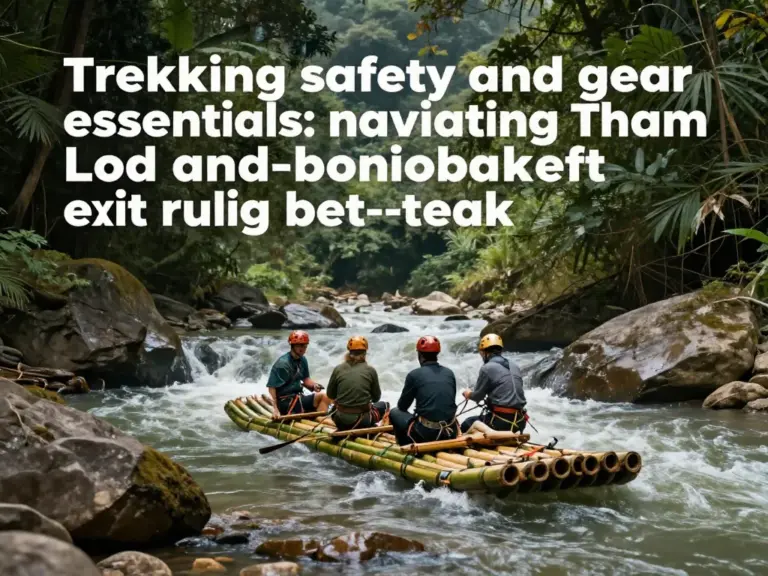
Tham Lod Cave, located in the Pang Mapha District of Mae Hong Son province, is one of Thailand’s most spectacular natural wonders. A visit here isn’t just a walk in the park; it involves a combination of light trekking, navigating dark limestone chambers, and a unique exit via a traditional bamboo raft. To ensure your experience is both memorable and safe, proper preparation is key. This guide covers everything from the physical demands of trekking Tham Lod to the specific gear you’ll need for the cave’s damp environment.
Understanding the Terrain of Tham Lod
Trekking Tham Lod involves navigating three main chambers: the Column Cavern, the Doll Cavern, and the Coffin Cavern. The path consists of wooden walkways, steep stairs, and slippery limestone surfaces. While the trek is not technically difficult, the humidity and darkness add a layer of challenge. You will be moving from the heat of the Thai jungle into a cool, damp subterranean world where the floor can be slick with ‘guano’ (bat droppings) and moisture.
Essential Gear for Your Cave Adventure
When trekking Tham Lod, your choice of gear can make or break the trip. You need items that provide grip, protection, and comfort in a high-humidity environment.
- Footwear: Wear sturdy hiking sandals with good grip or lightweight trail runners. Avoid flip-flops as they offer no traction on wet rocks.
- Headlamp: While guides have lanterns, having your own hands-free headlamp is a massive safety advantage.
- Clothing: Wear moisture-wicking fabrics. The cave is humid, and you will likely sweat during the climbs.
- Dry Bag: Essential for protecting your phone and camera, especially during the bamboo raft segments.
Fitness and Physical Preparation
You don’t need to be an elite athlete for trekking Tham Lod, but a basic level of cardiovascular fitness is helpful. The tour involves climbing several sets of steep, narrow wooden stairs to reach the higher caverns. If you have knee issues, take it slow, as the descents can be jarring. Balancing on the bamboo raft also requires a bit of core stability, though the guides do most of the heavy lifting.
| Activity | Intensity | Focus Area |
|---|---|---|
| Chamber Trekking | Moderate | Leg Strength & Balance |
| Stair Climbing | High | Cardio |
| Bamboo Rafting | Low | Stability |
The highlight for many is the bamboo-raft exit. As the Nam Lang River flows through the cave, you board a small raft to reach the final chamber or exit the cave system entirely. Safety Note: Keep your hands inside the raft at all times to avoid scraping against jagged cave walls. During the rainy season (June-October), water levels can rise significantly; always follow the guide’s instructions regarding whether rafting is safe. At the exit, keep an eye out for the thousands of swifts and bats that fly in and out during dusk—a truly magical sight.
Safety Protocols to Remember
Safety while trekking Tham Lod is largely about common sense and respecting the environment. Do not touch the stalactites or stalagmites, as the oils from your skin can stop their growth. Stay on the marked paths to avoid falling into crevices. If you feel dizzy due to the smell of guano or the enclosed space, inform your guide immediately and head toward the cave openings where the air is fresher.
คำถามที่พบบ่อย (FAQ)
Is Tham Lod Cave suitable for children?
Yes, children who are comfortable walking and climbing stairs can enjoy Tham Lod. However, parents should keep a close hold on younger children due to the dark environment and slippery patches.
What is the best time of year for trekking Tham Lod?
The best time is during the cool, dry season from November to February. During the peak of the rainy season, the river levels may be too high for the bamboo rafts to operate safely.
How long does the full trek and raft tour take?
A standard tour usually takes between 1.5 to 2 hours, depending on how much time you spend at each viewpoint and the speed of the raft.
Do I need to book a guide in advance?
No, guides are available at the park entrance. It is mandatory to enter with a local guide to ensure safety and the preservation of the cave.