Exploring Key Attractions in Detail: The Emerald Buddha, Royal Halls, Reclining Buddha, Chapel Architecture, and Cultural Etiquette
- Exploring Key Attractions in Detail: The Emerald Buddha, Royal Halls, Reclining Buddha, Chapel Architecture, and Cultural Etiquette
Thailand, a land steeped in rich history and vibrant spirituality, beckons travelers with its majestic temples and royal residences. Among the most revered and breathtaking sites for Thailand tourism are the Grand Palace and Wat Pho, home to the iconic Emerald Buddha and Reclining Buddha, respectively. These complexes offer an unparalleled glimpse into the nation’s artistic prowess, religious devotion, and royal heritage. To truly appreciate their grandeur and significance, understanding their architectural nuances and adhering to local cultural etiquette is paramount for every visitor. This guide will take you through the intricate details of these must-see attractions, ensuring a respectful and memorable exploration of the Grand Palace and Wat Pho Bangkok.
The Grand Palace: A Royal Legacy
The Grand Palace, a sprawling complex of buildings at the heart of Bangkok, has served as the official residence of the Kings of Siam (and later Thailand) since 1782. Established by King Rama I, it was the seat of royal government for over 150 years. Although the current monarch resides elsewhere, the palace remains a vital center for official ceremonies and state functions, symbolizing the enduring power and prestige of the Thai monarchy. Its vast grounds, covering 218,400 square meters, are encircled by impressive walls and house numerous halls, pavilions, and temples, each adorned with intricate details and vibrant colors. Walking through its gates is like stepping back in time, offering a profound appreciation for Thailand’s royal history and artistic traditions.
The Temple of the Emerald Buddha (Wat Phra Kaew)
Within the Grand Palace grounds lies Wat Phra Kaew, officially known as Wat Phra Si Rattana Satsadaram, the most sacred Buddhist temple in Thailand. It is home to the highly revered Emerald Buddha, a relatively small, dark green statue carved from a single block of jade or jasper. The statue is draped in one of three seasonal robes – for the hot season, rainy season, and cool season – which are changed by the King of Thailand in a significant royal ceremony. This ritual is believed to bring good fortune to the country. The Ubusot (ordination hall) housing the Emerald Buddha is a masterpiece of Thai craftsmanship, featuring gilded pillars, intricate murals depicting the Ramakian (Thai national epic), and a multi-tiered roof adorned with chofahs and naga finials. The atmosphere inside is one of deep reverence, with worshippers often sitting in quiet contemplation. Photography is strictly prohibited inside the ordination hall.
The Royal Halls and Residences
Beyond Wat Phra Kaew, the Grand Palace complex features several impressive royal halls, each with its own historical and architectural significance. The Chakri Maha Prasat Hall, for instance, stands out with its unique blend of traditional Thai roof and Western-style architecture, reflecting the late 19th-century influence of King Rama V’s modernization efforts. The Dusit Maha Prasat Hall, one of the oldest buildings in the complex, is a superb example of traditional Thai architecture and is primarily used for royal funerals. Other notable structures include the Phra Maha Monthien Group, which served as the king’s residential and sleeping quarters, and the Borom Phiman Mansion, built in Western style for royal guests. These halls showcase the evolution of Thai royal architecture and the country’s historical interactions with other cultures.
Wat Pho: The Temple of the Reclining Buddha
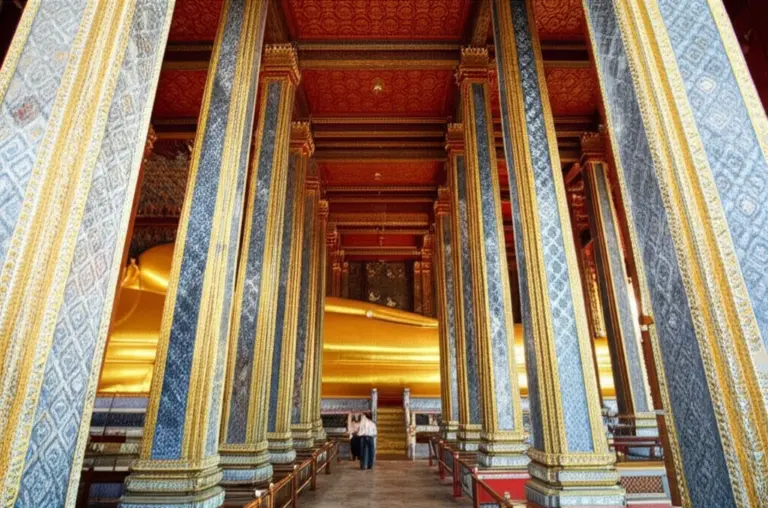
Just a short walk from the Grand Palace, Wat Pho, officially known as Wat Phra Chetuphon Wimon Mangkhalaram Rajwaramahawihan, is one of Bangkok’s oldest and largest temple complexes. It is most famous for its magnificent Reclining Buddha, a colossal gold-leaf-covered statue measuring 46 meters long and 15 meters high. The sheer scale of the statue, with its intricate mother-of-pearl inlaid feet depicting 108 auspicious characteristics of the Buddha, is awe-inspiring. Wat Pho is also considered the birthplace of traditional Thai massage, and visitors can still receive authentic massages within the temple grounds. The complex boasts numerous chedis (stupas), chapels, and a vast collection of Buddha images, making it a significant center for Buddhist learning and meditation. The tranquil atmosphere, despite the many visitors, provides a stark contrast to the bustling city outside.
Chapel Architecture: A Symphony of Thai Design
The architectural style observed in the chapels and halls of both the Grand Palace and Wat Pho embodies the pinnacle of traditional Thai artistry. Key elements include multi-tiered, overlapping roofs adorned with vibrant glazed tiles, often in green and orange, that shimmer in the tropical sun. The gables are typically decorated with ornate chofahs – slender, skyward-pointing finials resembling bird heads – and naga (mythical serpent) motifs, signifying protection and auspiciousness. The extensive use of gold leaf, mirrored mosaics, and intricate carvings of mythical creatures, deities, and floral patterns creates a dazzling visual spectacle. Murals depicting Buddhist cosmology, the Jataka tales (stories of the Buddha’s previous lives), and scenes from the Ramakian adorn the interior walls, serving both as religious instruction and artistic expression. The symmetry and meticulous detail in every structure highlight the profound spiritual devotion and skilled craftsmanship of the artisans.
Experience the grandeur of these iconic Bangkok landmarks through this immersive video tour.
Cultural Etiquette for Temple Visits
Visiting these sacred sites requires an understanding and adherence to local customs to show respect for Thai culture and religious beliefs. These guidelines are crucial for a harmonious and enriching experience.
Dress Code
- Modesty is Key: Both men and women must dress modestly. This means covering shoulders and knees. Sleeveless shirts, tank tops, short shorts, and mini-skirts are not permitted. [3, 5, 6, 7]
- Legs Covered: Men should wear long trousers. Women should wear long skirts or trousers that extend below the knee. [4, 5, 6]
- Footwear: Remove your shoes before entering any temple building or chapel. Designated areas are usually provided for shoe storage. [3, 4, 7]
- Hats: Remove hats before entering indoor religious spaces. [4]
Behavioral Guidelines
- Be Quiet and Respectful: Temples are places of worship and reflection. Maintain a quiet demeanor and avoid loud conversations or disruptive behavior. [3, 4, 7]
- Watch Your Feet: In Thai culture, the feet are considered the lowest and dirtiest part of the body. Do not point your feet towards Buddha images, monks, or other people. When sitting, tuck your feet behind you or sit cross-legged. [3, 4, 7]
- Respect Buddha Images: All Buddha images are sacred. Do not touch, climb on, or sit on any Buddha statues. [5, 6, 7]
- Respect Monks: Women should never touch a monk or hand anything directly to them. When passing a seated monk, lower your body by crouching out of respect. [3, 4, 7]
- No Public Displays of Affection: Refrain from holding hands, kissing, or other public displays of affection within temple grounds. [3, 4]
- Photography: While generally allowed, be respectful. Avoid using flash, especially during prayer, and do not take photos of people praying without permission. Some areas, like the Emerald Buddha chapel, prohibit photography entirely. [5, 6, 7]
- Step Over the Threshold: Do not step on the raised threshold of temple entrances, as it is believed to be the dwelling place of guardian spirits. [3, 6]
Planning Your Visit to the Grand Palace and Wat Pho Bangkok
Both the Grand Palace and Wat Pho are centrally located in Bangkok, making them accessible via various modes of transport. They are within walking distance of each other, allowing for a combined visit. It is advisable to visit in the morning to avoid the midday heat and larger crowds. Allocate at least 3-4 hours for the Grand Palace and Wat Phra Kaew, and another 1-2 hours for Wat Pho. Remember to stay hydrated and wear comfortable shoes, as there will be a significant amount of walking. Many vendors near the entrances offer suitable clothing for rent or purchase if you arrive unprepared. Enjoy your journey through these magnificent symbols of Thai heritage!
| Attraction | Key Feature | Dress Code |
|---|---|---|
| The Grand Palace & Wat Phra Kaew | Emerald Buddha, Royal Halls, intricate architecture | Strict: Shoulders and knees covered, long trousers/skirts for men/women |
| Wat Pho | Reclining Buddha, traditional Thai massage school | Modest: Shoulders and knees covered, long trousers/skirts for men/women |
Find your way to these historic sites.
คำถามที่พบบ่อย (FAQ)
What is the significance of the Emerald Buddha?
The Emerald Buddha is Thailand’s most sacred religious icon, believed to bring prosperity and protection to the nation. Its seasonal robe changes, performed by the King, are a crucial ritual for the country’s well-being.
Can I take photos inside the temples?
Photography is generally allowed in the temple grounds, but strictly prohibited inside the ordination hall of the Emerald Buddha at Wat Phra Kaew. Always look for signs and be respectful of worshippers. [5, 6, 7]
What should I wear when visiting the Grand Palace and Wat Pho?
Both men and women must wear clothing that covers their shoulders and knees. Long trousers or skirts are required. Sleeveless tops, short shorts, and mini-skirts are not allowed. Shoes must be removed before entering temple buildings. [3, 4, 5, 6, 7]
Is there an entrance fee for these attractions?
Yes, there is an entrance fee for the Grand Palace complex, which includes Wat Phra Kaew. Wat Pho also has a separate entrance fee. It’s advisable to check current prices before your visit. [6]
References
- Chai Lai Orchid – Thailand Temple Etiquette: Everything You Need to Know
- Fan Club Thailand – Etiquette advice for visiting Thai temples
- Scandasia – Thai Temple etiquette: A guide to being respectful when visiting a Buddhist temple in Thailand
- Mr Linh’s Adventure – Temple Etiquette in Thailand
- Fan Club Thailand – Thailand temple etiquette
- Emerald Buddha – How to Get There: Grand Palace & Emerald Buddha Bangkok
- The Royal Grand Palace – Architecture
- Wikipedia – Grand Palace
- Bangkok’s Grand Palace & Wat Pho: The Ultimate Visitor’s Guide to Temples, History, and Practical Tips
- Overview of the Grand Palace and Wat Pho: History, Significance, and Must-See Highlights for First-Time Visitors
- Planning Your Visit: Best Times, Ticketing, Dress Code, Guided Tours, and How to Avoid Crowds at Bangkok’s Top Temples