Ayutthaya & Sukhothai: A Complete Guide to Exploring Thailand’s Ancient Capitals and Their Historical Parks
- Ayutthaya & Sukhothai: A Complete Guide to Exploring Thailand’s Ancient Capitals and Their Historical Parks
For travelers fascinated by ancient civilizations, Thailand’s Ancient Capitals offer an unparalleled journey through time. Ayutthaya, the powerful Siamese kingdom that flourished for over 400 years, and Sukhothai, the ‘Dawn of Happiness’ and the first truly independent Thai kingdom, present distinct yet equally breathtaking ruins. Understanding the differences in their history, layout, and atmosphere is key to planning the perfect itinerary. Whether you are seeking a convenient day trip from Bangkok or a deeper dive into the country’s spiritual roots, this guide provides all the practical information you need to explore these magnificent historical parks.
The Grandeur of Ayutthaya: A Closer Look
Founded in 1350, Ayutthaya was once one of the world’s largest and most cosmopolitan cities, a major center of global commerce. Its ruins, located just 80 kilometers north of Bangkok, reflect a period of immense wealth and power. The city was built on an island surrounded by three rivers, giving it a natural defense advantage. Today, the Ayutthaya Historical Park is spread out, requiring transportation to navigate effectively.
Key Attractions in Ayutthaya Historical Park
The park is famous for its towering prangs (reliquary towers) and massive monasteries.
- Wat Mahathat: Home to the iconic Buddha head entwined in the roots of a Bodhi tree—a poignant symbol of Ayutthaya’s fall and subsequent reclamation by nature.
- Wat Phra Si Sanphet: Once the royal temple, famous for its three large chedis (pagodas) that housed the ashes of three former kings. It served as a model for the Temple of the Emerald Buddha in Bangkok.
- Wat Ratchaburana: Known for its well-preserved prang and the discovery of priceless golden artifacts within its crypts.
Logistics: Getting to and Around Ayutthaya
Ayutthaya’s proximity to Bangkok makes it an easy destination. You can travel by train (scenic and inexpensive), minibus, or private taxi. Once in the city, the best ways to explore the sprawling site are:
- Tuk-Tuk: The most convenient way. Hire a driver for a half or full day to take you between the main temple complexes.
- Bicycle: Suitable for fit travelers, especially for exploring the central island, but beware of traffic on the main roads.
- River Boat: A relaxed option for viewing the outer temples situated along the riverbanks.
Explore the Ruins of Ayutthaya
Watch this short documentary to visualize the scale and historical importance of the ancient capital before your visit.
Sukhothai: The Dawn of Happiness
Sukhothai, meaning ‘Dawn of Happiness,’ was the capital of the first independent Siamese kingdom, existing from 1238 to 1438. While geographically further from Bangkok, the Sukhothai Historical Park offers a profoundly different experience from Ayutthaya. It is characterized by its distinct, elegant Sukhothai-style Buddha images and is contained within a much more consolidated area, making it incredibly accessible for tourists.
Must-See Sites in Sukhothai Historical Park
The central zone of Sukhothai is the most densely packed and well-preserved.
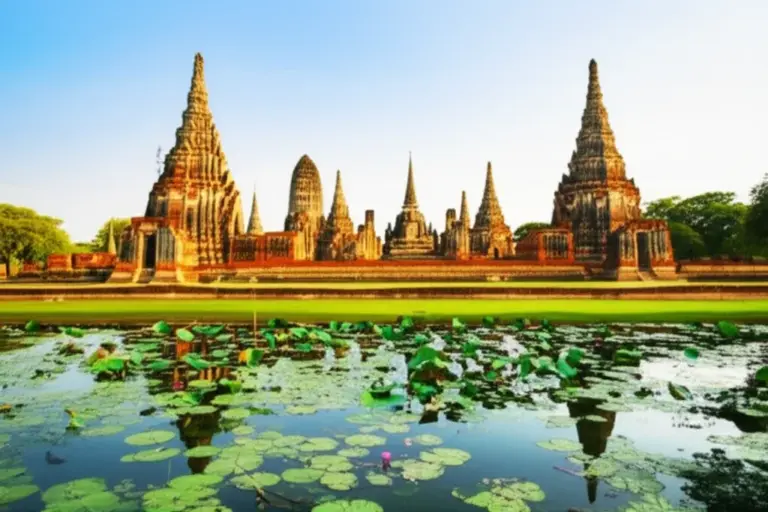
- Wat Mahathat (Sukhothai): The spiritual center of the kingdom, featuring two large standing Buddha images and a central lotus-bud chedi, emblematic of Sukhothai architecture.
- Wat Si Sawai: An older, Khmer-influenced site with three prangs, demonstrating the cultural synthesis occurring during the kingdom’s early days.
- Wat Si Chum: Located in the North Zone, this site houses the massive, awe-inspiring Phra Achana, a seated Buddha image whose sheer scale is breathtaking.
Practical Tips for Exploring Sukhothai
The best way to explore the central zone of Sukhothai is by bicycle. The park is flat, well-maintained, and car-free, offering a truly immersive and peaceful experience. Rentals are readily available near the entrance for a small fee. Ensure you allocate time to see the sunset over the ruins—it is often cited as one of the most magical experiences in Thailand.
Ayutthaya vs. Sukhothai: Choosing Your Historical Journey
Many visitors to Thailand’s Ancient Capitals only have time for one. While both are critical UNESCO sites, their physical characteristics and atmosphere differ significantly.
Comparison Table: Layout, Scale, and Ambiance
| Feature | Ayutthaya (1350–1767) | Sukhothai (1238–1438) |
|---|---|---|
| Atmosphere & Layout | Sprawling ruins interspersed with the modern city; feels grander and more spread out. | Contained within a large, peaceful park; feels pristine and highly concentrated. |
| Architecture Style | Massive, imposing stone structures; towering Khmer-style prangs; heavy foreign influence. | Elegant, delicate stucco work; signature lotus-bud chedis; classic Thai artistic style. |
| Accessibility | Easy day trip from Bangkok. Requires motorized transport (tuk-tuk) to see all key sites. | Requires domestic travel (flight or overnight bus). Ideal for cycling. |
| Best For… | Travelers short on time who want a taste of ancient Siamese power. | Travelers seeking tranquility, ideal photography, and a deep appreciation for early Thai art. |
Planning Your Trip to Thailand’s Ancient Capitals
To truly appreciate the scope of Thai history, visiting both Ayutthaya and Sukhothai is recommended. If time allows, consider linking them in a historical loop, perhaps starting with Ayutthaya from Bangkok and then traveling north to Sukhothai.
Remember that these are sacred religious sites. Always dress respectfully, covering shoulders and knees when entering active temples, and show reverence to the Buddha images. Both parks charge a small entry fee per zone, which contributes to their ongoing preservation as invaluable components of Thailand’s Ancient Capitals.
คำถามที่พบบ่อย (FAQ)
How much time is needed to explore Ayutthaya and Sukhothai Historical Parks?
For Ayutthaya, a full day (8-10 hours) is recommended, especially if traveling from Bangkok, as the sites are spread out. For Sukhothai, one full day is usually sufficient to cover the main central zone and the key North/West zones, particularly if you are cycling.
What is the best way to travel between Ayutthaya and Sukhothai?
The most direct and comfortable way is usually an overnight bus or a daytime bus, which takes approximately 6 to 7 hours. There are no direct train routes between the two. Alternatively, you can fly from Bangkok to Sukhothai (THS), making Ayutthaya a stopover on the train line north of Bangkok.
Is it better to visit Ayutthaya or Sukhothai first?
Historically, Sukhothai predates Ayutthaya, so visiting Sukhothai first offers a chronological perspective on the development of Thai art and governance. Logistically, however, most travelers visit Ayutthaya first due to its easy accessibility from Bangkok, often as a day trip before heading further north.
Are there entrance fees for the Historical Parks?
Yes, both parks operate on a zonal fee system. In Ayutthaya, most key temples charge 50 THB per site. In Sukhothai, the central zone charges 100 THB, and the peripheral zones (North, South, East, West) also charge separate fees. Combination passes are sometimes available but are not always cost-effective unless you plan to see every zone.
References
UNESCO World Heritage Centre: Historic City of Ayutthaya
UNESCO World Heritage Centre: Historic Town of Sukhothai and Associated Historic Towns
- Why Ayutthaya and Sukhothai Matter: History, UNESCO Status, and What to Expect When Visiting Ancient Capitals
- Planning Your Trip: Best Times to Visit, How to Get There, Transportation Between Ayutthaya and Sukhothai, and Suggested Itineraries
- Top Sites and Hidden Gems: Must-See Temples, Historical Park Highlights, Local Museums, and Photogenic Ruins in Ayutthaya and Sukhothai