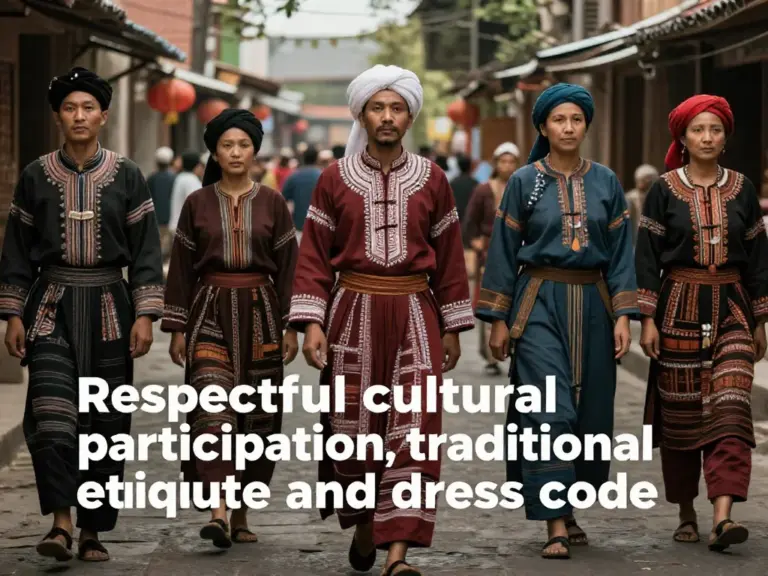
How to Participate Respectfully: Etiquette, Dress Code, and Local Customs
Traveling to the Land of Smiles is an enriching experience, but it requires a mindful approach to local traditions. Understanding How to Participate Respectfully: Etiquette, Dress Code, and Local Customs is not just about avoiding faux pas; it is about showing genuine respect to the hospitable Thai people. By adhering to these cultural norms, you ensure a smoother, more meaningful journey while preserving the dignity of the places you visit.
Understanding Thai Cultural Values
Thai culture is deeply rooted in Buddhism and a profound respect for hierarchy and social harmony. Concepts like ‘Sanuk’ (fun) and ‘Mai Pen Rai’ (no worries) are famous, but they exist alongside a strict code of conduct regarding the head and the feet. The head is considered the most sacred part of the body, while the feet are seen as the lowest, dirtiest part. Never touch a Thai person’s head, and avoid pointing your feet at people or sacred statues.
Dress Code: Respecting Sacred Spaces
When visiting temples (Wats) or royal palaces, the dress code is strictly enforced. Modesty is key. Both men and women should ensure their shoulders and knees are covered. Avoid tank tops, sleeveless shirts, or short shorts. Carrying a lightweight sarong or scarf is an excellent travel hack to cover up quickly when entering holy grounds.
Social Etiquette and Interactions
| Situation | Recommended Action |
|---|---|
| Greeting | Perform the ‘Wai’ (pressing palms together near the chest). |
| Public Displays | Keep physical affection (kissing/hugging) for private spaces. |
| Monks | Always show deference; women should avoid physical contact. |
The Wai is the standard Thai greeting. While tourists are not expected to master the nuance of the Wai immediately, a polite nod and a smile are always appreciated. Remember to maintain a calm demeanor; losing your temper or raising your voice is considered a significant loss of face and is highly counterproductive in Thai society.
General Local Customs
Thailand is a constitutional monarchy, and the Royal Family is held in the highest regard. It is illegal to speak ill of the monarchy. Always treat images of the King and the Royal Family with utmost respect. Furthermore, when handling money, try not to step on it, as it bears the image of the King. Being aware of these subtle customs helps you blend in and travel more like a local guest rather than a tourist.