Why choose Khao Lak for beginner surfing in the monsoon season: conditions, crowd levels, and timing for learners
- Why choose Khao Lak for beginner surfing in the monsoon season: conditions, crowd levels, and timing for learners
- Understanding Khao Lak’s Monsoon Surf Season
- Crowd Levels: Your Private Surf Session Awaits
- Optimal Timing: When Exactly Should Beginners Go?
- Essential Gear and Safety Tips for Monsoon Surfing
- Beyond the Waves: Khao Lak’s Monsoon Appeal
- Conclusion: The Verdict on Monsoon Surfing in Khao Lak
- คำถามที่พบบ่อย (FAQ)
- Are there surf schools open in Khao Lak during the monsoon season?
- Is the water cold in Khao Lak during the monsoon?
- How does the rain affect the quality of the waves?
- Is Khao Lak difficult to travel to during the monsoon?
Planning your first surf trip to Thailand? While Phuket often steals the limelight, savvy travelers in the know are increasingly turning their attention north to Khao Lak. The question remains: Why choose Khao Lak for beginner surfing in the monsoon season? The answer lies in a unique combination of consistent, manageable swell, significantly fewer crowds, and a laid-back atmosphere perfect for learning the ropes. This guide breaks down exactly what makes Khao Lak your ideal monsoon surfing destination. This information is crucial for Thailand Tourism enthusiasts seeking off-peak wave action.
Understanding Khao Lak’s Monsoon Surf Season
The Andaman Sea experiences its Southwest Monsoon typically from May through October. For many other Thai destinations, this means flat seas and heavy rain. However, Khao Lak, situated on the western coast of Phang Nga province, catches the prevailing winds and swell differently, creating surprisingly surfable conditions, especially for beginners who need smaller, rolling waves rather than massive barrels.
The Swell Profile: Gentle Giants for Learners
Khao Lak’s primary surf spots, such as Bang Niang and Khuk Khak Beach, are generally protected or oriented in a way that filters the harshest storm energy. This results in:
- Consistent, Smaller Waves: Expect knee-to-chest-high waves most days, which are perfect for practicing pop-ups and gaining confidence without being overwhelmed.
- Longer Rides: The sand bottom provides a forgiving slope, often leading to slower-breaking, peeling waves ideal for longboarding or learning on a soft-top.
- Fewer Hazards: Unlike reef breaks, the sandy bottoms minimize the risk of injury when falling—a huge confidence booster for novices.
Crowd Levels: Your Private Surf Session Awaits
This is arguably the biggest advantage when deciding Why choose Khao Lak for beginner surfing in the monsoon season. During the high season (November–April), popular beaches can become congested. During the monsoon months, however, the beaches are wonderfully deserted.
The Beginner’s Advantage of Low Crowds
For a learner, sharing a small peak with ten experienced surfers is stressful. In Khao Lak during the green season, you often get the entire beach to yourself or share it with just a handful of local instructors. This means more wave priority, less pressure, and more one-on-one time with your instructor.
Comparing Khao Lak to Phuket’s Monsoon Waves
While Kata and Karon in Phuket do pick up swell during the monsoon, they often suffer from strong side-shore winds and messy, choppy conditions that are difficult for beginners to manage. Khao Lak’s geography often provides slightly cleaner, more organized lines when the wind isn’t too strong.
Optimal Timing: When Exactly Should Beginners Go?
Timing within the monsoon window is key to maximizing your learning curve. While surfing is possible from May to October, certain months offer the best balance of rain intensity and wave quality.
The Sweet Spot Months
For the best experience, aim for the shoulder months:
- May & Early June: The monsoon is just setting in. You get the tail-end of the calmer weather but the first consistent pushes of swell.
- Late September & October: The rain often lessens towards the end of the season, but the ocean has built up residual energy, providing fun, manageable waves before the peak season rush begins.
Mid-season (July/August) can bring heavier rainfall, which might lead to more frequent surf school cancellations due to lightning or zero visibility, though the waves are often at their most consistent.
Essential Gear and Safety Tips for Monsoon Surfing
Surfing in the rainy season requires slightly different preparation than the dry season. Expertise in local conditions is vital for safety.
Finding the Right Spot: Bang Niang vs. Khuk Khak
While both beaches work, Bang Niang Beach is often cited as the most reliable beginner spot during the monsoon due to its gentle slope and accessibility. Khuk Khak offers a longer stretch but can sometimes be more exposed to the wind.
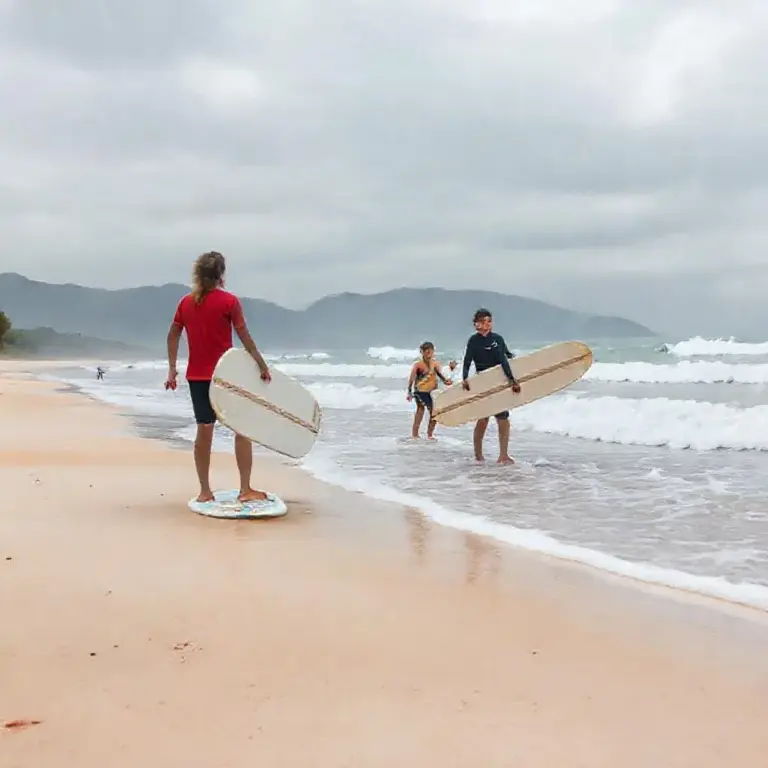
To give you a visual understanding of the surf vibe in the region, here is a look at typical Andaman conditions:
For those traveling around the region, knowing where to find the best local flavor is part of the experience. Khao Lak offers fantastic community vibes away from the main tourist hubs.
Beyond the Waves: Khao Lak’s Monsoon Appeal
Even on days when the surf is too messy, Khao Lak remains a fantastic destination for tourism. The lush jungle is at its greenest, waterfalls are flowing strongly, and prices are significantly lower than in peak season. This makes it an excellent value proposition for budget-conscious travelers.
Proximity to Attractions
- Khao Sok National Park: Only a short trip away, the jungle is vibrant and boat trips on Cheow Lan Lake are spectacular during the rainy season.
- Similan Islands Access: While the Similan Islands National Park is closed during the monsoon (usually May to mid-October), the surrounding area remains open for relaxation.
- Authentic Dining: Enjoy local Thai cuisine without the tourist rush at beachfront restaurants.
Conclusion: The Verdict on Monsoon Surfing in Khao Lak
When weighing up the options, the answer to Why choose Khao Lak for beginner surfing in the monsoon season becomes clear. It offers the perfect trifecta for the novice surfer: manageable waves, virtually zero crowds, and a lower cost of travel. If your goal is to build foundational skills without the stress of overcrowded breaks or overly powerful waves, booking your trip between May and October, focusing on the shoulder months, is highly recommended for an authentic and rewarding Thailand Tourism experience.
คำถามที่พบบ่อย (FAQ)
References
- Surfing in Khao Lak: Beginner Lesson Packages During Monsoon Season — Where to Learn, What to Expect, Safety Tips, and Best Deals
- What beginner lesson packages include: lesson structure, equipment, instructor qualifications, and tailored programs for monsoon conditions
- Safety and weather considerations during monsoon surfing: swell behavior, rip currents, wetsuits, cancellation policies, and emergency procedures