Low-Impact Camping Techniques: Leave No Trace Gear, Campsite Selection, and Safe Food Storage in Tropical Forests
- Low-Impact Camping Techniques: Leave No Trace Gear, Campsite Selection, and Safe Food Storage in Tropical Forests
- Understanding the Leave No Trace Principles in Tropical Ecosystems
- Campsite Selection: Protecting Fragile Tropical Soils
- Safe Food Storage: Deterring Bears, Monkeys, and Pests
- Respecting Wildlife and Water Sources
- คำถามที่พบบ่อย (FAQ)
- 1. Do I need to bring my own toilet paper out of the jungle?
- 2. Is building a small campfire ever allowed in Thai forests?
- 3. How do I minimize the disturbance when choosing a tent site?
- 4. What is the best way to dispose of cooking grease/oil?
- 5. Are there specific concerns about insects or leeches?
- References
Welcome, conscious traveler! Exploring the lush, biodiverse jungles of Thailand is an unparalleled experience. However, the very beauty that draws us in—the ancient rainforests, the remote waterfalls, the vibrant wildlife—is incredibly fragile. To ensure these natural treasures remain pristine for future generations of Thailand Tourism enthusiasts, adopting rigorous Low-Impact Camping Techniques is not optional; it is essential. This guide provides expert advice on gear selection, responsible campsite placement, and crucial safety measures like proper food storage in humid tropical environments.
Understanding the Leave No Trace Principles in Tropical Ecosystems
The globally recognized Seven Principles of Leave No Trace (LNT) form the bedrock of responsible outdoor ethics. While applicable everywhere, they demand specific adaptations when dealing with the high moisture, rapid decomposition, and sensitive soil structures found in Thai tropical forests (like Khao Sok or Doi Inthanon). We must move beyond simple trash packing to actively minimize our footprint.
Gear Selection for Minimal Impact
Your gear choices directly affect your impact. In the tropics, lightweight, quick-drying, and durable materials are key. Avoid heavy, non-biodegradable items wherever possible.
- Tents & Shelters: Opt for lightweight trekking poles instead of heavy freestanding tents, or use sturdy tarps. Always use a ground cloth (footprint) to protect the tent floor *and* the soil underneath from condensation and abrasion.
- Cooking: Use a small, efficient stove (like canister stoves) rather than building open fires. Fires in damp tropical forests are difficult to ignite, leave long-lasting scars, and can spread unexpectedly.
- Hygiene Products: Use only biodegradable soaps, sparingly, and at least 200 feet (about 70 steps) away from any water source to prevent contamination of streams vital to local ecosystems.
Campsite Selection: Protecting Fragile Tropical Soils
Choosing where to pitch your shelter is arguably the most critical application of Low-Impact Camping Techniques. Tropical forest floors often have thin topsoil layers that are easily compacted, leading to erosion and hindering plant regrowth for years.
The 200-Foot Rule and Durable Surfaces
Always camp at least 200 feet (70 meters) away from trails, water sources, and wildlife corridors. In Thailand, this often means avoiding low-lying areas near rivers or streams, which are prone to flash flooding and are sensitive riparian zones.
Identifying Durable Surfaces
- Established Sites: Whenever possible, use existing, designated campsites. These areas are already impacted and can handle further, limited use.
- Rock or Sand: If establishing a new site is absolutely necessary (and permitted), choose bare rock, gravel, or sand areas.
- Avoid Moss and Roots: Never camp on vibrant green moss beds or directly on top of large surface roots, as these indicate a fragile, shallow ecosystem.
When pitching your tent, spread your weight. If you must set up on vegetation, use a lightweight tarp underneath your tent to distribute the load and prevent crushing the undergrowth.
Waste Management: Digging Catholes Responsibly
Human waste must be managed correctly. In tropical environments, decomposition is faster, but proper disposal is still mandatory to protect water quality and prevent disease transmission. Dig catholes 6 to 8 inches deep and at least 200 feet from water, camp, and trails. Cover thoroughly upon completion.
Safe Food Storage: Deterring Bears, Monkeys, and Pests
Food storage in Thai forests requires vigilance. While large predators are rare, macaques, wild pigs, and monitor lizards are highly intelligent and persistent scavengers. Improper food storage leads to habituation, which is dangerous for both wildlife and future campers.
This is a crucial element of successful Low-Impact Camping Techniques; never feed wildlife, intentionally or accidentally.
The Bear Bagging Technique: Tropical Adaptation
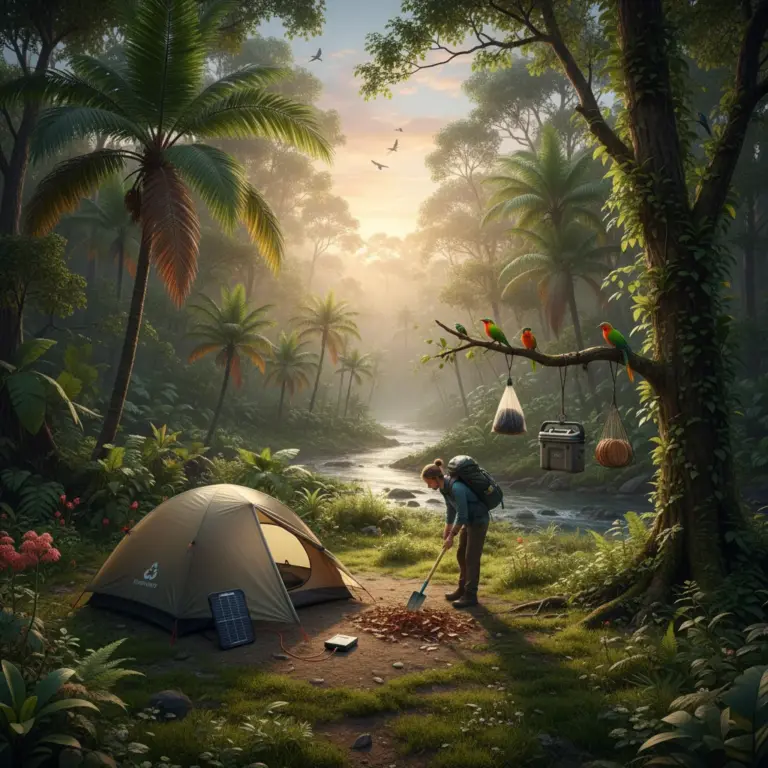
While traditional bear canisters are heavy and often unnecessary, the ‘PCT Method’ (hanging food) is highly recommended, though tree branches in the tropics can be slick or brittle. Use a durable sack and strong cord:
- Find a sturdy branch at least 15 feet high.
- Throw your line over the branch.
- Securely hoist your food bag at least 10–12 feet off the ground.
- Ensure the bag hangs at least 4 feet horizontally away from the main tree trunk.
Managing Odors and Grey Water
All scented items—toothpaste, bug spray, trash, and cooking pots—must be treated as food and stored securely with your main food cache. Grey water (water used for washing dishes) should be strained to remove food particles (pack these out) and dispersed widely, far from camp and water sources, using a fine spray to mimic natural runoff.
Respecting Wildlife and Water Sources
Thailand’s rainforests host incredible biodiversity. Your presence must be unobtrusive. Stick to established trails to prevent trampling sensitive flora and disturbing animal habitats. Never approach, feed, or touch any wildlife, no matter how docile they appear.
When purifying water, remember that boiling is the most reliable method in tropical regions where chemical treatments might interact unpredictably with unique mineral content. Always carry purification tablets as a backup, but prioritize filtration followed by boiling for maximum safety.
คำถามที่พบบ่อย (FAQ)
Here are answers to common questions regarding responsible trekking in Thailand.
1. Do I need to bring my own toilet paper out of the jungle?
Yes. All used toilet paper must be packed out in a sealed plastic bag (a Ziploc or dedicated WAG bag). Do not burn it, bury it, or leave it exposed, as tropical decomposition rates are misleadingly slow for paper products in deep forest settings.
2. Is building a small campfire ever allowed in Thai forests?
Generally, no. Open fires are strongly discouraged in humid tropical forests due to the risk of ground fires smoldering unseen beneath the leaf litter and the difficulty of fully extinguishing them. Always use a lightweight stove for cooking.
3. How do I minimize the disturbance when choosing a tent site?
Minimize disturbance by selecting sites that are already bare (rock, established camp areas). If setting up on vegetation, use a footprint and ensure you are far from streams. Never cut live vegetation for shelter building or firewood.
4. What is the best way to dispose of cooking grease/oil?
Scrape all solid food residue into your trash bag to pack out. Pour liquid grease or oil (once solidified) into a small, sealed container and pack it out. Never pour grease onto the ground, as it attracts insects and animals and contaminates the soil.
5. Are there specific concerns about insects or leeches?
Absolutely. While not directly related to LNT techniques, insect repellent is vital for personal safety. Use repellents responsibly, applying them to clothing rather than directly onto sensitive vegetation near your camp. Check thoroughly for ticks and leeches before entering your tent.
References
- Leave No Trace Center for Outdoor Ethics: The Seven Principles
- Thailand Tourism Board: Guidelines for Ecotourism
- Nakhon Si Thammarat Headwater National Parks: Complete Leave No Trace Guide for Responsible Trekking and Camping
- Planning Your Trip: Best Seasons, Access Points, Permits, and Local Regulations for Nakhon Si Thammarat headwaters
- On-Trail Practices: How to Hike Sustainably — Trail Etiquette, Waste Management, and Minimizing Campfire Impact