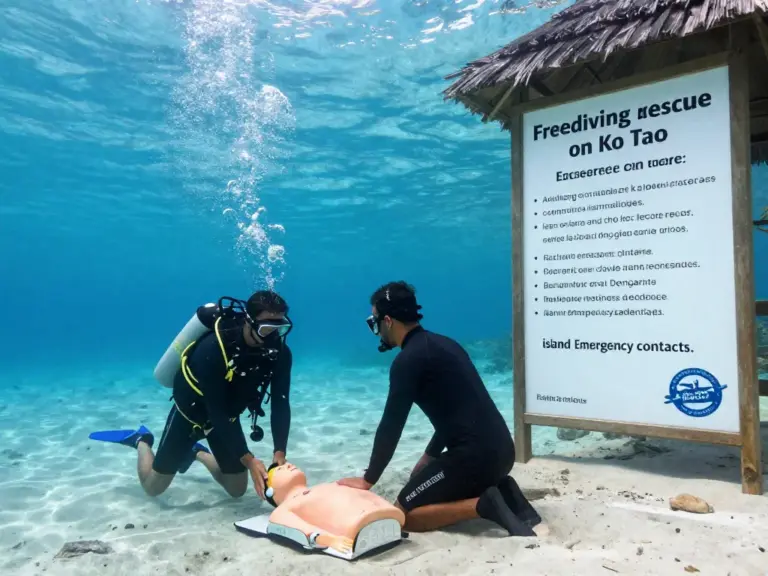
Rescue Skills and Buddy Procedures for Freediving Level 1 — recognizing distress, surface and submerged rescues, emergency response protocol, and local emergency contacts on Ko Tao
- Rescue Skills and Buddy Procedures for Freediving Level 1 — recognizing distress, surface and submerged rescues, emergency response protocol, and local emergency contacts on Ko Tao
Freediving is an exhilarating way to explore the underwater world of Thailand, particularly around the crystal-clear waters of Ko Tao. However, the beauty of the sport comes with inherent risks that require disciplined safety measures. For those undertaking a Level 1 course, mastering Rescue Skills and Buddy Procedures for Freediving Level 1 is not just a requirement for certification—it is a vital set of skills that ensures every dive remains safe for you and your partner. This guide delves into the essential safety protocols every beginner must know.
Recognizing Signs of Distress
Before a rescue is even necessary, a vigilant buddy must be able to recognize the early signs of distress. In freediving, distress often manifests as Loss of Motor Control (LMC) or a Blackout (BO). LMC, often called ‘samba,’ occurs when a diver’s brain is deprived of oxygen, leading to jerky movements or an inability to keep the airway above water upon surfacing. Key indicators include wide eyes, blue lips (cyanosis), and disorganized breathing patterns. Recognizing these signs early allows the buddy to intervene before the situation escalates into a full submerged blackout.
Surface Rescue Procedures
When a diver surfaces and shows signs of LMC, the buddy’s role is to provide physical support. The primary goal is to keep the diver’s airway (mouth and nose) clear of the water. You should support the diver by the armpits or the back of the neck, ensuring their head stays upright. Encourage them with calm, clear instructions: ‘Breathe, you are okay, keep breathing.’ Do not let them submerge their face again until they have fully recovered and regained conscious control over their motor functions.
Submerged Rescue: The Blackout Scenario
A submerged rescue is the most critical skill in Rescue Skills and Buddy Procedures for Freediving Level 1. If a diver loses consciousness underwater, the buddy must act swiftly. The ‘Reach, Secure, and Surface’ protocol is used. You must dive down, grab the diver (usually by the chin or under the arm), and bring them to the surface. It is essential to keep their airway closed during the ascent to prevent water from entering the lungs. Once at the surface, remove the diver’s mask and begin the ‘Blow, Tap, Talk’ (BTT) sequence: Blow across the eyes/nose to stimulate the mammalian dive reflex, tap the cheek gently, and talk to them to encourage a breath.
Emergency Response Protocol on the Boat or Shore
Once the diver is conscious or if they remain unresponsive, the emergency response protocol shifts to medical management. If the diver does not regain consciousness after the BTT sequence, you must immediately call for help and begin rescue breaths or CPR if necessary. On a dive boat in Ko Tao, the crew is trained to assist with oxygen administration. Ensure the diver is kept warm and monitored for secondary drowning symptoms, even if they appear to have recovered fully.
| Action | Description | Priority |
|---|---|---|
| Airway Protection | Keep mouth/nose above water | High |
| Blow-Tap-Talk | Stimulate breathing at surface | High |
| Oxygen Therapy | Administer 100% medical oxygen | Medium |
| Evacuation | Transport to nearest clinic | Critical |
Local Emergency Contacts on Ko Tao
Knowing who to call is part of your pre-dive planning. Ko Tao has several medical clinics equipped to handle diving emergencies and can coordinate transfers to the mainland (Chumphon or Surat Thani) or Koh Samui for hyperbaric treatment if required.
- Koh Tao Rescue: +66 (0) 87 900 8598
- Thai International Hospital (Ko Tao Branch): +66 (0) 77 456 476
- Emergency Services (General): 191 or 1669
คำถามที่พบบ่อย (FAQ)
What is the most important rule in freediving?
The most important rule is to never dive alone. Always have a trained buddy watching you from the surface while you are underwater and for at least 30 seconds after you surface.
How do I recognize a blackout underwater?
Signs include a sudden change in swimming rhythm, the release of bubbles (loss of airway control), or the diver becoming limp. A buddy should always be within reach to intervene immediately.
What should I do if my buddy has an LMC on the surface?
Support them to keep their head above water, remove their mask, and provide vocal encouragement to breathe until they regain full control of their movements.
Are there hyperbaric chambers on Ko Tao?
While Ko Tao has excellent medical clinics, the primary hyperbaric chambers for the region are located on nearby Koh Samui. Local clinics will coordinate fast-boat transfers in case of decompression illness.
References
- AIDA International – Freediving Safety Standards
- PADI Freediver Course Safety Protocols
- Divers Alert Network (DAN) – Breath-hold Diving Safety
- Freediving Level 1 on Ko Tao: Essential Equalization, Rescue, and Safety Guide for Beginners and Instructors
- What is Freediving Level 1 on Ko Tao and who should take this course? — course overview, certification goals, prerequisites, and expected outcomes
- Mastering Equalization Techniques for Shallow Water Freediving — step-by-step methods (Frenzel, Valsalva, hands-free), common problems, and exercises to practice on Ko Tao