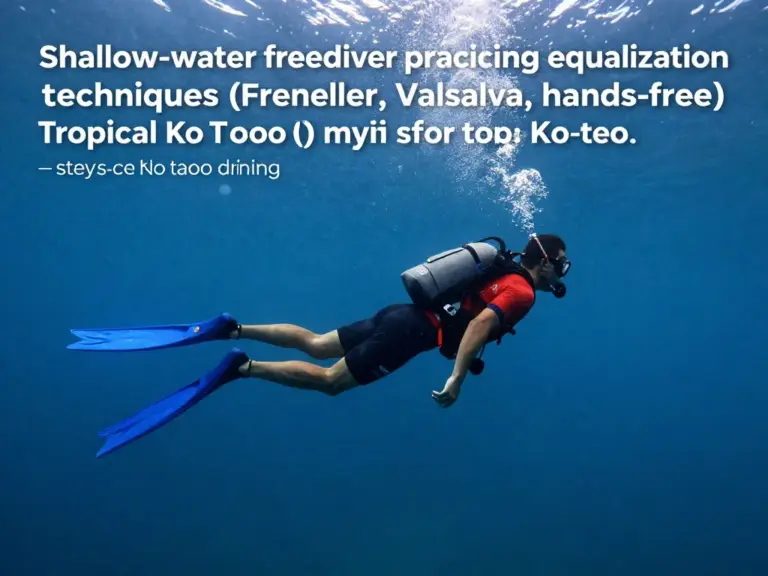
Mastering Equalization Techniques for Shallow Water Freediving — step-by-step methods (Frenzel, Valsalva, hands-free), common problems, and exercises to practice on Ko Tao
- Mastering Equalization Techniques for Shallow Water Freediving — step-by-step methods (Frenzel, Valsalva, hands-free), common problems, and exercises to practice on Ko Tao
Freediving is an exhilarating journey into the blue, but the gateway to the deep is Mastering Equalization Techniques for Shallow Water Freediving. Whether you are gliding over the vibrant reefs of Ko Tao or exploring a local quarry, the ability to equalize pressure in your ears is the most critical skill for safety and enjoyment. In this guide, we will break down the mechanics of the Valsalva, Frenzel, and Hands-Free methods, helping you overcome common hurdles and providing a roadmap for practice in Thailand’s diving mecca.
Understanding the Valsalva Maneuver
The Valsalva maneuver is often the first technique beginners learn. It involves pinching your nose and exhaling against your closed nostrils using your diaphragm and abdominal muscles. This increases pressure in the chest, forcing air up the Eustachian tubes into the middle ear.
The Gold Standard: The Frenzel Technique
For those serious about Mastering Equalization Techniques for Shallow Water Freediving, the Frenzel technique is essential. Unlike Valsalva, Frenzel uses the tongue as a piston to compress air in the back of the throat, driving it into the ears without involving the lungs.
- Pinch your nose shut.
- Fill your mouth with a small amount of air.
- Close the glottis (the back of your throat).
- Flatten the back of your tongue against the roof of your mouth to push air upward.
The Holy Grail: Hands-Free (BTV) Equalization
Voluntary Tubal Opening (BTV) or hands-free equalization is the most advanced method. It involves using the muscles surrounding the Eustachian tubes to pull them open, similar to what happens when you yawn or swallow. This technique is incredibly efficient and allows for a streamlined descent without ever touching your nose.
Common Equalization Problems and Solutions
Many divers struggle with ‘sticky’ ears or congestion. If you find yourself unable to equalize, never force it. This can lead to barotrauma. Common issues include late equalization (waiting until you feel pain) and head-down positioning, which causes blood to pool in the sinuses, making the Eustachian tubes narrower.
| Problem | Solution |
|---|---|
| Ear Pain | Stop descent, ascend slightly, and try again gently. |
| Congestion | Stay hydrated and avoid dairy or inflammatory foods before diving. |
| One-sided failure | Tilt your head to stretch the neck on the blocked side. |
Practical Exercises to Practice on Ko Tao
Ko Tao, Thailand, is the perfect classroom for mastering these skills. The island offers calm, shallow bays like Mango Bay or Aow Leuk, where you can practice without the stress of depth.
- Dry Practice: Use an Otovent balloon to visualize your tongue movements and pressure control.
- Buoyancy Control: Practice neutral buoyancy at 5 meters to focus solely on the sensation of your Eustachian tubes opening.
- Slow Descents: Use the mooring lines at Sail Rock to descend slowly, equalizing every half-meter.
คำถามที่พบบ่อย (FAQ)
What is the best technique for beginners?
Can I dive if I have a cold?
Why is Ko Tao good for practicing equalization?
How often should I equalize?
References
- Freediving Level 1 on Ko Tao: Essential Equalization, Rescue, and Safety Guide for Beginners and Instructors
- What is Freediving Level 1 on Ko Tao and who should take this course? — course overview, certification goals, prerequisites, and expected outcomes
- Rescue Skills and Buddy Procedures for Freediving Level 1 — recognizing distress, surface and submerged rescues, emergency response protocol, and local emergency contacts on Ko Tao