Thailand No-Fly Zones and Airspace Restrictions: Identifying Restricted Areas, Temporary Flight Restrictions, and How to Check Real-Time Maps
- Thailand No-Fly Zones and Airspace Restrictions: Identifying Restricted Areas, Temporary Flight Restrictions, and How to Check Real-Time Maps
Exploring the stunning landscapes of the Land of Smiles from the air is a dream for many travelers and content creators. However, understanding Thailand No-Fly Zones and Airspace Restrictions is crucial for ensuring safety and legal compliance. Thailand maintains strict aviation laws governed by the Civil Aviation Authority of Thailand (CAAT). Whether you are a professional drone pilot or a hobbyist, knowing where you can and cannot fly is the first step toward a successful aerial adventure .
Understanding Thailand Airspace Classifications
Thailand’s airspace is divided into various categories to manage the safety of commercial flights, military operations, and VIP movements. For the general public and drone operators, the most important areas to recognize are Restricted Areas, Prohibited Areas, and Danger Areas. Prohibited areas (indicated by a ‘P’ on aviation charts) are strictly off-limits, often covering royal palaces or high-security government installations. Restricted areas (‘R’) may be accessible only with specific permits or during certain times, while Danger areas (‘D’) alert pilots to potential hazards like military artillery practice.
Identifying Permanent No-Fly Zones in Thailand
Several permanent restrictions exist across the country that every visitor should be aware of. These include:
- Royal Palaces: Flying over or near any Royal residence is strictly prohibited and can lead to severe legal consequences.
- Government Buildings: Key administrative centers in Bangkok and provincial capitals are protected airspace.
- Military Bases: All military installations are sensitive zones.
- National Parks: While beautiful, flying drones in National Parks requires a specific permit from the Department of National Parks, Wildlife and Plant Conservation (DNP).
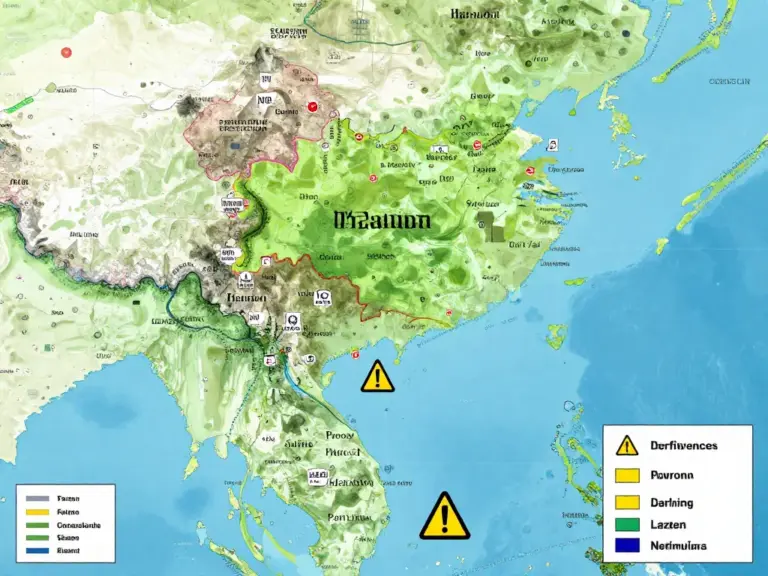
When planning your trip, it is essential to cross-reference your destination with official CAAT maps to avoid accidental trespassing into these zones.
Temporary Flight Restrictions (TFR)
Temporary Flight Restrictions (TFRs) are short-term limitations on airspace. In Thailand, these are frequently issued for special events, such as royal ceremonies, major sporting events, or during state visits by foreign dignitaries. TFRs can be announced with very little notice. Failing to check for active TFRs can result in your equipment being confiscated or heavy fines. These restrictions are usually published via NOTAMs (Notices to Airmen), which are accessible through official aviation portals.
How to Check Real-Time Maps and Permits
The most reliable way to stay updated on Thailand No-Fly Zones and Airspace Restrictions is to use official digital tools. The CAAT provides a web-based platform and resources for drone registration and flight permission. Additionally, several third-party apps like ‘AirMap’ or ‘DroneDeploy’ provide visual representations of restricted areas, though the CAAT’s official announcements remain the final authority.
| Zone Type | Description | Permit Required? |
|---|---|---|
| Prohibited (P) | Royal Palaces, Security Zones | Never Allowed |
| Restricted (R) | Military Zones, High-Density Areas | Yes (Special Case) |
| National Parks | Conservation Areas | Yes (DNP Permit) |
| Airport Buffer | 9km radius from runways | Yes (CAAT + Airport) |
Before taking off, always perform a final check of the local NOTAMs. If you are in Bangkok, the restrictions are significantly more complex than in rural provinces like Kanchanaburi or Nan.
Summary of Drone Laws for Tourists
To legally fly a drone in Thailand, you must register your device with both the CAAT and the National Broadcasting and Telecommunications Commission (NBTC). You must also possess valid drone insurance with a minimum coverage of 1 million THB. Without these documents, you are technically flying illegally, regardless of whether you are in a No-Fly Zone or not.
คำถามที่พบบ่อย (FAQ)
Can I fly a drone in Bangkok?
Most of Bangkok is covered by restricted airspace due to the proximity of airports (Don Mueang and Suvarnabhumi), royal palaces, and government buildings. Flying in Bangkok is highly restricted and usually requires specific coordination with the CAAT.
How far from an airport must I stay?
According to CAAT regulations, you must stay at least 9 kilometers (approx. 5 nautical miles) away from any airport or temporary airfield unless you have explicit written permission from the airport authority.
Do I need a permit for every flight?
If you are flying in a restricted area or a National Park, yes. For general ‘open’ areas, you do not need a per-flight permit, but your drone must be registered, and you must follow all standard safety rules (e.g., staying below 90 meters altitude).
What is the penalty for flying in a No-Fly Zone?
Violators can face imprisonment for up to 1 year, a fine of up to 40,000 THB, or both. Authorities are very strict about unauthorized flights near sensitive areas.
References
- The Civil Aviation Authority of Thailand (CAAT) Official Website
- National Broadcasting and Telecommunications Commission (NBTC)
- Department of National Parks, Wildlife and Plant Conservation
- Thailand Drone Rules: Complete Guide to Registration, Insurance, and No-Fly Zones for Safe & Legal Flying
- How to Register Your Drone in Thailand: Step-by-Step Process, Required Documents, and Fees for Recreational and Commercial Pilots
- Understanding Mandatory Drone Insurance in Thailand: Coverage Types, Policy Requirements, and How to Choose the Right Plan