Cashless in Thailand: How to Use QR PromptPay, Cards, and ATMs Safely and Easily as a Visitor
Thailand has undergone a massive digital transformation over the last few years. While the image of bustling street markets often brings to mind stacks of crumpled Thai Baht notes, the reality is that Cashless in Thailand is now the preferred way of life for locals and savvy travelers alike. From high-end malls in Bangkok to remote fruit stalls in Chiang Mai, the blue and purple ‘PromptPay’ QR codes are ubiquitous. In this guide, we will explore how you can navigate the Thai financial landscape safely and efficiently.
Understanding the QR PromptPay Revolution
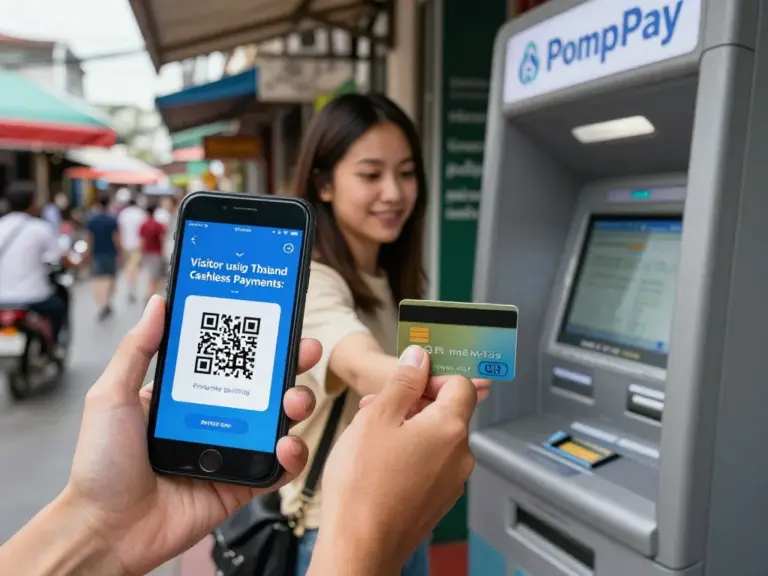
The backbone of Cashless in Thailand is PromptPay. It is a national interbank payment system that allows users to transfer money using a mobile phone number or by scanning a QR code. For visitors, this can be slightly tricky as it usually requires a local bank account. However, there are now cross-border QR payment agreements between Thailand and several countries including Singapore, Malaysia, Indonesia, Cambodia, and Vietnam. If your home bank supports these agreements, you can simply scan a Thai QR code and pay directly from your home currency account.
Using Credit and Debit Cards Effectively
While small vendors prefer QR codes, major establishments like hotels, department stores, and upscale restaurants widely accept Visa and Mastercard. American Express is less common but accepted in international hotel chains. When using your card, always choose to be charged in Thai Baht (THB) rather than your home currency. This avoids ‘Dynamic Currency Conversion’ (DCC), which usually carries a hidden markup of 3% to 5%.
| Payment Method | Best For | Acceptance Level |
|---|---|---|
| QR PromptPay | Street food, markets, small shops | Very High |
| Credit/Debit Card | Malls, Hotels, Supermarkets | High |
| Cash (THB) | Taxis (older), remote areas | Universal |
Even if you aim for a Cashless in Thailand experience, you might still need some physical cash for emergencies or specific local experiences. Thai ATMs are everywhere, but they come with a catch: a standard withdrawal fee of 220 THB (approx. $6-7 USD) per transaction for foreign cards. To minimize costs, withdraw the maximum amount allowed (usually 20,000 to 30,000 THB) in one go to consolidate the fee. Always use ATMs attached to a physical bank branch during business hours to ensure help is available if the machine retains your card.
Digital Wallets: TrueMoney and GrabPay
For many visitors, downloading the TrueMoney Wallet app is a game-changer. You can top it up at any 7-Eleven store and use it to pay at thousands of locations. Similarly, the Grab app (Thailand’s version of Uber) allows you to link your credit card to pay for rides and food deliveries seamlessly, further reducing the need to handle physical cash.
Safety Best Practices for Digital Payments
Staying safe while going Cashless in Thailand is straightforward if you follow these rules:
1. Enable Push Notifications: Ensure your banking app sends an alert for every transaction.
2. Use a VPN: When checking bank balances on public Wi-Fi in hotels or cafes, always use a secure VPN.
3. Keep a Backup: Never rely on just one card. Carry at least two cards from different providers and keep them in separate places.
4. Notify Your Bank: Before flying to Thailand, inform your bank of your travel dates to prevent your cards from being blocked for ‘suspicious’ foreign activity.
คำถามที่พบบ่อย (FAQ)
Q: Can I use Apple Pay or Google Pay in Thailand?
A: Acceptance is growing in major cities like Bangkok at stores like 7-Eleven and major malls, but it is not as widespread as QR PromptPay or physical card tapping yet.
Q: What is the best way to get Thai Baht without high fees?
A: Use a card like Wise or Charles Schwab that reimburses ATM fees, or bring cash in your home currency and exchange it at ‘SuperRich’ (orange or green) booths for the best rates.
Q: Is it safe to scan any QR code I see?
A: Generally, yes. In Thailand, the QR codes at registers are linked to official merchant accounts. Just ensure the name that pops up on your screen matches the shop name before confirming the payment.
References
Bank of Thailand Official Website
Tourism Authority of Thailand (TAT)
- How Thailand’s Cashless Ecosystem Works: PromptPay, ewallets, card acceptance, and where QR payments fit in
- Preparing Before You Travel: Setting up international cards, using PromptPay (can visitors register?), and e-wallet alternatives
- Paying Like a Local: Step-by-step QR PromptPay payment flow, using cards at shops/restaurants, and tips for tuk-tuks, markets, and street vendors