Bangkok 3-Day Temple Itinerary: Ultimate Guide to See the City’s Must-Visit Wats Efficiently
- Bangkok 3-Day Temple Itinerary: Ultimate Guide to See the City’s Must-Visit Wats Efficiently
- Essential Preparation for Your Temple Tour
- Day 1: The Royal Core – Grand Palace & Iconic Wats
- Day 2: Cultural Depth & Elevated Views
- Day 3: Architectural Beauty and Flexibility
- Navigating Bangkok Temples Efficiently: Pro Tips
- Understanding Temple Etiquette (Crucial for Trustworthiness)
- คำถามที่พบบ่อย (FAQ)
Bangkok, the City of Angels, pulses with vibrant street life, towering skyscrapers, and, most importantly, hundreds of breathtaking Buddhist temples (Wats). Planning which temples to visit can be overwhelming, especially when balancing spiritual exploration with limited vacation time. This comprehensive guide provides the ultimate Bangkok 3-Day Temple Itinerary, designed for the efficient traveler keen on soaking in the history, architecture, and serenity of the city’s most sacred sites without burnout. We focus on logical routing to maximize your sightseeing time.
Essential Preparation for Your Temple Tour
As seasoned travelers to Thailand know, preparation is key to an efficient visit. The sheer scale of the religious complexes demands strategic planning. Before diving into the itinerary, ensure you have the following sorted:
-
Ticket Strategy
The Grand Palace complex often requires the most time and has the highest entry fee. Pre-booking online can sometimes save queue time, though on-site purchase is common.
-
Transportation
The Chao Phraya River Express Boat is your best friend for Day 1. For other days, use BTS Skytrain, MRT subway, or metered taxis/Grab.
-
Timing
Start early! Most major Wats open around 8:30 AM. Beat the intense midday heat and the largest tour groups by arriving right at opening time.
Day 1: The Royal Core – Grand Palace & Iconic Wats
Day one focuses exclusively on the historic Rattanakosin Island area, where Bangkok’s three most famous landmarks are clustered within walking distance of each other. This is the most intense sightseeing day, but its efficiency comes from grouping these essential stops together.
Morning: The Grand Palace & Wat Phra Kaew (Emerald Buddha)
Begin promptly at 8:30 AM. The Grand Palace complex is the spiritual heart of the Thai Kingdom. Wat Phra Kaew, located within the grounds, houses the revered Emerald Buddha—a statue carved from a single block of jade. Allow at least 2.5 to 3 hours here. Remember the strict dress code: long trousers/skirts and shirts with sleeves are mandatory. Photography is forbidden inside the main temple building.
Afternoon: Wat Pho (Reclining Buddha)
A short walk (about 10 minutes) from the Grand Palace gates brings you to Wat Pho. This temple is famed for the massive, 46-meter-long Reclining Buddha, covered in gold leaf. Wat Pho is also considered the birthplace of traditional Thai massage, and you can often book a session here—a perfect way to recharge mid-day. This site is extensive, so budget 1.5 to 2 hours.
Sunset Magic: Wat Arun (Temple of Dawn)
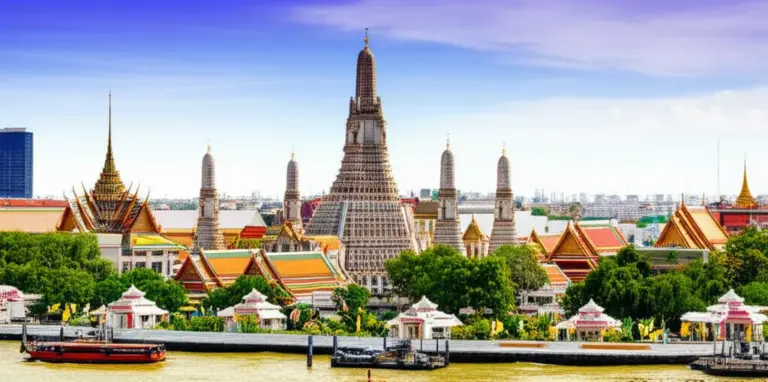
Catch the cross-river ferry (a very cheap, quick ride) from Tha Tien Pier (near Wat Pho) to Wat Arun. This temple’s central prang (spire) is stunningly decorated with colorful porcelain. While beautiful during the day, it truly shines as the sun sets, casting golden light over the Chao Phraya River. It usually closes around 6:00 PM, so time your visit accordingly.
Watch Our Tour Guide: See this itinerary visualized. This video offers excellent on-the-ground context for navigating Day 1.
Day 2: Cultural Depth & Elevated Views
Day two moves away from the immediate riverfront to explore sites that offer different perspectives on Bangkok’s religious history. We focus on accessibility via public transport.
Morning: Wat Saket (The Golden Mount)
Wat Saket, or the Golden Mount, is a man-made hill topped with a gleaming golden chedi. Climbing the 300+ steps is a spiritual journey in itself, offering panoramic views of the old city. It’s less crowded early in the day, making the climb more pleasant. This location provides a fantastic contrast to the flat river temples.
Afternoon: Wat Traimit (Golden Buddha)
Head towards Chinatown (Yaowarat) to visit Wat Traimit. This temple houses the world’s largest solid gold Buddha statue, weighing 5.5 tons. Its history is fascinating, having been hidden under plaster for centuries before its true composition was revealed. This location allows you to transition easily into exploring Bangkok’s famous street food scene for dinner.
Location Snapshot: The core temples visited over the first two days are concentrated in the Old City area.
Day 3: Architectural Beauty and Flexibility
For the final day of your Bangkok 3-Day Temple Itinerary, we offer two excellent, but distinct, paths depending on your energy level and interest in ancient history.
Option A: Wat Benchamabophit (The Marble Temple)
Located near the Dusit Palace, Wat Benchamabophit is renowned for its stunning European-influenced architecture, built primarily from imported Italian Carrara marble. It offers a peaceful respite from the glittering gold found elsewhere. The symmetry and clean lines make it a photographer’s dream, and it’s easily accessible by taxi or bus.
Option B: Day Trip to Ayutthaya (Ancient Capital)
If you are deeply passionate about history, dedicate Day 3 to Ayutthaya, the former capital destroyed by the Burmese in the 18th century. You can hire a private driver or take a train. While this sacrifices time in central Bangkok, it offers a profound look at Thailand’s ancient temple heritage, featuring massive ruins like Wat Mahathat (famous for the Buddha head entwined in tree roots).
Efficiency in Bangkok travel hinges on mastering local transport. For the Day 1 cluster, stick to walking and the river ferry. For Day 2 and 3 locations further afield, utilize the BTS/MRT network whenever possible to bypass notorious traffic jams. Always use the official meter in taxis, or use a ride-hailing app like Grab for transparent pricing. This detailed routing is what makes this Bangkok 3-Day Temple Itinerary truly work.
| Site | Estimated Time | Best Transport |
|---|---|---|
| Grand Palace / Wat Phra Kaew | 3 hours | River Boat (Tha Chang Pier) |
| Wat Pho | 1.5 – 2 hours | Walk |
| Wat Arun | 1 hour | River Ferry (Cross-river) |
| Wat Saket (Golden Mount) | 1.5 hours | Taxi/MRT to Sam Yot |
Understanding Temple Etiquette (Crucial for Trustworthiness)
Respecting local customs is paramount when visiting sacred sites. Showing E-E-A-T in travel advice means prioritizing cultural sensitivity. Failure to adhere to these rules can result in being denied entry, which ruins the itinerary.
- Dress Code: Shoulders and knees must be covered for both men and women. Shoes are removed before entering temple halls.
- Feet Etiquette: Never point your feet at a Buddha image or a monk. Sit with your feet tucked beneath you.
- Monks: Women should never touch a monk or pass an object directly to one. Place the item on a table or pass it via a man.
- Photography: Be respectful. Do not pose inappropriately in front of statues (e.g., selfies showing disrespect). Always ask permission before photographing people.
คำถามที่พบบ่อย (FAQ)
Here are answers to common queries regarding planning your trip.
How much money should I budget for temple entry fees in Bangkok?
The Grand Palace/Wat Phra Kaew is the most expensive at 500 THB. Wat Pho and Wat Arun typically cost 200 THB each. Wat Saket is usually around 50 THB. If you opt for Ayutthaya, budget for transport and multiple site entries there as well. Always carry small denominations of Thai Baht.
Is it possible to see all the major temples in one day?
While technically possible to rush through the Big Three (Grand Palace, Wat Pho, Wat Arun) in one very long day, it is highly discouraged. You will be rushed, hot, and miss the contemplative atmosphere. The recommended Bangkok 3-Day Temple Itinerary allows for a more meaningful experience.
What is the best time of day to visit Wat Arun?
Wat Arun is spectacular both early morning when the light illuminates the porcelain mosaics clearly, and late afternoon/sunset when it glows beautifully across the river. Since Day 1 groups the major sites together, aim to arrive at Wat Arun about 1-2 hours before its scheduled closing time (usually 6:00 PM) to catch the sunset view.
Are there any free temples to visit in Bangkok?
Yes, many smaller Wats do not charge entry fees, though donations are always welcome. For instance, Wat Suthat (near the Giant Swing) often has a lower or non-existent fee compared to the Royal sites. Always check local signage upon arrival.
What should I do if I get overwhelmed by the heat during my itinerary?
If the heat becomes too much, utilize the air-conditioned respite offered by Wat Pho (for a massage) or Wat Traimit (for its museum exhibits). Hydration is critical; purchase bottled water frequently. Consider swapping the afternoon activity for a long, air-conditioned lunch near a BTS station if necessary.
References
Official Grand Palace Information Portal
Tourism Authority of Thailand Official Site
- Best route overview for a 3-day Bangkok temple itinerary: how to plan days by neighborhood and transport
- Day 1: Grand Palace, Wat Phra Kaew and Wat Pho — tickets, opening times, dress code and timing tips
- Day 2: Thonburi canals and Wat Arun, plus nearby lesser-known temples — river transport, photo spots and crowd avoidance