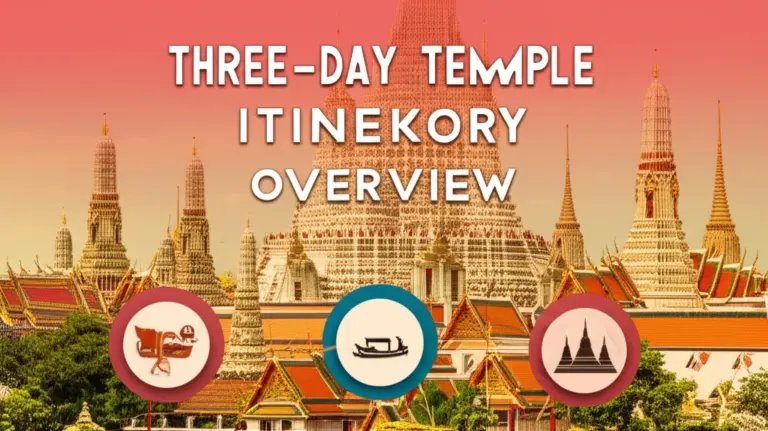
Best route overview for a 3-day Bangkok temple itinerary: how to plan days by neighborhood and transport
- Best route overview for a 3-day Bangkok temple itinerary: how to plan days by neighborhood and transport
- Why Planning Your Bangkok Temple Visits by Neighborhood is Crucial
- Day 1: The Royal Core – Rattanakosin Island (The Big Three)
- Day 2: Riverside Wonders & Local Charm (Thonburi & Beyond)
- Day 3: Modern Meets Mysticism (Hidden Gems & Accessibility)
- Essential Transport Guide for Your Temple Tour
- Bangkok Temple Etiquette: Must-Know Rules
- คำถามที่พบบ่อย (FAQ)
Bangkok, the City of Angels, is renowned for its dazzling array of gilded temples (Wats) that stand as magnificent testaments to Thai history and faith. Planning a visit to these sacred sites can be overwhelming; there are hundreds scattered across the sprawling metropolis. To maximize your time and minimize travel fatigue, the secret lies in strategic grouping. This comprehensive guide outlines the 3-day Bangkok temple itinerary, perfectly segmented by neighborhood and optimized for efficient transport, ensuring you experience the cultural heart of Thailand without feeling rushed.
Why Planning Your Bangkok Temple Visits by Neighborhood is Crucial
Bangkok traffic is legendary, and hopping randomly between temples across the city map is a recipe for spending more time in a taxi than admiring ancient architecture. Successful temple touring requires geographic clustering. By dedicating specific days to specific areas—like the historic Rattanakosin Island or the riverside Thonburi district—you leverage walking distance and efficient river transport, drastically cutting down on wasted transit time. This expert approach guarantees an immersive experience while respecting your precious vacation schedule.
Day 1: The Royal Core – Rattanakosin Island (The Big Three)
Day one focuses entirely on the historical and spiritual epicenter of Bangkok: Rattanakosin Island, often referred to as the Old City. These three major sites are close enough to be completed comfortably in one day, primarily by walking.
Morning: The Grand Palace & Wat Phra Kaew (Emerald Buddha)
Start your journey at the Grand Palace complex, the former residence of the Thai Monarch. This is the most important site in Thailand, housing Wat Phra Kaew, home to the revered Emerald Buddha statue. Arrive right when the gates open (usually 8:30 AM) to beat the intense heat and the largest tour groups. Allow 2.5 to 3 hours here. Remember the strict dress code: long trousers/skirts and covered shoulders are mandatory for everyone.
Midday: Wat Pho (Reclining Buddha) & Thai Massage School
A short, pleasant walk from the Grand Palace brings you to Wat Pho. This temple is famous for the massive, gold-leaf-covered Reclining Buddha. Beyond its impressive size, Wat Pho is considered the birthplace of traditional Thai massage. Consider booking a reputable massage at the school located within the temple grounds for a deeply authentic midday break.
Afternoon/Evening: Wat Arun (Temple of Dawn) via Ferry
From the Tha Tien Pier (near Wat Pho), take the inexpensive cross-river ferry to Wat Arun. The iconic prang (spire) of Wat Arun is breathtaking up close, covered in intricate porcelain mosaics. The best time to visit is late afternoon when the sun begins to illuminate the structure beautifully. This completes the ‘Big Three’ of the central temple circuit.
Day 2: Riverside Wonders & Local Charm (Thonburi & Beyond)
Day two takes you slightly north and into the quieter, historically significant areas outside the immediate core, utilizing the Chao Phraya Express Boat for scenic travel.
Morning: Wat Saket (The Golden Mount)
Head north via taxi or a short boat ride to Wat Saket. This temple sits atop a man-made hill, offering one of the best panoramic views of the surrounding city—a fantastic contrast to the ground-level temples of Day 1. Be prepared to climb about 300 steps, but the view is well worth the effort.
Midday: Wat Kalayanamit & Local Markets
Take a river taxi south towards Thonburi to visit Wat Kalayanamit. This temple houses one of Bangkok’s largest seated Buddha images, Luang Pho To, which is highly respected by local Buddhists. This area offers a glimpse into older, less tourist-centric Bangkok life. Lunch here can be sourced from nearby local eateries.
Afternoon: Wat Ratchabophit (Unique Architecture)
Concluding the day, visit Wat Ratchabophit. This temple is architecturally unique, featuring a blend of Thai and European styles, with a stunning golden chedi surrounded by a cloister lined with ceramic tiles. It offers a fascinating look at King Chulalongkorn’s (Rama V) eclectic taste.
Day 3: Modern Meets Mysticism (Hidden Gems & Accessibility)
Day three focuses on temples accessible via the modern Skytrain (BTS) system or located in distinct commercial areas, allowing for easier navigation for travelers staying outside the Old City.
Morning: Wat Benchamabophit (Marble Temple)
Take the BTS to the Chit Lom or Phloen Chit area and take a short taxi ride to Wat Benchamabophit. Known locally as the Marble Temple, its main hall is constructed from imported Carrara marble from Italy. It is an elegant, serene spot perfect for a quiet morning reflection.
Midday: Wat Traimit (Golden Buddha) & Chinatown Exploration
Travel to the edge of Chinatown (Yaowarat) to see Wat Traimit. This temple houses the world’s largest solid gold Buddha statue, weighing 5.5 tonnes. After viewing the statue, immerse yourself in the vibrant energy and street food scene of nearby Chinatown for lunch.
Afternoon: Optional Temple or Museum Visit
Use the final afternoon for flexibility. You might choose to revisit a favorite spot, or explore a less-visited site like Wat Suthat (famous for its giant swing nearby), or dedicate time to the Bangkok National Museum for deeper historical context.
Essential Transport Guide for Your Temple Tour
Mastering Bangkok transport is key to executing this 3-day Bangkok temple itinerary flawlessly. Here is a summary of the best methods for covering the distances between neighborhoods:
| Transport Mode | Best For | Pros | Cons |
|---|---|---|---|
| Chao Phraya Express Boat | Rattanakosin & Riverside (Day 1 & 2) | Fast, scenic, avoids road traffic. | Limited routes, weather dependent. |
| BTS/MRT | Modern Bangkok (Day 3) | Fastest way to cross the city grid. | Does not reach most major temples directly. |
| Taxis/Grab | Door-to-door service | Convenient for short hops or poor weather. | Subject to severe traffic congestion. |
| Walking | Rattanakosin (Day 1) | Free, allows you to absorb atmosphere. | Hot and humid; distances add up quickly. |
Bangkok Temple Etiquette: Must-Know Rules
Respect is paramount when visiting these active places of worship. Adhering to local customs ensures a positive experience for you and the community. Failure to comply can result in being denied entry.
- Dress Code: Shoulders and knees must be covered. No sleeveless tops, short shorts, or revealing clothing. Carry a light scarf or sarong for quick coverage.
- Footwear: Remove shoes before entering any temple building (Wiharn or Ubosot).
- Offerings: If you wish to make an offering, use the designated donation boxes. Never touch monks.
- Noise Level: Maintain a quiet, respectful volume, especially inside prayer halls.
คำถามที่พบบ่อย (FAQ)
How much does it cost to visit the main temples in Bangkok?
Entry fees vary significantly. The Grand Palace has the highest fee (around 500 THB). Many other significant temples, like Wat Pho and Wat Arun, charge between 100–200 THB. Some smaller, local Wats are free. Always carry small denominations of Thai Baht for entry and small purchases.
Is it better to hire a private driver or use public transport for this itinerary?
For the Day 1 Rattanakosin cluster, walking is superior. For Days 2 and 3, a mix is best: use the BTS/MRT for long distances, the river boat for riverside access, and only use taxis/Grab when public transport routes are inconvenient or the weather is poor. A private driver for all three days is often slower due to traffic.
Can I visit temples in Bangkok on a Sunday?
Yes, you can visit temples any day of the week. However, be aware that markets (like Chatuchak, which is near some northern temples) are busiest on weekends. Weekday mornings are generally the least crowded times for major sites.
What is the absolute best time of day to photograph Wat Arun?
The best lighting for photographing Wat Arun is generally in the late afternoon (around 4 PM to 6 PM) when the sun is low, casting warm light on its intricate porcelain facade. Sunrise is also excellent if you cross the river early.
References
Official Tourism Authority of Thailand Site
Bangkok Metropolitan Administration Official Portal
- Bangkok 3-Day Temple Itinerary: Ultimate Guide to See the City’s Must-Visit Wats Efficiently
- Day 1: Grand Palace, Wat Phra Kaew and Wat Pho — tickets, opening times, dress code and timing tips
- Day 2: Thonburi canals and Wat Arun, plus nearby lesser-known temples — river transport, photo spots and crowd avoidance