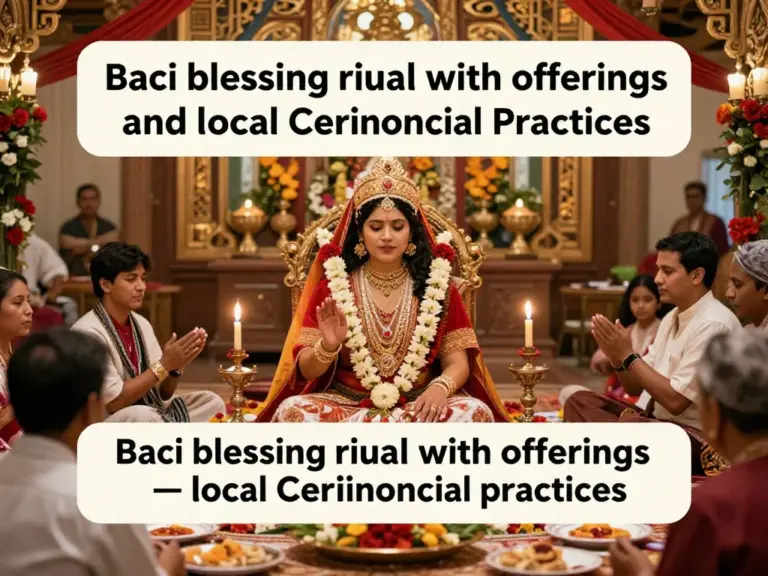
How Baci Blessings Are Performed: Ritual Steps, Offerings, and Local Practices
If you are traveling through the culturally rich regions of Southeast Asia, you may encounter the soul-stirring Baci ceremony. Understanding How Baci Blessings Are Performed is key to appreciating the deep spiritual fabric of Laos and parts of Northeast Thailand. This ancient ritual, often called the ‘Sou Khuan,’ is a profound experience designed to call back the 32 spirits (khuan) that govern the human body, ensuring harmony, health, and good fortune.
The Significance of the Baci Ceremony
The Baci is more than just a ceremony; it is a communal act of love and support. In Lao culture, it is believed that the human body is home to 32 organs, each guarded by a spirit. When someone is stressed, sick, or embarking on a new journey, these spirits are thought to wander away. The ceremony serves to invite these spirits back to the body to restore balance. It is performed for weddings, births, safe travels, or to welcome honored guests.
The Phak Khuan: Central Offerings
At the heart of the ritual sits the Phak Khuan, a beautiful, multi-tiered centerpiece constructed from banana leaves and decorated with marigold flowers. It is essentially an altar. Offerings placed on the Phak Khuan include:
- White Cotton Threads: These are the most critical element, used to bind the spirits to the body.
- Candles and Incense: Symbolizing light and spiritual connection.
- Sticky Rice and Fruits: Traditional food offerings representing abundance.
- Flowers: Often marigolds or local blooms, symbolizing purity.
Ritual Steps: How the Ceremony Unfolds
The ceremony is typically led by a Moh Phon, an elder or spiritual leader known for their wisdom. The ritual follows a specific, rhythmic flow:
- The Calling: The Moh Phon chants prayers in the ancient Pali language, calling the spirits back to the person being blessed.
- The Binding: Participants sit in a circle around the Phak Khuan, holding the white cotton threads that connect to the center. This creates a physical bridge of energy.
- Tying the Threads: Family and friends take turns tying these white cotton strings around the wrists of the recipient. As they tie the knot, they whisper blessings and well-wishes.
- Feasting: Once the blessings are tied, the ceremony concludes with a communal meal, cementing the bonds of the community.
Local Practices and Etiquette
If you are invited to participate, remember that the threads on your wrist should be kept on for at least three days for the blessings to fully take effect. It is considered a gesture of great hospitality and honor to be included in this intimate circle. You do not need to speak the local language to participate; your presence and respectful demeanor are the most important contributions.
คำถามที่พบบ่อย (FAQ)
Q: Can tourists participate in a Baci ceremony?
Yes, tourists are often welcomed with open arms. It is a sign of respect and friendship to be invited to a Baci ceremony, and participating is a deeply memorable cultural experience.
Q: How long should I wear the white thread?
Traditionally, it is recommended to keep the white cotton threads on your wrists for at least three days to ensure the blessings settle and the spirits remain with you.
Q: Is the Baci ceremony religious?
The Baci is a blend of Animist beliefs and Buddhist traditions. While it incorporates Buddhist chanting, its roots lie in the indigenous belief in spirits, making it a unique cultural syncretism.