How do the main components and sequence of a traditional Isaan blessing ceremony (Baci) unfold, and what are the symbolic objects and actions?
- How do the main components and sequence of a traditional Isaan blessing ceremony (Baci) unfold, and what are the symbolic objects and actions?
The Heart of Isaan Culture: Understanding the Baci Ceremony
The Baci ceremony, often referred to as *Su Kwan* (the calling of the soul) in Thai and Lao, is not merely a social gathering but a deeply spiritual and animistic ritual. It is performed to celebrate major life transitions—births, weddings, welcoming honored guests, recovering from illness, or a safe return from a long journey. The fundamental belief behind the traditional Isaan blessing ceremony (Baci) is the concept of the *Khwan* (soul or life force).
According to ancient belief systems prevalent in Northeast Thailand and Laos, a person is composed of 32 vital organs, each guarded by a *Khwan*. When a person undergoes stress, shock, or a major change, some of these 32 souls may wander away, leaving the individual vulnerable to misfortune or illness. The Baci ceremony is the ritualized process of calling these wandering souls back to the body, restoring balance, harmony, and good fortune.
The Components of the ‘Pha Khwan’ (The Soul Tray)
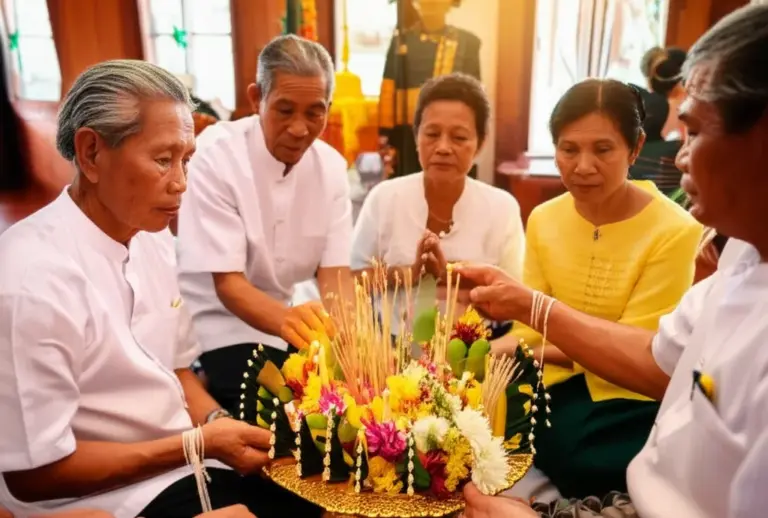
The focal point of the entire ceremony is the *Pha Khwan* (or *Bai Sri* in some contexts), an elaborate, tiered centerpiece crafted from banana leaves, flowers (often marigolds or frangipani), and meticulously arranged offerings. This structure serves as the spiritual altar and the symbolic receptacle for the returning souls.
Symbolic Objects and Their Meaning
| Symbolic Object | Meaning |
|---|---|
| Hard-Boiled Eggs | Represent fertility, life force, and the cyclical nature of life. They are a sign of abundance. |
| Sticky Rice & Sweets | Symbolize prosperity, sustenance, and the sweetness of a happy life. |
| White Cotton Strings | The most crucial element. These strings are pure, representing the thread of life and the binding of the *Khwan* to the body. |
| Flowers (e.g., Marigolds) | Represent beauty, purity, and the flourishing of life. |
| Candles | Lit at the peak of the *Pha Khwan*, symbolizing the light of the dharma and the illumination of the path for the wandering souls. |
The Sequence of the Baci: Unfolding the Ritual
The Baci unfolds in a precise, three-part sequence, guided by a spiritual master, typically a respected elder or a former monk known as the *Mor Pham* (Master of the Ceremony). The atmosphere is one of deep respect, calm, and collective positive intention.
The Invocation (Calling the Khwan)
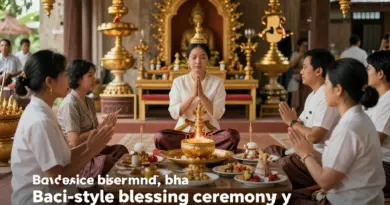
The ceremony begins with all participants sitting around the *Pha Khwan*. The person being blessed (or the central group) is seated closest. The *Mor Pham* begins to chant in a rhythmic, ancient language, reciting the *mantras* that officially invite the *Khwan* back from wherever they may have strayed. During this time, attendees place their hands on the *Pha Khwan* or gently touch the person next to them, creating a human chain to channel the blessings and good energy.
The Chanting and Blessings
The chanting continues, offering prayers for health, longevity, happiness, and prosperity. It’s a moment of deep collective meditation and the setting of powerful intentions. The cotton strings, which radiate out from the *Pha Khwan*, are held by the participants, symbolically connecting everyone to the spiritual core of the ritual.
The Central Action: The Wrist-Tying
Once the chanting concludes, the *Mor Pham* takes the first cotton strings and ties them gently around the wrists of the person being blessed, whispering personalized well-wishes. This action physically binds the *Khwan* back to the body. Following the master, the elders, family members, and finally, all guests take turns tying the strings. Each knot tied is accompanied by a sincere, spoken blessing, such as “May you have good health” or “May your journey be safe.” The white cotton strings must be worn for at least three days to ensure the souls are fully settled.
Participating in the Baci: A Tourist’s Guide to Respect
For tourists visiting Northeast Thailand, being invited to a Baci is a great honor and a unique cultural experience. Here are a few tips for respectful participation:
- Dress Modestly: Wear clean, respectful clothing, ideally covering shoulders and knees, as this is a sacred ritual.
- Maintain Silence: During the chanting, remain quiet, attentive, and respectful. Do not interrupt the *Mor Pham*.
- Accept the String: When the white strings are tied, receive the blessing with both hands open and palms up. Do not flinch or pull your hand away.
- Do Not Remove Immediately: The strings should be left tied for at least three days. When you do remove them, untie them gently; do not cut them, as this is considered cutting the good fortune.
By understanding the deeper meaning of the *Khwan* and the symbolic objects, visitors can appreciate the profound cultural significance of the traditional Isaan blessing ceremony (Baci). It is a beautiful testament to the strong community bonds and spiritual life of the people in Northeast Thailand, offering a truly authentic glimpse into the nation’s rich heritage.
คำถามที่พบบ่อย (FAQ)
What is the primary purpose of the Baci ceremony?
The primary purpose is to call back the *Khwan* (the 32 guardian spirits or souls) to the body, ensuring the person’s health, happiness, and good fortune, especially during life transitions, welcoming important guests, or celebrating significant events. It restores spiritual and physical balance.
What is the *Pha Khwan* and what does it symbolize?
The *Pha Khwan* is the elaborately decorated centerpiece, often a tiered cone made of banana leaves and flowers. It symbolizes the spirit receptacle and is laden with offerings like hard-boiled eggs, rice, and sweets, which represent fertility, abundance, and life force. It is the altar where the souls are called to gather.
Who performs the Baci ceremony?
The ceremony is led by a respected elder or a specialized ritual practitioner known as the *Mor Pham* (or *Mor Phon*), who chants the sacred verses (*mantras*) to invoke the spirits and bestow blessings upon the individual or group being honored.
Is the Baci ceremony only performed in Thailand?
No, the Baci or *Su Kwan* ceremony is a central cultural and spiritual practice shared across the Lao-Isaan ethnic groups, meaning it is widely practiced throughout Northeast Thailand (Isaan) and the neighboring country of Laos, reflecting a shared cultural heritage.
References
Official Tourism Authority of Thailand Website
Academic Resources on Southeast Asian Folk Beliefs
Video Source: Traditional Thai Isan Wedding Ceremony (Bai Sri Su Kwan)
- The Baci-like Blessings and Traditional Ceremonies in Isaan: Understanding Local Rituals for Community, Spirit, and Identity
- What is the cultural and spiritual meaning behind Baci-like blessings in Isaan and who participates in these ceremonies?
- How do local variations, influences from Buddhism and animism, and regional festivals shape different forms of Baci-like rituals across Isaan?