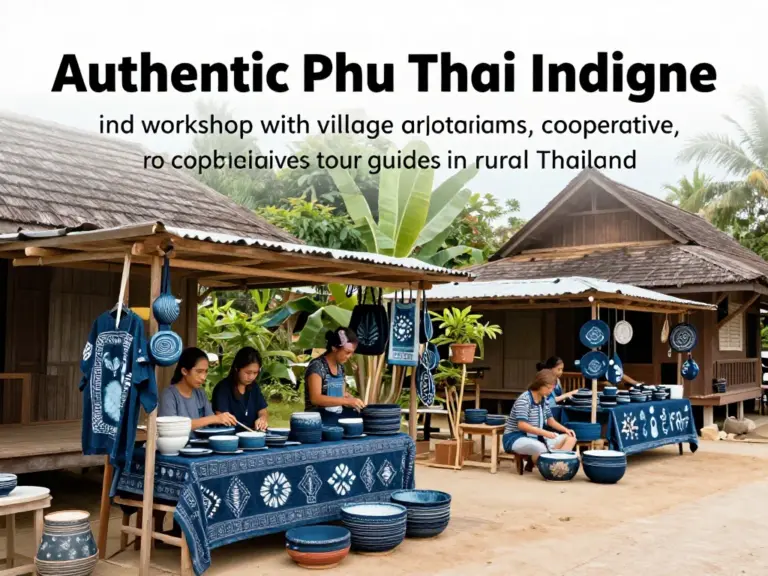
Where to go and who to visit: top Phu Thai villages, artisan cooperatives, and ethical tour operators for authentic indigo workshops
Thailand’s Northeast, or Isan, is home to a vibrant cultural tapestry, but few threads are as deeply blue as those woven by the Phu Thai people. For travelers seeking authentic indigo workshops, the provinces of Sakon Nakhon and Kalasin offer a journey into a world where nature and tradition collide. Indigo (Kram) is more than just a color here; it is a way of life, a spiritual connection to the earth, and a testament to the enduring skill of the Phu Thai artisans.
The Heart of Indigo: Sakon Nakhon’s Phu Thai Villages
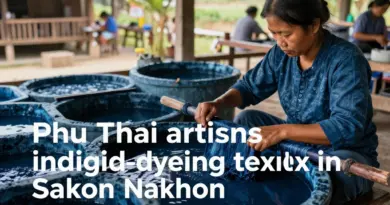
Sakon Nakhon is widely regarded as the indigo capital of Thailand. The Phu Thai ethnic group in this region has perfected the art of ‘natural fermentation’ to create the deep, lasting blue hues that the area is famous for. One of the most significant stops for any textile enthusiast is Ban Tham Tao. This village is renowned for its intricate weaving patterns and its dedication to 100% natural dyes. Visitors can witness the ‘Kram’ vats, which are treated almost like living beings, fed with fruit and herbs to maintain the fermentation process.
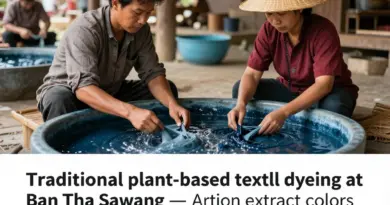
Another essential destination is Ban Non Hom. This village offers a highly immersive experience where you can learn the ‘Mudmee’ (Ikat) technique. Here, the Phu Thai elders guide you through the process of tying patterns onto cotton threads before they are dipped multiple times into the indigo vats to achieve the desired shade of navy.
Artisan Cooperatives Leading the Way
To support the local economy directly, visiting artisan cooperatives is the most ethical approach. The Kram Sakon Cooperative is a fantastic example of a modern collective that preserves ancient techniques while adapting to contemporary designs. They offer structured authentic indigo workshops ranging from half-day sessions to multi-day intensives. Their facility includes a beautiful showroom and a garden where the Indigofera tinctoria plants are grown.
| Cooperative Name | Location | Specialty |
|---|---|---|
| Kram Sakon | Sakon Nakhon City | Modern Design & Traditional Dyeing |
| Mae Teeta | Sakon Nakhon | High-end Indigo Textiles |
| Ban Phone Weaver Group | Kalasin | Phu Thai Silk & Indigo Blend |
Ethical Tour Operators for Cultural Immersion
Navigating the rural villages of Isan can be challenging due to the language barrier and remote locations. This is where ethical tour operators come in. Agencies like Local Alike and Village To The World specialize in community-based tourism. They ensure that the majority of the tour proceeds go directly to the Phu Thai villagers. These operators provide translators who can help you understand the philosophy behind the craft—such as why the artisans ‘talk’ to their dye vats to ensure a good color.
What to Expect in an Authentic Indigo Workshop
Participating in a workshop is a sensory experience. You will start by harvesting or preparing the indigo paste, followed by the ‘waking up’ of the vat. You will learn different folding and tying techniques (Shibori style or traditional Thai patterns). The most magical moment is when the fabric is pulled from the green-yellow liquid; as it hits the oxygen, it transforms into a brilliant blue right before your eyes.
คำถามที่พบบ่อย (FAQ)
Q: Do I need to book indigo workshops in advance?
A: Yes, especially for village-based workshops, as the artisans need time to prepare the dye vats and materials.
Q: Is the indigo dye safe for sensitive skin?
A: Absolutely. Authentic Phu Thai indigo uses 100% natural ingredients like lime, tamarind, and herbs, making it eco-friendly and skin-safe.
Q: Can I bring my own clothes to dye?
A: Most cooperatives prefer you use their locally sourced organic cotton to ensure the dye adheres properly, but some may allow you to bring small natural-fiber items.
References
- Tourism Authority of Thailand (TAT)
- Local Alike Community Based Tourism
- Sustainable Arts and Crafts Institute of Thailand (SACIT)
- Indigo dyeing with Phu Thai artisans in Sakon Nakhon: A hands-on cultural experience and sustainable textile tradition
- Why Phu Thai indigo dyeing in Sakon Nakhon matters: history, cultural significance, and traditional techniques
- What to expect in a workshop: step-by-step indigo dyeing process, materials, seasonal timing, and how to prepare for a hands-on experience