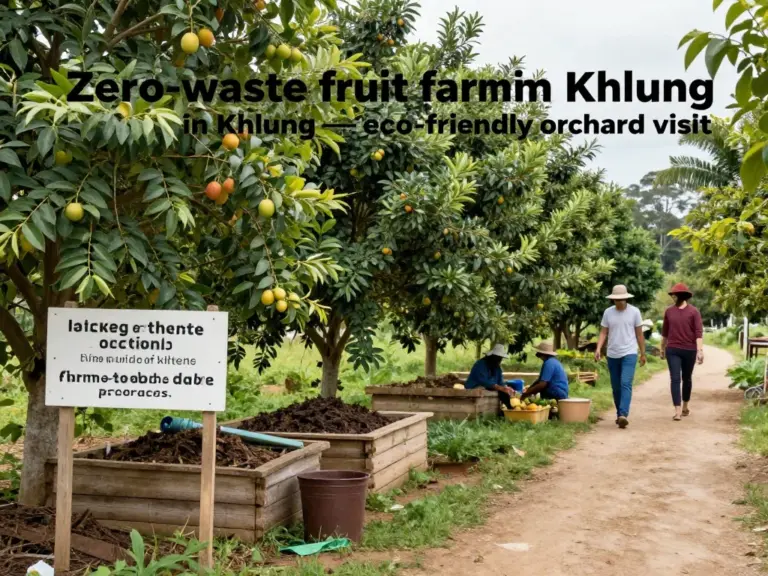
Why visit a zero waste fruit farm in Khlung? Benefits, what to expect, and how to prepare
Thailand’s agritourism scene is evolving, and the district of Khlung in Chanthaburi is at the forefront of this green revolution. Visiting a zero waste fruit farm in Khlung offers more than just a taste of delicious tropical fruits; it provides a profound look into sustainable living and regenerative agriculture. As travelers become more conscious of their environmental footprint, these farms offer a refreshing alternative to traditional tourism.
The Environmental Benefits of Zero Waste Farming
A zero waste fruit farm in Khlung operates on the principle of a circular economy. Every byproduct of the farming process is repurposed. Fruit peels become organic compost, fallen branches are turned into biochar, and wastewater is treated through natural filtration systems. This approach significantly reduces the carbon footprint of the farm and prevents chemical runoff into local waterways, preserving the delicate ecosystem of the Chanthaburi mangroves.
What to Expect During Your Visit
When you step onto a zero waste fruit farm in Khlung, expect an immersive sensory experience. Unlike commercial orchards, these farms often feel like lush, diverse jungles. You will likely see a variety of trees—Durian, Mangosteen, Rambutan, and Longkong—growing harmoniously. Many farms offer guided tours where owners explain their composting techniques and pest management without the use of harmful pesticides.
You can also look forward to ‘Farm-to-Table’ tastings. There is nothing quite like eating a tree-ripened Durian or a chilled Mangosteen right where it was grown. Many farms also host workshops on making organic fertilizers or natural insect repellents, allowing you to take some sustainable knowledge home with you.
How to Prepare for Your Eco-Adventure
To make the most of your visit to a zero waste fruit farm in Khlung, a little preparation goes a long way. Since these are working farms, comfort and practicality are key. Here are some tips:
- Wear Appropriate Clothing: Light, breathable long-sleeved shirts and trousers will protect you from the sun and occasional mosquitoes.
- Footwear: Sturdy, closed-toe shoes or boots are essential as the terrain can be uneven or muddy.
- Bring Reusables: In the spirit of zero waste, bring your own water bottle and a reusable bag if you plan on purchasing fresh produce.
- Timing: The best time to visit is during the fruit season, typically from May to July.
| Season | Available Fruits | Activity Level |
|---|---|---|
| May – June | Durian, Mangosteen | High (Harvesting) |
| July – August | Rambutan, Longkong | Medium |
| September – April | Orchard Maintenance | Educational |
คำถามที่พบบ่อย (FAQ)
What is the best time of year to visit a zero waste fruit farm in Khlung?
The peak season for fruit in Khlung is between May and July. This is when the famous Durian and Mangosteen are ripe and available for tasting.
Are these farms family-friendly?
Yes! These farms are excellent for families. They provide a safe and educational environment for children to learn where their food comes from and the importance of nature conservation.
Is there an entrance fee for the farms?
Most farms charge a small fee for guided tours and fruit buffets. It is recommended to contact the specific farm in advance for their current pricing and to make a booking.
How do I get to Khlung from Bangkok?
Khlung is located in Chanthaburi province. You can take a bus from Ekkamai Eastern Bus Terminal to Chanthaburi city and then a local taxi or ‘songthaew’ to Khlung, which takes about 4 hours in total.
References
- Zero waste fruit farm tour in Khlung: experiential guide to composting, refill stations, and sustainable practices
- How the farm’s composting system works: step-by-step process, visitor participation, and environmental impact
- Refill station guide: what products are available, packaging-free shopping tips, and how to support local circular economy