How Koh Kood eco-resorts treat wastewater — onsite systems, natural wetlands, sequencing batch reactors, and water reuse for landscaping
- How Koh Kood eco-resorts treat wastewater — onsite systems, natural wetlands, sequencing batch reactors, and water reuse for landscaping
- The Imperative for Onsite Wastewater Treatment in Island Destinations
- Sequencing Batch Reactors (SBRs): The Heart of Modern Treatment
- The Role of Natural Wetlands in Tertiary Treatment
- Water Reuse for Landscaping and Beyond
- Learn More About Water Management Technology
- คำถามที่พบบ่อย (FAQ)
- Are the treated water systems in Koh Kood resorts safe for direct contact?
- What is the main environmental benefit of using SBRs over traditional septic tanks?
- How does water reuse for landscaping help the island?
- Are there specific Thai regulations these resorts must adhere to for wastewater?
The pristine turquoise waters and lush jungles of Koh Kood make it a jewel of Thailand’s Eastern Gulf. As responsible tourism grows, understanding How Koh Kood eco-resorts treat wastewater becomes crucial for preserving this delicate island ecosystem. These resorts are leaders in sustainability, often implementing sophisticated, self-contained systems to ensure that their operations leave minimal impact on the island’s vital water resources.
The Imperative for Onsite Wastewater Treatment in Island Destinations
Unlike large mainland cities, islands like Koh Kood often lack centralized municipal sewage infrastructure. This forces high-end, environmentally conscious resorts to adopt complete autonomy over their waste management. The goal is threefold: protect the surrounding coral reefs and beaches, meet strict environmental standards, and maximize water efficiency. This commitment to onsite systems is what defines a true eco-resort.
Moving Beyond Conventional Septic Systems
Traditional septic tanks, while suitable for low-density use, cannot handle the organic load and volume generated by a busy resort. Therefore, Koh Kood’s leading establishments invest heavily in advanced primary and secondary treatment processes designed for continuous flow and high purification standards.
Sequencing Batch Reactors (SBRs): The Heart of Modern Treatment
One of the most effective technologies adopted by modern Koh Kood facilities is the Sequencing Batch Reactor (SBR). This system is favored for its flexibility and efficiency in treating variable wastewater loads common in hospitality settings.
How SBR Technology Works
The SBR operates in timed cycles rather than continuous flow. These cycles typically involve four distinct phases:
- Fill: Wastewater enters the reactor.
- React (Aeration/Anoxic): Microorganisms break down organic pollutants under controlled oxygen levels.
- Settle: The activated sludge settles to the bottom, separating clean water from solids.
- Decant/Draw: The treated effluent is carefully drawn off the top for further processing or reuse.
This precision allows the resort to achieve effluent quality that often surpasses basic regulatory requirements, making the water safe for the next stage of purification.
The Role of Natural Wetlands in Tertiary Treatment
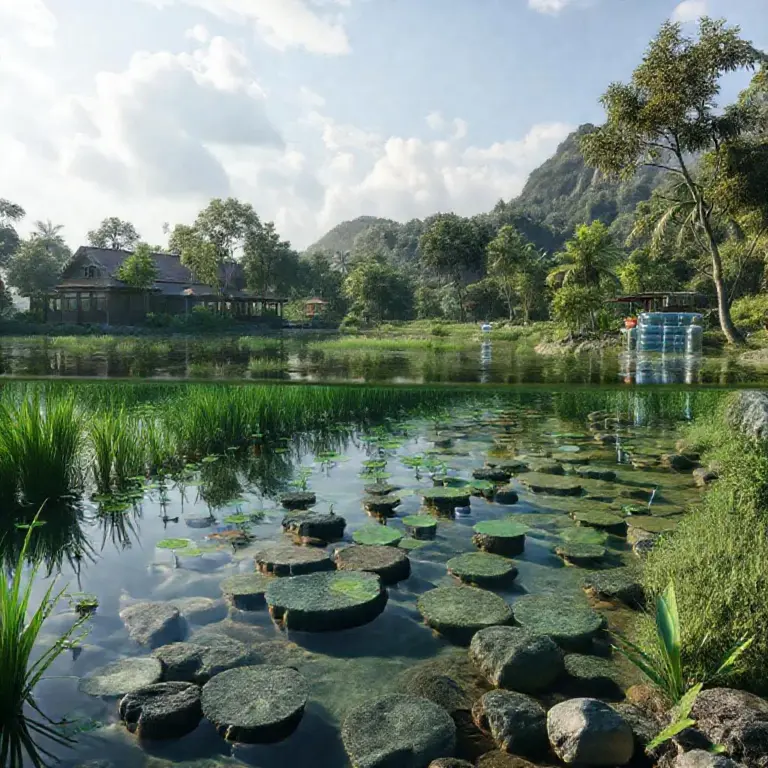
Even after SBR treatment, advanced purification is needed, especially in sensitive marine environments. This is where nature steps in. Many forward-thinking resorts integrate engineered or natural wetlands as a tertiary polishing step. These systems are a beautiful example of biomimicry in action.
Biological Filtration and Absorption
Water flows slowly through constructed beds planted with specific aquatic macrophytes (like reeds or cattails). These plants, along with the soil and microbial communities they support, naturally absorb residual nutrients (like nitrogen and phosphorus) and filter out fine suspended solids. This process significantly reduces the biological oxygen demand (BOD) and ensures the final discharge water is clean and ecologically sound.
This natural filtration method is highly aesthetic, often doubling as a beautiful landscape feature within the resort grounds, enhancing the guest experience while serving a vital environmental function.
Water Reuse for Landscaping and Beyond
The ultimate goal in sustainable water management is achieving a closed-loop system, and water reuse is central to How Koh Kood eco-resorts treat wastewater responsibly. The treated effluent, now referred to as recycled water, is never wasted.
The primary use for this recycled water is irrigation. Tropical resorts require significant amounts of water to maintain lush gardens, lawns, and non-edible ornamental plants. By substituting freshwater sources with treated wastewater for landscaping, the resort drastically reduces the stress placed on the island’s limited groundwater reserves.
Advanced Polishing for Higher Reuse Standards
For certain applications, such as toilet flushing (greywater recycling systems often integrated with the main treatment), further disinfection steps are required. These may include:
- UV Disinfection: Using ultraviolet light to neutralize pathogens without adding chemicals.
- Membrane Filtration (Ultrafiltration/Reverse Osmosis): Used in high-end setups to remove virtually all dissolved solids and microorganisms, although this is less common for standard landscaping reuse.
The success of these integrated systems highlights the commitment of Koh Kood’s hospitality sector to environmental stewardship. They prove that luxury travel and ecological preservation can coexist through smart engineering and dedication to sustainable practices.
Tourists visiting these resorts can rest assured that their stay contributes positively to local conservation efforts by supporting facilities that expertly manage their environmental footprint.
Learn More About Water Management Technology
คำถามที่พบบ่อย (FAQ)
Treated water from SBRs and wetlands is generally safe for irrigation but is still considered non-potable. Direct contact uses, like swimming pools, require further chemical treatment and are usually separate systems. The primary goal is safe disposal or reuse for landscaping.
SBRs provide superior effluent quality by precisely controlling the biological treatment phases, leading to lower levels of suspended solids and nutrients released into the environment, which is critical for protecting sensitive marine areas around Koh Kood.
Water reuse reduces the demand on precious island groundwater resources. By irrigating tropical plants with recycled water, resorts minimize pumping from aquifers, helping to maintain the island’s freshwater table and prevent saltwater intrusion.
Yes, resorts must comply with standards set by Thailand’s Ministry of Natural Resources and Environment, specifically relating to effluent quality discharge limits (BOD, SS, E. coli). Eco-resorts often voluntarily adopt stricter international standards to maintain their sustainable branding.
References
- Thai Water Resources Information Portal
- UN Environment Programme on Sustainable Tourism Practices
- World Health Organization Guidelines for Water Reuse
- Eco-resort stay on Koh Kood: wastewater treatment and renewable energy in action — sustainable hospitality that guests can experience
- Why choose an eco-resort on Koh Kood? — search intent, benefits of visiting, and what sustainable practices travelers care about
- Renewable energy solutions powering island resorts — solar PV, battery storage, microgrids, and hybrid systems adapted to Koh Kood