Phu Kradueng Summit Trek: Complete Logistics, Best Seasons, and Practical Camping Tips for a Safe Hike
The Phu Kradueng Summit Trek is more than just a hike; it is a rite of passage for outdoor enthusiasts in Thailand. Located in the Loei province, this bell-shaped mountain offers a unique plateau landscape that stretches over 60 square kilometers. Whether you are seeking the misty sunrise at Nok Aen Cliff or the legendary sunset at Lom Sak Cliff, preparing for this journey requires careful planning of logistics and gear.
Understanding the Logistics: Getting to Phu Kradueng
Reaching the base of the mountain is the first step of your adventure. Most travelers start from Bangkok, taking an overnight bus from Mo Chit Bus Terminal heading towards Loei or Wang Saphung. You should ask to be dropped off at ‘Pha Nok Khao,’ which is the gateway to the park. From there, local ‘Songthaews’ (red pick-up trucks) are readily available to transport you to the National Park Headquarters.
For those preferring air travel, the nearest airports are in Loei or Khon Kaen. Upon arrival at the park, you must register and pay the entry fee. It is highly recommended to arrive early in the morning, as the trail up the mountain closes at 1:00 PM to ensure all hikers reach the summit before dark.
Best Seasons for the Phu Kradueng Summit Trek
Timing is everything when planning your Phu Kradueng Summit Trek. The park is open from October 1st to May 31st each year. Each season offers a distinct experience for visitors:
- Cool Season (November – January): This is the peak period. Temperatures can drop to near freezing at night, and the morning frost is a common sight. It is the best time for those who enjoy crisp air and clear skies.
- Flower Season (February – April): As the weather warms, wild rhododendrons and various orchids begin to bloom across the plateau, painting the landscape in vibrant colors.
- Early Opening (October): Ideal for those who want to see lush green forests and waterfalls at their fullest, though be prepared for occasional light rain and muddy paths.
The Climb: What to Expect on the Trail
The ascent is divided into two main parts: the 5.5-kilometer steep climb to ‘ หลังแป’ (Lang Pae) and the subsequent 3.5-kilometer flat walk to the campsite. The climb is punctuated by several rest stops known as ‘Sams.’ Each Sam features food stalls, water, and rest areas, making the trek manageable even for beginners.
| Checkpoint | Distance from Base | Features |
|---|---|---|
| Sam Haek | 1.0 km | Stiffest initial climb, food stalls |
| Sam Kok Kok | 2.5 km | Bamboo forests |
| Lang Pae | 5.5 km | The Plateau Edge, flat terrain begins |
| Wang Kwang Camp | 9.0 km | Final destination, visitor center |
Practical Camping Tips for a Safe Hike
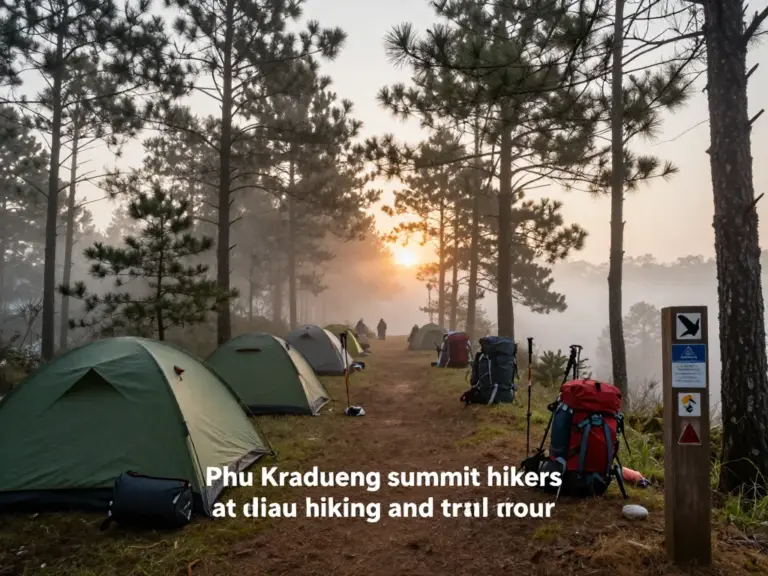
Camping at the summit is a highlight of the experience. The park provides rental tents, sleeping bags, and mats, but you can also bring your own gear. Here are essential tips for a comfortable stay:
- Hire a Porter: If you are not an experienced trekker, hire a local porter at the base. They carry luggage for a small fee per kilogram, allowing you to enjoy the hike without a heavy load.
- Layer Your Clothing: Even in the summer, the summit is significantly cooler than the base. Bring thermal wear and a windproof jacket.
- Hydration and Nutrition: While there are plenty of food stalls, carrying a reusable water bottle is essential for the stretches between Sams.
- Leech Protection: During the early season (October-November), leeches can be present. Wear long socks and use repellent.
คำถามที่พบบ่อย (FAQ)
How long does it take to hike to the summit?
Typically, it takes 4 to 6 hours to reach the plateau (Lang Pae) and another hour to walk to the campsite, depending on your fitness level and how many stops you make at the ‘Sams’.
Do I need to book a tent in advance?
During weekends and public holidays, it is highly recommended to book via the Department of National Parks (DNP) website. On weekdays, you can usually find available rentals upon arrival.
Are there wild animals on the plateau?
Yes, Phu Kradueng is home to wild elephants and deer. It is important to stay on marked trails and follow park rangers’ instructions, especially during the night.
Is there electricity and Wi-Fi at the campsite?
There is limited electricity at the visitor center for charging devices (usually for a small fee). Mobile signal is generally good across the plateau, but Wi-Fi is not provided.
References
บทความที่เกี่ยวข้อง
- Best Times to Visit Phu Kradueng — Seasonal Weather, Crowds, and When Trails Are Most Accessible
- How to Plan Your Trek — Permits, Transport, Park Fees, and Ideal 2–3 Day Itineraries to Reach the Summit
- Camping Logistics on the Plateau — Campsite Options, What to Pack, Food & Water Strategies, and Overnight Safety
How long does it take to hike to the summit?
Do I need to book a tent in advance?
Are there wild animals on the plateau?
Is there electricity and Wi-Fi at the campsite?
- Best Times to Visit Phu Kradueng — Seasonal Weather, Crowds, and When Trails Are Most Accessible
- How to Plan Your Trek — Permits, Transport, Park Fees, and Ideal 2–3 Day Itineraries to Reach the Summit
- Camping Logistics on the Plateau — Campsite Options, What to Pack, Food & Water Strategies, and Overnight Safety