Top Routes and Areas in Railay and Tonsai — Grades, Route Types, and Recommended Multi-pitch and Sport Climbs for All Levels
- Top Routes and Areas in Railay and Tonsai — Grades, Route Types, and Recommended Multi-pitch and Sport Climbs for All Levels
- Why Railay and Tonsai are a Climber’s Paradise
- Understanding Climbing Grades in Thailand
- Railay Beach: Sport Climbing Hotspots
- Tonsai Beach: The Heart of the Climbing Scene
- Deep Water Soloing (DWS): A Unique Thrill
- Essential Gear and Safety Tips
- Best Time to Visit for Climbing
- Climbing Schools and Guides
- Beyond the Cliffs: Exploring Railay and Tonsai
- คำถามที่พบบ่อย (FAQ)
For adventurers seeking an unparalleled rock climbing experience, the limestone karsts of Railay and Tonsai in Krabi, Thailand, stand as a world-renowned mecca. This guide delves into the best of what these iconic destinations offer, covering everything from understanding climbing grades to discovering the top routes for all skill levels, ensuring your Railay Tonsai rock climbing adventure is unforgettable.
Why Railay and Tonsai are a Climber’s Paradise
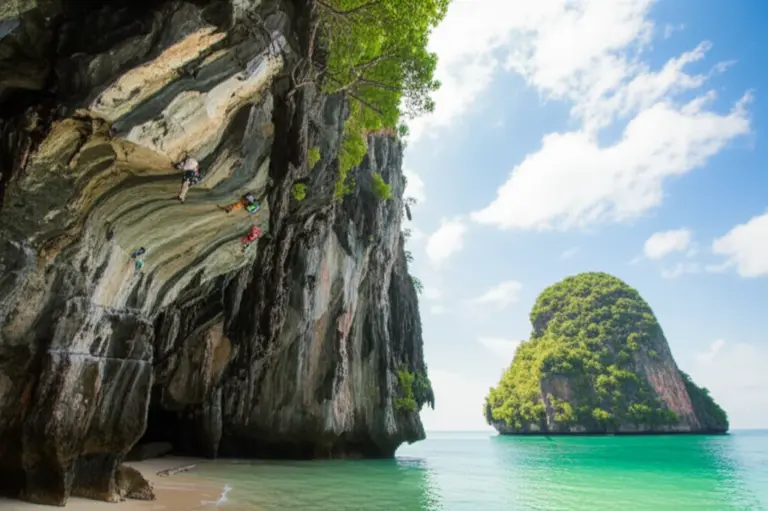
Nestled on the Andaman coast, Railay and Tonsai beaches are not just picturesque tourist destinations; they are a geological marvel, boasting towering limestone cliffs that attract climbers from across the globe. The unique karst formations provide an incredible variety of routes, from gentle beginner slopes to challenging multi-pitch ascents and thrilling deep water solos. The vibrant climbing community, coupled with the stunning tropical backdrop, creates an atmosphere unlike any other. Access to these paradises is exclusively by longtail boat, adding to their secluded charm. [5, 7]
Understanding Climbing Grades in Thailand
In Railay and Tonsai, the French grading system is predominantly used for sport climbing routes. This system ranges from 4 (easy) to 9 (extremely difficult), often with ‘a’, ‘b’, and ‘c’ subdivisions and a ‘+’ for added difficulty. For those familiar with the Yosemite Decimal System (YDS), a rough conversion is helpful: a French 5 is roughly YDS 5.6-5.9, while 6a is around 5.10a. With over 700 routes, ranging from 5a to 8c+, there’s truly something for every skill level. [4, 6, 7]
Railay Beach: Sport Climbing Hotspots
Railay Beach, particularly Railay West and East, offers a mix of routes suitable for all. Railay West is known for its stunning sunset views and some beginner-friendly climbs. Railay East, on the other hand, hosts several popular walls. [7]
Beginner-Friendly Routes (Grades 5a-5c)
- Diamond Cave Wall: A popular choice for novices, offering an enjoyable and well-protected experience with a mix of slab climbing and small holds. [14]
- Muay Thai Wall: Located on Railay East, this wall provides several easy climbs, especially suitable for beginners. Some parts are only accessible at low tide. [7, 10]
Intermediate and Advanced Challenges (Grades 6a-7c+)
- Thaiwand Wall: Offers spectacular views and routes like ‘Fit to be Thai’d’ (6a+), a highly recommended single-pitch climb. [17]
- King Fisher (7a+): Found on Happy Island, this 30m route is a classic that keeps climbers engaged until the very end. [2]
- Narcillion (6c+): Located at Low Tide Wall, this technical route has a well-deserved reputation for its solid grade and sequency crux. [2]
Tonsai Beach: The Heart of the Climbing Scene
Tonsai Beach, a short walk or longtail boat ride from Railay, is often considered the true epicenter of rock climbing in the region. It boasts a more bohemian, ‘dirtbag climber’ atmosphere and is known for its challenging overhanging routes, attracting a dedicated climbing crowd. [5, 7]
Beginner and Moderate Routes
- Wee’s Present (5b): A good introduction to slightly more technical climbing for novices. [14]
- Groove Tube (6a): Found at Fire Wall, this classic is known for being smooth and straightforward with plenty of stances, making it a perfect first lead for many. [10, 13]
Multi-pitch Masterpieces and Advanced Lines
Tonsai is particularly famous for its multi-pitch routes that offer breathtaking views of the Andaman Sea. [12]
- Humanality (6a-6b+): Arguably the most popular multi-pitch in Railay/Tonsai, this five-pitch climb ascends the main Tonsai wall, offering incredible views. It’s a must-do for intermediate to advanced climbers. [2, 5, 13]
- Nights in White Satin (7b+): Located on the Muai Thai/123 wall, this route is a favorite for its technical moves, overhangs, and pumpy finish. [2]
- No Good Deed Goes Unpunished (6b+): Found at Wee’s Present Wall, this is considered one of the best routes at its grade in Railay. [13]
Deep Water Soloing (DWS): A Unique Thrill
For those seeking an even greater adrenaline rush, deep water soloing (DWS) is a must-try. This form of climbing involves ascending sea cliffs without ropes or harnesses, with the Andaman Sea serving as your crash pad. Tonsai is a hub for DWS, with trips often organized by local climbing schools. It’s recommended to go with a guide, especially to navigate the underwater rocks that shift with the tides, and trips typically depart around high tide to ensure sufficient water depth. [3, 5, 8, 9, 11]
Essential Gear and Safety Tips
While many climbing schools provide gear, if you have your own, bring it! The community is very open to finding climbing partners, and having your own rope and quickdraws can be an advantage. Safety is paramount; ensure your gear is in good condition, and always climb with experienced partners or certified guides. The unique corrosive environment of Southern Thailand meant a massive effort to re-bolt routes with titanium, though some older steel bolts may remain. Always check guidebooks or local resources like TheCrag for the latest information on bolt conditions. [4, 5, 13]
Best Time to Visit for Climbing
The ideal climbing season in Railay and Tonsai is during Thailand’s dry season, which runs from November to March. During these months, temperatures and humidity are lower, making for more comfortable climbing conditions. While April is typically the hottest month, and May to October marks the rainy season, some crags offer overhangs that protect routes from getting wet, allowing for year-round climbing. [6, 7, 13]
Climbing Schools and Guides
Whether you’re a complete beginner or an experienced climber looking for local insights, several reputable climbing schools and guides operate in the area. They offer everything from half-day introductory courses to multi-day advanced training and private guiding for multi-pitch ascents. King Climbers, Basecamp Tonsai, and Hot Rock Climbing School are well-known options. Professional climbing lessons typically cost around $50-70 USD and include all necessary technical gear and safety instruction. [4, 6, 7, 11, 12]
Beyond the Cliffs: Exploring Railay and Tonsai
After a day of challenging climbs, Railay and Tonsai offer plenty of other activities. Relax on the pristine beaches, explore hidden lagoons, or enjoy the vibrant nightlife, especially in Tonsai. The area is also famous for its stunning viewpoints and sea kayaking opportunities. [8]
Railay and Tonsai truly offer an unparalleled blend of world-class climbing and breathtaking natural beauty. Whether you’re clipping your first bolt or tackling a challenging multi-pitch, the Railay Tonsai rock climbing experience promises adventure, camaraderie, and memories to last a lifetime. Prepare for an epic journey!
คำถามที่พบบ่อย (FAQ)
References
- Railay.com – 10 Favorite Climbs on Tonsai Beach Thailand
- Railay.com – Deep Water Soloing Around Tonsai Beach Thailand
- Railay.com – Rock Climbing Tonsai and Railay Beach- Krabi Thailand
- ItsBetterInThailand.com – Tonsai and Railay Bay – A Rock climber’s paradise in Thailand
- RailayAdventure.com – Hot Rock Climbing School
- Byklo Blog – Railay Rock Climbing: 3 Krabi Crags For All Skill Levels
- Amazing Thailand – Deep-water solo and sailing in Krabi
- Alex In Wanderland – A Leap of Faith: Deep Water Soloing in Thailand
- OCD612 WordPress – Railay – Thailand climbing guide for the weak
- Aloha Adrian – Deep Water Soloing in Thailand
- Karst Climbing – Guided Multi-pitch Climbing
- We Are Explorers – Tonsai is Thailand’s Climbing Mecca
- KrabiNature.com – Krabi’s Best Rock Climbing in 2025
- Maxine Schuiling WordPress – Deep Water Solo rock climbing in Tonsai Bay
- Thailand Bucket List – Multi Pitch Rock Climbing in Railay
- Escape Is In WordPress – Guide to Climbing in Tonsai
- Railay and Krabi Rock Climbing: An Adventurer’s Guide to Routes, Tips, and Local Logistics
- Why Railay and Krabi Are World-Class Rock Climbing Destinations — Best Seasons, Climbing Styles, and What Makes the Limestone Unique
- How to Plan Your Trip to Railay and Krabi — Getting There, Where to Stay, Permits, and Budgeting for Climbers