Where to stay and eat: guesthouses, homestays, seasonal hill-tribe produce and recommended local dishes
When planning a journey through the misty mountains of Northern Thailand, the primary question for any traveler is where to stay and eat to capture the true essence of the region. Moving beyond the standard luxury resorts, the real soul of Thailand’s tourism lies in its intimate guesthouses, community-based homestays, and the vibrant flavors of seasonal hill-tribe produce. This guide explores how to immerse yourself in local culture while enjoying some of the most unique culinary experiences Southeast Asia has to offer.
Authentic Accommodations: Guesthouses vs. Homestays
Choosing where to stay and eat often starts with the type of roof over your head. Guesthouses in Thailand are typically small, family-run establishments that offer a blend of privacy and local charm. They are perfect for travelers who want a budget-friendly option without sacrificing basic amenities. On the other hand, homestays offer a deeper level of immersion. In a homestay, you are a guest in a family’s home, often participating in daily activities like harvesting crops or preparing dinner.
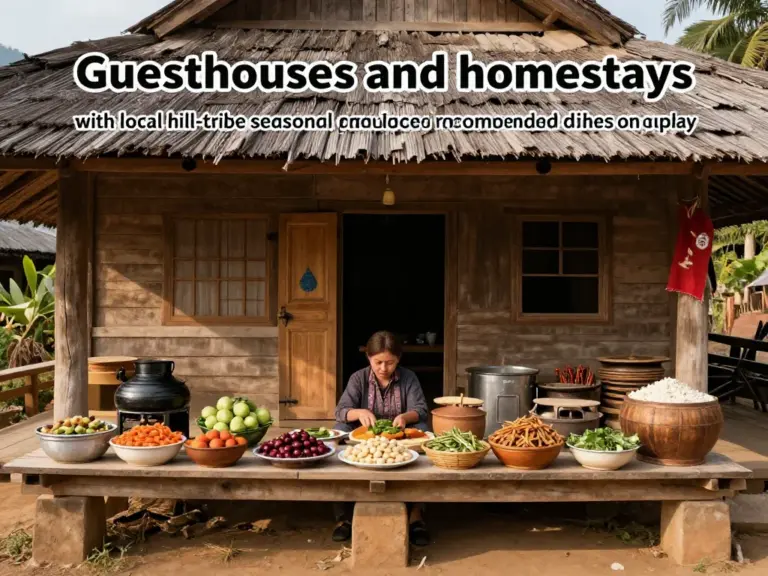
In areas like Mae Kampong, the homestay model has flourished, allowing visitors to sleep in traditional wooden houses nestled in the forest. These stays are often inclusive of traditional breakfasts, giving you a head start on your culinary exploration of the region.
Seasonal Hill-Tribe Produce: A Taste of the Highlands
The high altitudes of Northern Thailand provide a unique microclimate perfect for crops that don’t grow elsewhere in the country. When considering where to stay and eat, look for places that emphasize ‘farm-to-table’ dining. The Royal Projects, initiated to replace opium cultivation with sustainable farming, have turned the hills into a lush garden of seasonal delights.
| Season | Produce | Best Location |
|---|---|---|
| Winter (Nov-Feb) | Strawberries & Persimmons | Samoeng, Chiang Mai |
| Rainy (Jun-Oct) | Wild Mushrooms & Bamboo Shoots | Mae Hong Son |
| Year-round | Arabica Coffee & Oolong Tea | Doi Chang / Doi Mae Salong |
Hill-tribe communities such as the Akha, Lisu, and Karen have mastered the art of utilizing these ingredients. From fermented tea leaf salads to sun-dried tomatoes and avocados, the freshness of the produce is unparalleled. Many homestays will take you on a foraging trek where you can pick your own ingredients for the evening meal.
Recommended Local Dishes You Must Try
Your journey of where to stay and eat isn’t complete without sampling the iconic flavors of the North. Northern Thai cuisine (Lanna food) is distinct from the spicy, coconut-heavy dishes of the South. It relies more on bitter, sour, and earthy notes.
- Khao Soi: A creamy coconut curry noodle soup, topped with crispy fried noodles and served with pickled mustard greens and lime.
- Sai Oua: Northern Thai sausage packed with lemongrass, kaffir lime leaves, and galangal.
- Nam Prik Ong: A mild chili dip made with minced pork and tomatoes, served with fresh seasonal vegetables from the hill tribes.
- Gaeng Hung Lay: A slow-cooked pork belly curry influenced by Burmese flavors, featuring ginger and tamarind.
Sustainable Tourism and E-E-A-T
Choosing local guesthouses and consuming seasonal produce isn’t just about the experience; it’s about responsible travel. By prioritizing community-based tourism, you ensure that your travel budget directly benefits the people who preserve these traditions. Expert travelers recommend checking for certifications from the Thailand Community Based Tourism Institute (CBT-I) to ensure the homestays meet high standards of sustainability and cultural respect.
คำถามที่พบบ่อย (FAQ)
Q1: What is the best time of year to visit for seasonal produce?
A: The cool season (November to February) is ideal for strawberries, temperate fruits, and blooming flowers, though the rainy season offers the best wild mushrooms.
Q2: Are homestays safe for solo travelers?
A: Yes, homestays in Thailand are generally very safe and welcoming. Families treat guests with great hospitality, often making solo travelers feel like part of the family.
Q3: How do I find authentic guesthouses?
A: Look for listings on community-based tourism sites or use platforms like Agoda and Booking.com while filtering for ‘Guesthouses’ or ‘Homestays’ with high local ratings.
Q4: Is Northern Thai food very spicy?
A: While some dishes have heat, Northern food (Lanna) is often less spicy than Southern or Isan food, focusing more on aromatic herbs and savory flavors.