Practical phrases and bargaining scripts: polite Thai expressions, price negotiation lines, and when to accept or walk away
- Practical phrases and bargaining scripts: polite Thai expressions, price negotiation lines, and when to accept or walk away
- The Foundation: Essential Polite Thai Phrases
- Price Negotiation Scripts: The Art of the Haggle
- Navigating Transportation: Taxi & Tuk-Tuk Scripts
- When to Accept or Walk Away: The Exit Strategy
- คำถามที่พบบ่อย (FAQ)
- Is bargaining expected everywhere in Thailand?
- What is a reasonable discount percentage to aim for?
- What should I say if I don’t want to buy after negotiating?
- Should I use Thai numbers when bargaining?
Welcome to the vibrant markets of Thailand! Navigating price negotiations can be daunting, but mastering a few practical phrases and bargaining scripts: polite Thai expressions, price negotiation lines, and when to accept or walk away will transform your shopping experience from stressful to successful. This guide provides you with the linguistic tools and cultural insight needed to haggle respectfully and effectively.
The Foundation: Essential Polite Thai Phrases
Before you even discuss the price, you must establish rapport. Using these simple, polite phrases shows respect for the vendor and immediately puts you in a better negotiating position.
Greetings and Politeness Markers
Always start and end interactions with these terms. The addition of krap (for male speakers) or ka (for female speakers) is non-negotiable for politeness.
- Hello/Goodbye: Sawadee krap/ka (สวัสดี ครับ/ค่ะ)
- Thank You: Khop Khun krap/ka (ขอบคุณ ครับ/ค่ะ)
- Excuse Me/Sorry: Kor Tod krap/ka (ขอโทษ ครับ/ค่ะ)
Asking the Price
Once you find an item you like, the next step is finding out the starting point of the negotiation.
How much is this?: Tao rai krap/ka? (เท่าไหร่ ครับ/ค่ะ)
Price Negotiation Scripts: The Art of the Haggle
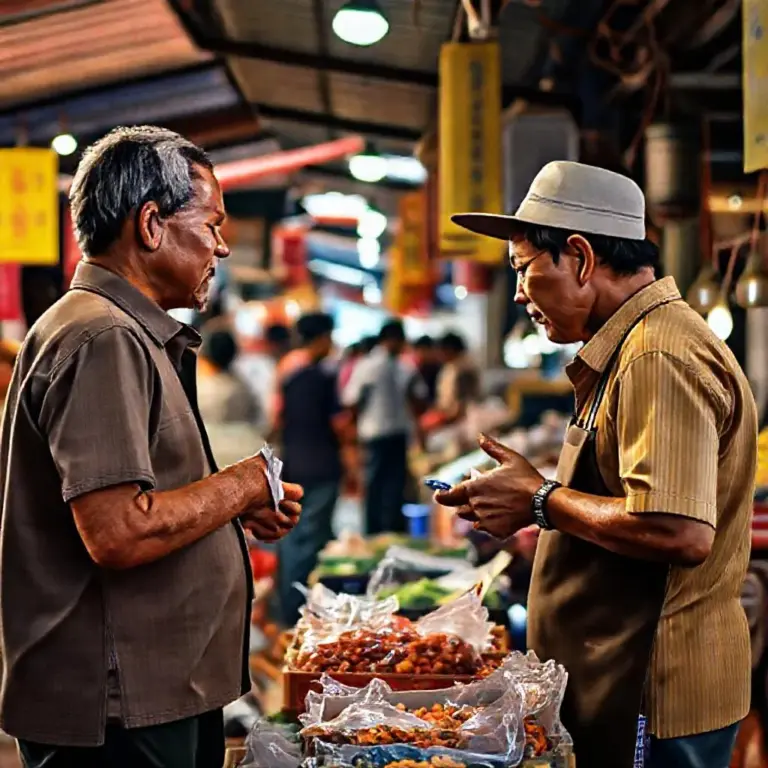
In tourist-heavy areas (like Chatuchak Weekend Market or specific stalls in Patpong), prices are often inflated for foreigners. Negotiation is expected, but it must be done gracefully.
Step 1: The Initial Inquiry and Shock Response
When the vendor names a high price (e.g., 500 THB), respond with polite surprise. This is where your first true bargaining script comes into play.
| English Script | Thai Phrase | Pronunciation Guide |
|---|---|---|
| That is too expensive! | Paeng mak! (แพงมาก) | Paeng Mahk! |
| Can you make it cheaper? | Lot rakha dai mai krap/ka? (ลดราคาได้ไหม) | Lot Rah-kah Dai Mai? |
| It’s too much for me. | Mai wai krap/ka. (ไม่ไหว) | Mai Wai! |
Step 2: Offering Your First Counter-Price
Never accept the first counter-offer. A good rule of thumb is to start at 40-50% of the initial asking price, depending on the item and location. For high-quality goods, aim for 60-70%.
I will give you [Price] Baht.: Ao [Price] Baht na krap/ka. (เอา…บาทนะ)
If they ask 500 THB, you might counter with 200 THB. They will likely settle around 300-350 THB. Always use your fingers to show the number clearly!
Step 3: The Final Offer and Agreement
When you reach a price you are comfortable with, confirm it politely.
- This is my final offer.: Nee ra-ka sut tai na krap/ka. (นี่ราคาสุดท้ายนะ)
- Deal! (I take it.): Chai! (ใช่) or simply smile and hand over the cash.
Once the price is agreed upon, you must buy the item. Backing out after agreeing is considered extremely rude.
Negotiating fares is common outside of metered taxis (which use the taximeter meter). If a driver quotes a flat rate, you need specific scripts.
Meter vs. Flat Rate
Do you use the meter?: Chai meter mai krap/ka? (ใช้มิเตอร์ไหม)
If they refuse the meter, you must negotiate the price *before* getting in.
To [Destination], how much?: Pai [Destination], tao rai krap/ka? (ไป… เท่าไหร่)
For Tuk-Tuks, a short trip should generally cost between 80–150 THB, depending on traffic and location. A fair counter-offer is usually 20-30% lower than their initial quote.
When to Accept or Walk Away: The Exit Strategy
Knowing when to conclude the negotiation or abandon the pursuit is crucial for maintaining your budget and sanity. This is the final piece of mastering practical phrases and bargaining scripts: polite Thai expressions, price negotiation lines, and when to accept or walk away.
Knowing When to Accept
Accept the price if:
- It is close to what you researched (e.g., within 15% of the local price).
- The vendor has lowered their price significantly (showing maximum effort).
- You are satisfied with the item and the interaction has been pleasant and smiling.
Knowing When to Walk Away
Walking away is a powerful tactic, but it must be executed with grace, or you risk offending the vendor.
I will look around first.: Kho du kon paeokorn krap/ka. (ขอดูไปก่อน)
If you state your final, reasonable price and the vendor refuses, simply say Khop Khun krap/ka (Thank you) with a smile and begin to slowly walk away. If they call you back, they have accepted your final price. If they do not, the price was likely too low for them, and you should respect that boundary.
Remember: In Thailand, the relationship often matters more than the transaction. A friendly approach will always yield better results than aggressive haggling.
Learn Thai Negotiation in Action
Watching native speakers or experienced travelers in action can significantly boost your confidence. Here is a helpful resource to visualize these interactions:
คำถามที่พบบ่อย (FAQ)
References
Thai Embassy Official Resources
- Thai etiquette in restaurants and markets: bargaining politely — A guide for visitors to Thailand
- Understanding the cultural context: why politeness matters when bargaining in Thai restaurants and markets
- How to read social cues and body language: recognizing wai, smiles, tone, and other nonverbal signals during transactions