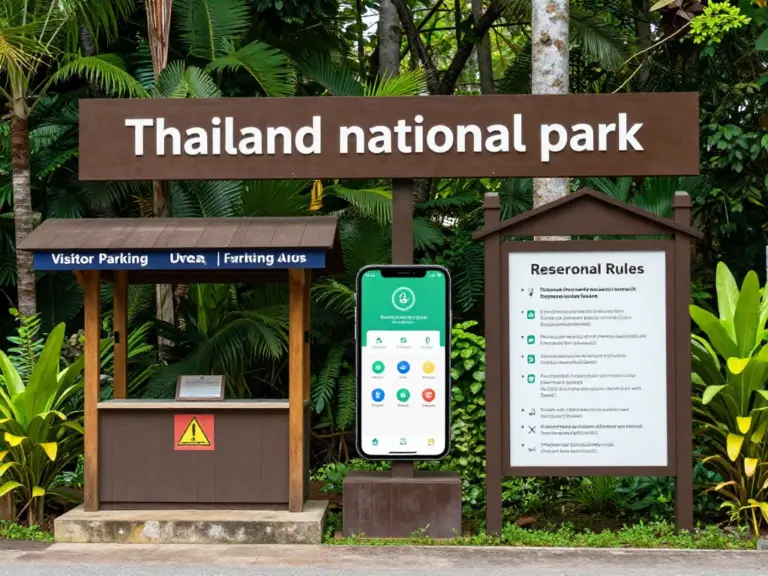
How to check availability, park rules, and the online/onsite reservation systems for Thailand’s national parks
Exploring the lush landscapes of Thailand’s national parks is a highlight for any traveler. From the misty peaks of Doi Inthanon to the crystal-clear waters of Mu Ko Similan, these protected areas offer unparalleled natural beauty. However, to preserve these ecosystems and manage visitor numbers, the Department of National Parks, Wildlife and Plant Conservation (DNP) has implemented a robust reservation system. Understanding how to check availability and navigate the rules is essential for a seamless adventure in Thailand’s national parks.
Understanding the Online Reservation System (QueQ App)
The primary tool for visiting Thailand’s national parks is the QueQ mobile application. This app is designed to manage social distancing and prevent overcrowding. Whether you are planning a day trip or an overnight stay, the QueQ app allows you to book your entry slot up to 60 days in advance. This is particularly crucial for ‘hotspots’ like Maya Bay or Khao Yai.
How to use the QueQ App:
- Download the QueQ app from the App Store or Google Play Store.
- Select the ‘National Park’ icon within the app.
- Choose the specific park you wish to visit (e.g., Erawan National Park).
- Select your preferred date and time slot.
- Enter the number of visitors and provide the required identification details.
- Save the booking confirmation (QR code) to show at the park entrance.
Onsite Reservation and Walk-in Policy
While the DNP encourages online booking, many parks still maintain a ‘Walk-in’ quota. Typically, the ratio is 70% online bookings and 30% walk-ins. However, this can vary. If you arrive onsite without a reservation for one of Thailand’s national parks, you may be denied entry if the daily limit has already been reached. It is always safer to use the online system to secure your spot.
How to Check Availability and Seasonal Closures
Before setting out, it is vital to check if the park or specific attractions within it are open. The DNP frequently closes parks for ecological recovery, especially during the monsoon season. For example, many marine parks in the Andaman Sea close from May to October. You can check the latest announcements on the official DNP Website or their official Facebook page, which is frequently updated with ‘Open/Closed’ status tables.
| Park Name | Region | Best Time to Visit |
|---|---|---|
| Khao Yai | Central | November – February |
| Doi Inthanon | North | December – January |
| Mu Ko Similan | South | January – April |
| Erawan | West | Year-round |
Essential Park Rules and Regulations
To ensure the conservation of Thailand’s national parks, visitors must adhere to strict regulations. Violations can lead to heavy fines or being banned from the park.
- No Alcohol: The consumption and possession of alcoholic beverages are strictly prohibited.
- Plastic Ban: Single-use plastics, including bags and straws, are banned to protect wildlife.
- Noise Control: Loud music and shouting are not allowed, as they disturb the natural habitat.
- Drone Laws: Flying a drone requires prior permission from the DNP and a valid CAAT registration.
- Waste Management: Visitors are expected to ‘Pack it in, Pack it out’ and use designated waste bins.
คำถามที่พบบ่อย (FAQ)
Q1: Can I book a campsite through the QueQ app?
A1: No, the QueQ app is primarily for entry. To book campsites or bungalows in Thailand’s national parks, you must use the official DNP National Park Booking website.
Q2: Is the entrance fee included in the online reservation?
A2: Generally, no. You book your slot online and pay the entrance fee (which differs for locals and foreigners) at the physical ticket booth upon arrival.
Q3: What happens if I miss my reserved time slot?
A3: Most parks allow a small grace period, but if you are significantly late, your slot may be given to a walk-in visitor. It is best to arrive 15-30 minutes early.
Q4: Are pets allowed in the national parks?
A4: In most cases, no. Pets are generally prohibited in Thailand’s national parks to prevent disease transmission and disturbance to local wildlife.
References
- Department of National Parks, Wildlife and Plant Conservation (DNP) Official Portal
- Tourism Authority of Thailand (TAT) Newsroom
- The Civil Aviation Authority of Thailand (Drone Regulations)
- How to Reserve National Park Tents and Gear in Thailand: A Complete Step-by-Step Guide for Visitors
- What types of tents and equipment are available in Thai national parks and how to choose the right gear for your trip
- Step-by-step reservation process: booking platforms, required documents, payment methods, and tips to secure popular campsites