Planning Your Trip: Best Times to Visit, How to Get There (Chiang Mai to Doi Suthep, Getting Around Bangkok), Tickets, Dress Code, and Accessibility
- Planning Your Trip: Best Times to Visit, How to Get There (Chiang Mai to Doi Suthep, Getting Around Bangkok), Tickets, Dress Code, and Accessibility
Thailand is a land of incredible contrasts, offering everything from bustling, modern metropolises to ancient temples and pristine beaches. To ensure your adventure runs smoothly, effective preparation is crucial. This comprehensive Thailand trip planning guide covers the essential logistics—from deciding when to visit to mastering local transportation and understanding cultural etiquette—guaranteeing an enriching and stress-free experience.
Expert Tip:
The key to enjoying Thailand is flexibility. While planning is vital, be prepared for minor delays, especially when using public transport or visiting during the peak season.
When to Go: The Best Times to Visit Thailand
Thailand’s climate is tropical, dominated by three primary seasons. Choosing the right time depends heavily on your tolerance for heat, crowds, and rain, as well as the specific regions you plan to visit.
Cool and Dry Season (November–February)
This is widely considered the best time to visit, offering pleasant temperatures (especially in the North) and minimal rainfall. While perfect for sightseeing and beach activities, it is also the peak tourist season. Expect higher prices for accommodation and flights, and major attractions will be crowded.
Hot Season (March–May)
Temperatures soar during this period, often exceeding 40°C (104°F). While the heat can be intense, crowds thin out slightly, and prices may drop. This season culminates in Songkran (Thai New Year) in mid-April, which involves large-scale water fights—a fun cultural experience, but travel logistics can be challenging.
Rainy Season (June–October)
Also known as the Green Season, this period brings heavy, short-lived downpours, usually in the late afternoon. The landscape is lush and vibrant, and tourist crowds are minimal. However, boat travel to some islands (especially on the Andaman Coast like Phuket and Koh Lanta) can be disrupted, and some activities may be weather-dependent. Prices are at their lowest during this time.
Understanding how to move efficiently between and within Thailand’s major hubs is essential for any successful Thailand trip planning guide. From rapid transit to mountainous routes, transport options are varied and generally affordable.
Getting Around Bangkok: The Urban Maze
Bangkok’s traffic is legendary, making its rail systems the best way to travel long distances within the city:
| Mode of Transport | Description | Key Use |
|---|---|---|
| BTS Skytrain & MRT Subway | Fast, efficient, and air-conditioned elevated/underground rail systems. | Avoiding traffic jams; connecting major shopping and business districts. |
| Metered Taxis | Abundant and affordable, but subject to severe traffic delays. Ensure the meter is used. | Late-night travel or short distances off the rail routes. |
| Tuk-Tuks & Motorbike Taxis | Iconic, open-air vehicles great for short hops. Negotiate the fare *before* riding. | Touristy areas; short, exciting rides. |
| Chao Phraya Express Boat | River ferries that bypass traffic and connect the old city (Grand Palace, Wat Arun) to the BTS system. | Sightseeing and accessing riverside attractions. |
The Journey to Doi Suthep (Chiang Mai)
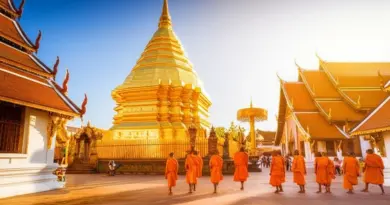
Doi Suthep, home to the revered Wat Phra That Doi Suthep, sits high on a mountain overlooking Chiang Mai. There are no public buses or trains directly to the temple. The most common methods are:
- Songthaew (Red Trucks): These shared red pickup trucks are the standard way to travel. They depart frequently from the base of the mountain or from the Huay Kaew Road entrance near the zoo. You typically wait for the truck to fill up before departing.
- Private Taxi/Grab: Offers door-to-door service but is more expensive. This is ideal for groups or those prioritizing speed and comfort.
- Motorbike Rental: Only recommended for experienced riders due to the steep, winding mountain road.
Wat Phra That Doi Suthep is approximately 15 km from Chiang Mai city center. Allow at least 2-3 hours for the round trip and temple visit. The view from the top is spectacular.
Practical Preparation: Tickets, Dress Code, and Accessibility
Temple Etiquette and Dress Code
Respecting local customs, especially at temples (Wats), is non-negotiable. Thailand is deeply Buddhist, and adherence to the dress code demonstrates respect for the religion and culture.
- Cover Up: Shoulders and knees must be covered. This applies to both men and women. Avoid tank tops, short shorts, and sheer clothing.
- Footwear: Shoes must be removed before entering the main prayer hall (bot) of any temple, as well as many private homes and some shops. Slip-on shoes are highly practical.
- Behavior: Never point your feet at a person or a Buddha image. Do not touch monks, and women should avoid direct contact with them entirely.
Ticket Information and Costs
Most major temples and parks require a small entrance fee. For example, the entrance fee for Wat Phra That Doi Suthep is typically around 30-50 THB. The Grand Palace in Bangkok is significantly more expensive (around 500 THB) but covers multiple attractions within the complex. Always carry small denominations of Thai Baht (THB) for ticket purchases and local transport.
Accessibility Considerations for Travelers
While Thailand has made strides, accessibility for travelers with mobility issues remains challenging outside of modern infrastructure.
- Bangkok Rail: The BTS Skytrain and MRT Subway systems are generally modern and offer ramps or elevators at most major stations, though older stations might lack full accessibility.
- Sidewalks and Roads: Sidewalks are often uneven, crowded, and frequently blocked by vendors or motorbikes, making navigation difficult for wheelchairs.
- Temples: Historic sites like Doi Suthep often require climbing long, steep staircases (Doi Suthep has over 300 steps). While some sites offer alternative ramps or lifts, it is best to research specific temple accessibility before visiting.
By carefully planning your routes, respecting local customs, and timing your visit to maximize comfort, your Thai vacation will undoubtedly become a memorable adventure. This detailed Thailand trip planning guide provides the foundational knowledge necessary to explore this remarkable country with confidence and ease.
คำถามที่พบบ่อย (FAQ)
References
- Wat Phra That Doi Suthep & Bangkok’s Iconic Temples: The Ultimate Visitor’s Guide to Thailand’s Spiritual Sites
- Why These Temples Matter: History, Cultural Significance, and What to Expect When You Visit Doi Suthep and Bangkok’s Famous Wats
- Top Temples to See in Bangkok and Chiang Mai: Detailed Highlights of Wat Phra Kaew, Wat Pho, Wat Arun, Wat Chedi Luang, and Doi Suthep