Day 2: Thonburi canals and Wat Arun, plus nearby lesser-known temples — river transport, photo spots and crowd avoidance
- Day 2: Thonburi canals and Wat Arun, plus nearby lesser-known temples — river transport, photo spots and crowd avoidance
Welcome to Day 2 of your essential Bangkok exploration. While many tourists focus solely on the bustling streets of Sukhumvit or the grandeur of the Grand Palace, the true soul of old Bangkok lies across the Chao Phraya River in Thonburi. This area offers a captivating glimpse into local life, preserved by the intricate network of canals, or khlongs. Crafting the perfect Thonburi canals and Wat Arun itinerary requires strategic planning, particularly regarding transport and timing, to maximize stunning photo opportunities while minimizing exposure to peak crowds. This guide provides the expert blueprint for a serene and culturally rich day.
Mastering the Chao Phraya River: Your Transport Gateway
The river is the highway of Thonburi. Understanding the various boat options is crucial for efficiency and budget. Forget taxis for this leg of the journey; the river offers superior views and direct access to key sites.
Choosing Your Vessel: Express Boats vs. Tourist Boats
For reaching the main piers, the Chao Phraya Express Boat is your most reliable and cost-effective option. Look for the colored flags: the Orange Flag boat is ideal for general tourist travel, stopping at most major piers, including Tha Tien (for Wat Pho/Wat Arun access) and Saphan Taksin (for BTS connections).
- Orange Flag: Local commuter favorite, frequent stops. (~15 THB one way).
- Blue Flag: Tourist Boat, slightly more expensive but guaranteed English announcements.
- Longtail Boats: Essential for canal tours, hired privately or semi-privately from specific piers (like Saphan Taksin or Tha Chang). Negotiate the price beforehand!
Essential Ticketing and Route Tips
Purchase single tickets directly from the booth attendant on the pier before boarding the Express Boat. For canal exploration, you will need a dedicated longtail boat tour, usually booked for 2-3 hours to cover the main Khlongs.
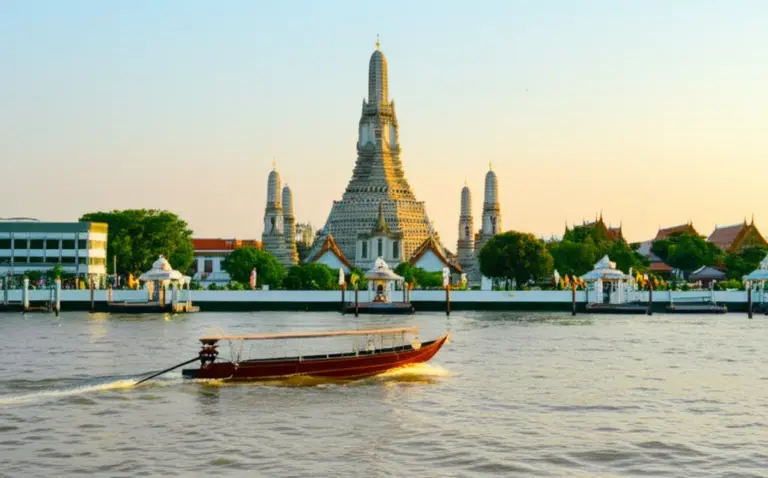
Wat Arun is the visual centerpiece of the western riverbank. Its stunning prang (spire), decorated with intricate porcelain mosaics, is breathtaking. To truly conquer the crowds, timing is everything in this Thonburi canals and Wat Arun itinerary.
Best Time to Visit for Photography (Crowd Avoidance)
For the best light and fewest people, aim to arrive right as the gates open (usually 8:00 AM). The early morning sun illuminates the porcelain perfectly. Alternatively, the late afternoon (around 4:30 PM) offers softer light, though crowds often swell for sunset views from the opposite bank.
Prime Photo Spot Recommendation
For the absolute best, crowd-free shots of Wat Arun’s exterior, skip climbing the prang itself initially. Instead, take a short ferry across to the Tha Chang pier area and photograph the temple from the riverside promenade. This angle captures the entire structure perfectly, especially beautiful when reflected in the water.
What to See Inside and Etiquette
Remember that Wat Arun is an active place of worship. Dress respectfully (shoulders and knees covered). While climbing the main prang is permitted (for a small fee), be aware that the steps are steep and narrow. Inside the smaller surrounding structures, you’ll find exquisite Buddha statues and murals offering deep historical insight into Thai Buddhist cosmology.
Diving Deeper: Exploring the Hidden Thonburi Canals (Khlongs)
The network of canals west of the river offers a stark contrast to the polished temples. Hiring a longtail boat from a designated pier allows you to explore these watery backstreets, where life moves at a slower, more traditional pace. This is where you gain genuine experience beyond the main tourist trail.
Witnessing Local Life on the Water
See how locals wash clothes, prepare food, and commute—it’s a living museum.
Klong Bang Luang: The Artist’s Community and Floating Market (Weekends Only)
If your Day 2 falls on a Saturday or Sunday, make Klong Bang Luang a priority. This community has embraced tourism tastefully. You can often watch traditional Thai puppet shows (the artist often performs near the main bridge) and buy simple snacks from vendors paddling small boats. This offers an authentic, less commercialized floating market feel than Damnoen Saduak.
Wat Kalayanamit: The Giant Buddha and Quiet Sanctuary
Located near the mouth of the Khlongs, Wat Kalayanamit houses one of Bangkok’s largest seated Buddha images, known as Phra Buddha Trilokachet. It’s significantly less crowded than the temples closer to the river crossing, offering a profoundly peaceful atmosphere perfect for reflection after the hustle of Wat Arun. The architecture here is distinct, blending Thai, Chinese, and Indian influences.
Discovering Lesser-Known Gems (e.g., Wat Dusit)
For those who truly seek solitude, ask your boat driver to navigate further down quieter tributaries. While specific stops can change based on water levels and driver knowledge, temples like Wat Dusit, often tucked away, provide incredible photographic opportunities without the tourist shuffle. These moments truly define an expert-level Thonburi canals and Wat Arun itinerary.
Logistics and Crowd Avoidance Strategies for a Perfect Day
Successful navigation hinges on avoiding the midday rush (10 AM to 3 PM) when tour buses flood the area and the sun is at its harshest.
Timing Your Canal Tour for Maximum Serenity
Schedule your longtail canal tour immediately after visiting Wat Arun, aiming to start around 10:30 AM if you arrived early at the temple, or better yet, plan the canal tour first thing in the morning (7:30 AM start) before heading to Wat Arun around 11:00 AM when the major crowds thin out after the first wave.
| Activity | Optimal Time Slot | Crowd Level |
|---|---|---|
| Wat Arun Visit | 8:00 AM – 9:30 AM | Low |
| Canal Tour (Khlongs) | 9:45 AM – 12:30 PM | Medium/Low |
| Lunch near River | 1:00 PM | Medium |
Culinary Stops Along the River
After exploring the quieter side of the river, you’ll be hungry. For an authentic experience near the main piers, seek out local street vendors or small riverside restaurants serving traditional Thai dishes. Look for places specializing in seafood or local noodle soups; these are often tucked away on the side streets leading away from the main temple complexes.
To connect back to the modern side of Bangkok, take the cross-river ferry from Wat Arun pier to Tha Tien Pier, where you can easily catch a bus or walk towards Wat Pho, or take the Express Boat further north to the city center. This day trip proves that the best Bangkok experiences often require just a bit of navigation skill and a willingness to cross the water.
คำถามที่พบบ่อย (FAQ)
References
For official operating hours and specific temple regulations, consult local tourism resources:
Official Tourism Authority of Thailand Site.