The Gibbon Experience and Canopy Walkways: Immersive Treetop Conservation Stays That Support Wildlife and Local Communities
- The Gibbon Experience and Canopy Walkways: Immersive Treetop Conservation Stays That Support Wildlife and Local Communities
- The Call of the Wild: What is The Gibbon Experience?
- A Unique Model: Conservation Through Adventure
- Your Treetop Adventure: Ziplines and Canopy Walks
- An Essential Stop for Sustainable Thailand Tourism
- คำถามที่พบบ่อย (FAQ)
- Where is The Gibbon Experience located?
- Is The Gibbon Experience suitable for all ages?
- How does The Gibbon Experience support conservation?
- What is the best time of year to visit?
For travelers exploring Southeast Asia, particularly those focused on sustainable and adventurous excursions beyond Thailand’s borders, the **Gibbon Experience and Canopy Walkways** in northern Laos offer a truly unparalleled adventure. This isn’t just a holiday; it’s an immersive conservation stay that directly funds the protection of endangered wildlife and uplifts local communities. It represents the pinnacle of ecotourism, transforming a remote jungle into a self-sustaining model for environmental stewardship.
Why This Matters for Thailand Tourism
Though located in Laos, The Gibbon Experience is a key regional highlight, often accessed via the Thai border town of Chiang Khong (opposite Huay Xai, Laos). For tourists in Northern Thailand (e.g., Chiang Rai), this conservation stay is a must-do extension that aligns perfectly with the growing demand for ethical and high-impact travel.
The Call of the Wild: What is The Gibbon Experience?
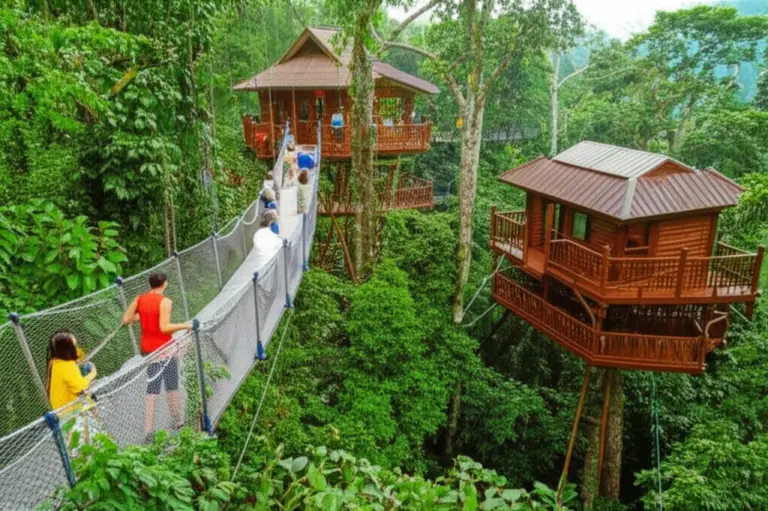
Established in the Bokeo Nature Reserve, the **Gibbon Experience and Canopy Walkways** is a groundbreaking tourism project. Its primary goal is to protect the forest from illegal logging and poaching by providing a sustainable, profitable alternative: eco-adventure tourism. The experience involves staying in the world’s tallest treehouses, accessible only by a network of thrilling ziplines that stretch for hundreds of meters across deep valleys and dense jungle canopy.
The Bokeo Nature Reserve covers an expansive area of protected land, established specifically to safeguard the critically endangered Black Crested Gibbon, which was once thought to be extinct in the region. The revenue generated from visitors directly funds the reserve’s infrastructure, staff, and essential anti-poaching patrols. This direct link between your adventure and conservation is what sets the experience apart.
A Unique Model: Conservation Through Adventure
The success of the Gibbon Experience is rooted in its integrated approach to Ecotourism, demonstrating a powerful E-E-A-T (Experience, Expertise, Authoritativeness, Trustworthiness) model. By turning the forest into a valuable, protected asset, it provides a strong incentive for both the government and local people to preserve it, proving that conservation can be economically viable.
Protecting the Black Crested Gibbon
The star attraction—the gibbons—are shy, but their distinctive morning calls are a common and unforgettable sound for guests. The experience offers specific treks with local guides dedicated to tracking these elusive primates. It’s a privilege to witness them in their natural habitat, and this close encounter reinforces the importance of the reserve’s mission. The funds ensure continuous monitoring and effective protection of their habitat against external threats.
Empowering Local Communities
The entire operation is staffed by people from surrounding villages. From the construction of the massive treehouses and the maintenance of the zipline cables to the guiding and catering, the project provides meaningful, sustainable employment and training. This creates a vested interest in the reserve’s success and improves the quality of life for the people who live alongside the forest.
Your Treetop Adventure: Ziplines and Canopy Walks
The journey into the reserve is an adventure in itself. After a hike, visitors are clipped into harnesses and begin their traversal of the jungle via a series of high-speed ziplines. These lines, some reaching over 400 meters in length and 150 meters in height, are the only way to reach the accommodation. The rush of flying through the canopy is exhilarating and provides a perspective on the forest ecosystem that is impossible to gain from the ground.
An inside look at the thrilling zipline access and treetop accommodations.
Living High: The Treetop Accommodations
The treehouses are architectural marvels, built high in the canopy to minimize environmental impact. They offer rustic yet comfortable accommodation, complete with running water and basic amenities. Waking up in one of these structures, often 30 to 40 meters above the forest floor, provides an incredible sense of isolation and immersion. It’s here, suspended in the jungle, that you truly appreciate the scale and tranquility of the Bokeo Nature Reserve.
Practical Tips for Planning Your Stay
The **Gibbon Experience and Canopy Walkways** offers several package options, typically lasting 2 to 3 days. Booking well in advance is essential due to high demand. Travelers should prepare for strenuous hiking and be comfortable with heights. The journey often requires crossing the border from Thailand (Chiang Khong/Huay Xai), making it a perfect multi-country itinerary for those focused on Thailand tourism who wish to see the best of the region.
| Requirement | Details |
|---|---|
| Physical Fitness | Moderate to good fitness required for hiking and self-ziplining. |
| Accommodation | Basic, elevated treehouses (shared or private options). |
| Access Point | Huay Xai, Laos (easily accessible from Chiang Khong, Thailand). |
| What to Bring | Sturdy shoes, headlamp, insect repellent, light waterproof gear. |
An Essential Stop for Sustainable Thailand Tourism
As the world shifts towards more responsible travel, the model established by the Gibbon Experience serves as a powerful example. By choosing to include the **Gibbon Experience and Canopy Walkways** in your itinerary, you are not merely a tourist; you become a direct contributor to a successful, long-term conservation effort in Southeast Asia. It’s a profound way to connect with nature, challenge yourself physically, and leave a positive, lasting impact on both the environment and the local people.
คำถามที่พบบ่อย (FAQ)
References
For official booking and detailed conservation information, please visit The Gibbon Experience Official Website.
- What is the Gibbon Experience? Origins, conservation goals, and what to expect from treetop immersion stays
- How canopy walkways work: design, safety, wildlife viewing, and best seasons for gibbon encounters
- Community-based conservation and sustainable tourism: how stays fund reforestation, anti-poaching, and local livelihoods