Where to find authentic organic rice planting homestays in Na Muen Nan — top villages, host profiles, and local transport
- Where to find authentic organic rice planting homestays in Na Muen Nan — top villages, host profiles, and local transport
Nestled in the southern reaches of Nan province, the district of Na Muen remains one of Thailand’s best-kept secrets for those seeking a genuine connection with the land. Unlike the bustling tourist hubs of Chiang Mai, Na Muen offers a quiet, contemplative escape into the world of traditional agriculture. Finding authentic organic rice planting homestays in Na Muen Nan allows travelers to step away from the digital world and into the rhythmic, seasonal life of a Thai farmer. This guide explores the top villages, the people who make them special, and the logistics of reaching this remote paradise.
Top Villages for Authentic Rice Planting Experiences
Na Muen is characterized by its rolling hills and fertile valleys. While many villages practice agriculture, two specifically stand out for their commitment to organic methods and community-based tourism.
1. Ban Na Muen (The Heart of the District)
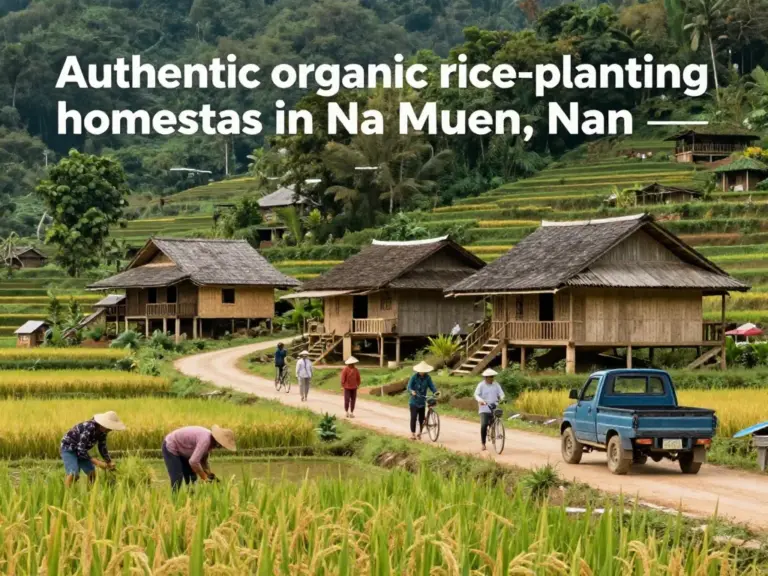
Ban Na Muen serves as the administrative and cultural hub. Here, several families have opened their homes to visitors interested in ‘Slow Life’ tourism. The rice paddies here are often integrated with fish ponds and vegetable gardens, showcasing a holistic ecosystem. Guests can learn the art of ‘Dam Na’ (transplanting rice seedlings) while staying in traditional wooden stilt houses.
2. Ban Bo Kaeo (The Highland Escape)
Located at a slightly higher elevation, Ban Bo Kaeo offers stunning views of terraced rice fields. The community here is deeply tight-knit, and the organic practices are born out of a necessity to preserve the local water sources. Staying here provides a cooler climate and a more rugged, authentic farming experience.
Host Profiles: Meeting the Guardians of the Soil
The soul of any homestay is the host. In Na Muen, you aren’t just a customer; you are treated as a temporary member of the family. These hosts are experts in local ecology and traditional wisdom.
| Host Profile | Specialization | Experience Style |
|---|---|---|
| Uncle Somchai | Organic Fertilizer & Seed Saving | Educational, hands-on, deeply technical regarding soil health. |
| Auntie Malee | Traditional Weaving & Rice Cooking | Cultural immersion, focusing on the post-harvest process and home-cooked meals. |
| P’Keng | Agro-Ecology & Youth Farming | Modern organic techniques mixed with traditional Nan heritage. |
Reaching Na Muen requires a bit of planning, as it is approximately 80 kilometers south of Nan city. However, the journey itself is part of the adventure, offering scenic views of the Nan River and surrounding mountains.
- By Private Car/Motorbike: This is the most flexible option. Take Route 1025 and 1026 heading south. The roads are well-paved but winding.
- By Local Songthaew: From the Nan Provincial Bus Terminal, look for the blue or orange songthaews heading towards Na Noi or Na Muen. These run several times a day but are slower and stop frequently.
- By Ferry: For a truly unique entrance, some travelers arrive via the Sirikit Dam reservoir ferry, crossing from Uttaradit province into the southern tip of Na Muen.
Why Organic Matters in Na Muen
Choosing authentic organic rice planting homestays in Na Muen Nan isn’t just about the experience; it’s about supporting a sustainable future. The farmers here avoid chemical pesticides to protect the local biodiversity. When you participate in these homestays, your tourism dollars directly support the preservation of heirloom rice varieties and the health of the local community.
คำถามที่พบบ่อย (FAQ)
References
- Tourism Authority of Thailand (TAT)
- Official Nan Province Website
- The Organic Center – Sustainable Agriculture Resources
- Organic rice planting homestay in Na Muen Nan: Complete guide to authentic farm stays, activities, and how to book
- Why travelers choose organic rice planting homestays in Na Muen Nan — culture, sustainable tourism, and what to expect
- What activities and experiences await — rice planting, farm-to-table meals, homestay routines, and seasonal timing