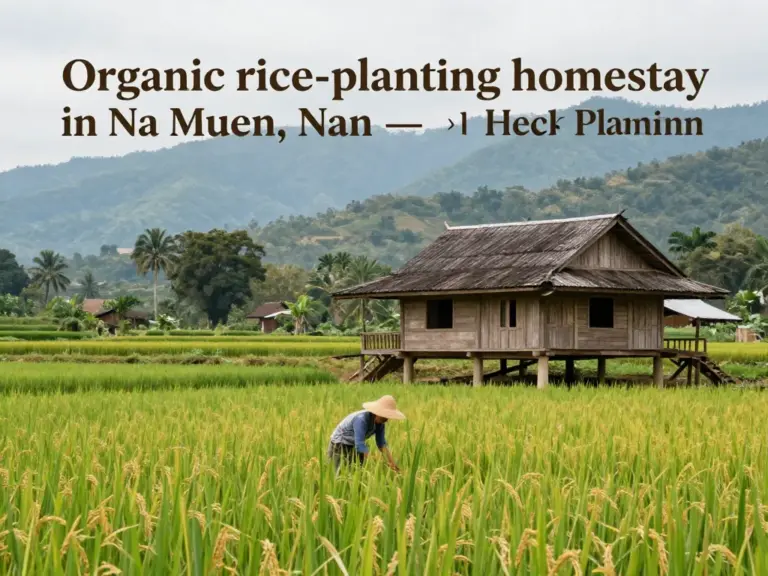
Organic rice planting homestay in Na Muen Nan: Complete guide to authentic farm stays, activities, and how to book
Escape the bustling city life and immerse yourself in the serene landscapes of Northern Thailand. An Organic rice planting homestay in Na Muen Nan offers a unique opportunity to connect with nature, understand local traditions, and experience the slow-paced life of a Thai farmer. This guide provides everything you need to know about planning your authentic farm stay in one of Nan’s most peaceful districts.
The Charm of Na Muen, Nan
Na Muen is a hidden gem tucked away in the southern part of Nan province. Unlike the more popular tourist hubs, Na Muen retains a raw, untouched beauty characterized by rolling hills, misty mornings, and vast stretches of emerald-green rice paddies. Choosing an organic rice planting homestay in Na Muen Nan means trading luxury resorts for heartfelt hospitality and wooden houses that breathe with the rhythm of the seasons.
Authentic Farm Stay Activities
A stay here is far from passive. Guests are encouraged to participate in the daily life of the community. Depending on the time of year, your activities might include:
- Rice Planting & Harvesting: Learn the traditional methods of transplanting rice seedlings (June-August) or harvesting the golden grains (November-December).
- Organic Cooking Classes: Pick fresh vegetables from the garden and learn to cook Northern Thai delicacies like ‘Nam Prik Ong’ over a wood-fire stove.
- Village Exploration: Cycle through the quiet lanes, visit local temples, and interact with the friendly villagers who are always ready with a smile.
- Morning Alms: Experience the spiritual side of Thailand by participating in the early morning alms-giving ceremony to local monks.
Top Organic Rice Planting Homestays in Na Muen
| Homestay Name | Highlight | Best For |
|---|---|---|
| Baan Na Muen Organic Stay | Hand-on farming experience | Families & Students |
| The Mist Valley Farm | Panaromic mountain views | Couples & Photographers |
| Rice Field Haven | Traditional wooden architecture | Solo Travelers |
Most homestays in this region focus on sustainability. They use organic fertilizers, avoid chemical pesticides, and promote a circular economy within the village. By staying here, you are directly supporting the preservation of traditional Thai agriculture.
How to Book Your Stay
Booking an Organic rice planting homestay in Na Muen Nan requires a bit more effort than booking a standard hotel, as many local hosts do not list on major international platforms. Here are the best ways to secure your spot:
- Local Tourism Facebook Pages: Many homestays in Nan operate primarily through Facebook. Search for ‘Homestay Na Muen’ or ‘Nan Agritourism’.
- Direct Contact: Use messaging apps like LINE, which is the primary communication tool in Thailand.
- Community-Based Tourism (CBT) Networks: Contact the Nan Provincial Tourism Office for recommendations on registered community homestays.
คำถามที่พ่อย (FAQ)
When is the best time to visit Na Muen for rice planting?
The best time for rice planting is during the rainy season, specifically from late June to August. If you want to see the golden harvest, plan your visit for November.
Do I need to bring my own farming gear?
Most homestays provide basic gear like hats and boots. However, it is recommended to bring comfortable clothes that you don’t mind getting muddy, and plenty of sunscreen.
Is English widely spoken in Na Muen?
English proficiency is limited in rural Na Muen. It is helpful to have a translation app ready or learn a few basic Thai phrases. The hosts are incredibly patient and often use gestures to communicate.
How do I get to Na Muen from Nan town?
Na Muen is approximately 80-100 kilometers from Nan city center. You can rent a car, take a local ‘Songthaew’ (blue truck), or arrange a private transfer through your homestay host.
References
- Why travelers choose organic rice planting homestays in Na Muen Nan — culture, sustainable tourism, and what to expect
- Where to find authentic organic rice planting homestays in Na Muen Nan — top villages, host profiles, and local transport
- What activities and experiences await — rice planting, farm-to-table meals, homestay routines, and seasonal timing