Coral nursery volunteering on Ko Tao with reef-safe practices: Complete guide for responsible conservation and snorkeling impact reduction
Ko Tao, often celebrated as the ‘Turtle Island’ of the Gulf of Thailand, is a global hub for divers and ocean lovers. However, its vibrant underwater ecosystems face mounting pressure from climate change and tourism. Coral nursery volunteering on Ko Tao has emerged as a vital way for travelers to give back, ensuring that the island’s reefs remain resilient for generations to come. This guide explores how you can participate in meaningful conservation while practicing reef-safe habits.
Understanding Coral Restoration on Ko Tao
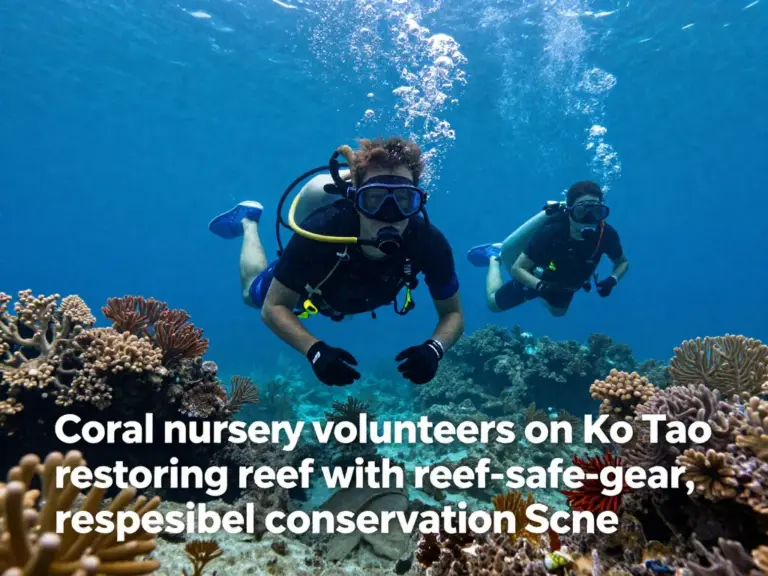
Coral nurseries are essentially underwater gardens where fragmented corals are nurtured until they are strong enough to be outplanted onto natural reefs. On Ko Tao, organizations like the New Heaven Reef Conservation Program (NHRCP) and Save Koh Tao lead these initiatives. Volunteers learn to identify healthy ‘corals of opportunity’—fragments naturally broken by waves or anchors—and secure them to nursery structures like tables or PVC frames.
Reef-Safe Practices for Every Volunteer
Responsible conservation starts with personal behavior. When engaging in coral nursery volunteering on Ko Tao, your impact begins before you even hit the water. One of the most critical steps is switching to reef-safe sunscreen. Traditional sunscreens contain Oxybenzone and Octinoxate, chemicals that cause coral bleaching even in trace amounts. Look for mineral-based alternatives containing Zinc Oxide or Titanium Dioxide.
Snorkeling Impact Reduction Techniques
Even well-intentioned snorkelers can accidentally damage fragile ecosystems. To reduce your impact, follow these gold standards:
Master your buoyancy: Avoid kicking up sediment, which can smother polyps.
Look but don’t touch: Oils from human skin can be toxic to marine organisms.
No standing: Never stand on rock-like structures; they are often living coral colonies.
How to Get Involved
Whether you are a certified diver or a beginner snorkeler, there are paths to contribute. Many dive schools offer ‘Eco-Diver’ certifications that include sessions on coral nursery maintenance, substrate stabilization, and biodiversity surveys. Short-term volunteers can participate in beach and reef cleanups, which are equally essential for maintaining the health of the nursery environment.
The Long-Term Value of Your Contribution
By participating in coral nursery volunteering on Ko Tao, you aren’t just planting coral; you are supporting a blue economy. Healthy reefs provide coastal protection, sustain local fisheries, and ensure that the tourism industry—the lifeblood of the island—remains sustainable. Your efforts help build a ‘reef of hope’ against the global tide of coral degradation.
คำถามที่พบบ่อย (FAQ)
Q: Do I need to be a professional diver to volunteer?
A: No! While some deep-water nursery work requires Scuba certification, many programs offer land-based education and snorkeling-based restoration activities.
Q: What is the best time of year for coral volunteering on Ko Tao?
A: The best conditions are typically from March to September when the seas are calm and visibility is high, allowing for easier work in the nurseries.
Q: How can I tell if my sunscreen is truly reef-safe?
A: Check the ingredients list for Zinc Oxide or Titanium Dioxide and ensure it does not contain Oxybenzone, Octinoxate, or microplastics.
References
- New Heaven Reef Conservation Program – Ko Tao
- Coral Gardeners Global Restoration Standards
- Tourism Authority of Thailand (TAT) Eco-Tourism Guidelines
- Why volunteer on Ko Tao? Understanding goals, conservation outcomes, and what reef-safe practices mean for coral health
- How to choose the right coral nursery volunteer program: certifications, daily tasks, duration, costs, and reviews
- Preparing for your trip and on-site training: reef-safe sunscreen, dive/snorkel skills, biosecurity, and safety protocols