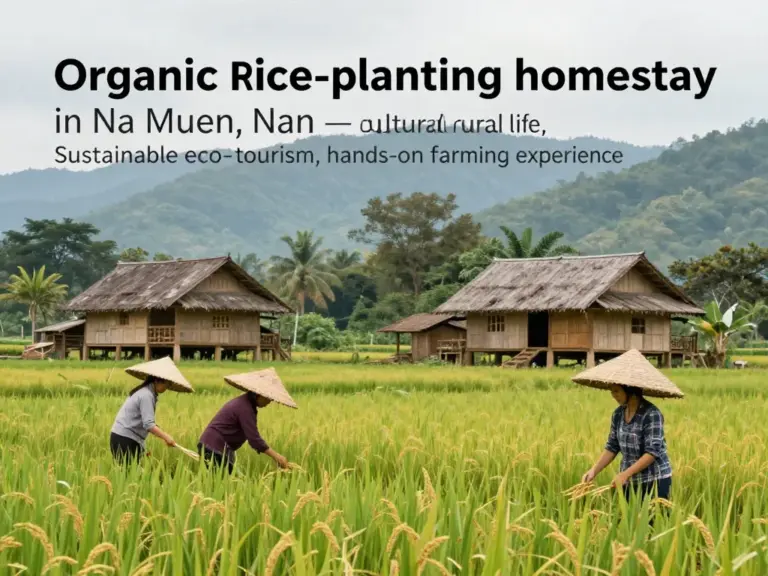
Why travelers choose organic rice planting homestays in Na Muen Nan — culture, sustainable tourism, and what to expect
In the serene southern reaches of Nan province lies Na Muen, a district that remains one of Thailand’s best-kept secrets. For the modern traveler seeking more than just a photo opportunity, the rise of organic rice planting homestays in Na Muen Nan offers a profound connection to the land and its people. This isn’t just a vacation; it is an immersion into a way of life that has sustained the Lanna people for generations, now reimagined through the lens of sustainability.
The Appeal of Sustainable Tourism in Na Muen
Sustainability is no longer a buzzword in Na Muen; it is a survival strategy and a pride point. Travelers are increasingly drawn to this region because it prioritizes the environment over mass tourism. By choosing organic rice planting homestays in Na Muen Nan, visitors directly contribute to the preservation of local ecosystems. These farms eschew chemical pesticides, ensuring that the soil remains fertile and the water runoff into local streams stays pure.
Authentic Cultural Immersion: Beyond the Surface
When you stay at a homestay in Na Muen, you aren’t just a guest; you are treated as a member of the family. The cultural exchange begins at sunrise. You might find yourself waking up to the sound of roosters and the smell of freshly steamed sticky rice. The core of the experience revolves around the rice cycle—the heartbeat of Thai culture. Depending on the season, you may help sow seeds, transplant seedlings into the mud, or harvest golden stalks using traditional hand tools.
What to Expect: A Day in the Life
Accommodations in Na Muen are typically simple yet comfortable, often built from teak wood or bamboo to allow for natural ventilation. Expect to sleep on a comfortable floor mattress with a mosquito net, surrounded by the sounds of the jungle. Meals are a highlight, featuring “farm-to-table” ingredients long before the term became trendy. You will taste organic rice grown right outside your door, paired with spicy local dips (Nam Prik), seasonal vegetables, and river fish.
| Activity | Description | Season |
|---|---|---|
| Rice Seeding | Preparing the nursery beds for the new crop. | May – June |
| Transplanting | Moving seedlings into the main flooded paddies. | July – August |
| Harvesting | Cutting and threshing the organic rice by hand. | November – December |
The Emotional Reward of Slow Travel
The true reason travelers flock to organic rice planting homestays in Na Muen Nan is the sense of peace. In a world of constant notifications, the “slow travel” movement finds its home here. There is a meditative quality to working in the fields, feeling the cool mud between your toes, and witnessing the sunset over the emerald green terraces. It is a chance to reset your internal clock and appreciate the hard work that goes into every bowl of rice.
คำถามที่พบบ่อย (FAQ)
Q: When is the best time to visit Na Muen for rice planting?
A: The best time to see the lush green fields is during the rainy season from July to September. If you wish to see the golden harvest, plan your visit for late October to November.
Q: Do I need prior farming experience?
A: Not at all! The local farmers are patient teachers and will guide you through every step of the process at your own pace.
Q: Is there internet access at the homestays?
A: While many homestays offer basic Wi-Fi, the connection can be spotty. It is the perfect opportunity for a digital detox.
References
- Organic rice planting homestay in Na Muen Nan: Complete guide to authentic farm stays, activities, and how to book
- Where to find authentic organic rice planting homestays in Na Muen Nan — top villages, host profiles, and local transport
- What activities and experiences await — rice planting, farm-to-table meals, homestay routines, and seasonal timing