How the farm’s composting system works: step-by-step process, visitor participation, and environmental impact
- How the farm’s composting system works: step-by-step process, visitor participation, and environmental impact
In the heart of Thailand’s growing eco-tourism sector, the farm’s composting system stands as a beacon of sustainability. As travelers increasingly seek authentic and responsible experiences, understanding how organic waste is transformed into ‘black gold’ becomes a highlight of the journey. This article provides an in-depth look at our circular economy model, detailing the mechanical and biological journey of waste on the farm.
The Science Behind the Farm’s Composting System
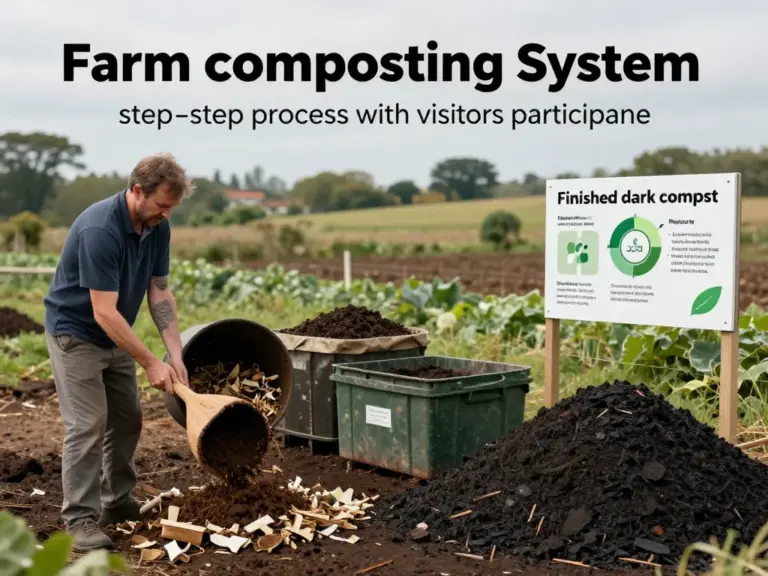
The farm’s composting system is more than just a pile of waste; it is a carefully managed biological reactor. By balancing nitrogen-rich ‘greens’ (like kitchen scraps and fresh grass) with carbon-rich ‘browns’ (like dried leaves and rice husks), we create the perfect environment for aerobic bacteria and fungi to thrive. In Thailand’s tropical climate, this process is accelerated by the consistent warmth and humidity, allowing us to recycle nutrients faster than in temperate regions.
A Step-by-Step Process of Waste Transformation
Our system follows a rigorous four-stage process to ensure the final product is pathogen-free and nutrient-dense. This ensures that the farm remains a safe environment for both visitors and the local ecosystem.
| Step | Action | Description |
|---|---|---|
| 1 | Collection & Sorting | Gathering kitchen waste and garden debris, ensuring no plastic enters the stream. |
| 2 | Layering | Creating a ‘lasagna’ of greens and browns to optimize the C:N ratio. |
| 3 | Aeration | Turning the piles weekly to introduce oxygen for aerobic microbes. |
| 4 | Maturation | Allowing the compost to rest for 4-8 weeks until it smells like fresh earth. |
The Role of Microorganisms
During the thermophilic phase, temperatures within the pile reach up to 60°C. This natural heat is essential for killing weed seeds and harmful bacteria. Visitors can often see steam rising from the piles during the morning turn, a visual testament to the intense biological activity occurring within the farm’s composting system.
Visitor Participation: Learning by Doing
We believe that education is the key to global change. Visitors to the farm are not just passive observers; they are invited to participate in ‘Compost Workshops.’ Here, guests can help sort organic materials, learn the ‘squeeze test’ for moisture levels, and even help distribute finished compost to our vegetable beds. This hands-on approach demystifies the process and provides travelers with practical skills they can take home to their own communities.
The Environmental Impact: Closing the Loop
The environmental impact of the farm’s composting system is profound. By diverting organic waste from landfills, we significantly reduce methane emissions—a greenhouse gas far more potent than carbon dioxide. Furthermore, the use of finished compost improves soil structure, increases water retention (crucial for Thailand’s dry season), and eliminates the need for chemical fertilizers. This creates a resilient agricultural system that supports local biodiversity, from earthworms to native bird species.
- Reduction in carbon footprint by 40% compared to traditional waste disposal.
- Restoration of depleted soil minerals.
- Support for local pollinators through chemical-free farming.
คำถามที่พบบ่อย (FAQ)
References
- Environmental Protection Agency – Composting Basics
- Tourism Authority of Thailand – Sustainable Travel Initiatives
- FAO – Soil Improvement and Composting
- Zero waste fruit farm tour in Khlung: experiential guide to composting, refill stations, and sustainable practices
- Why visit a zero waste fruit farm in Khlung? Benefits, what to expect, and how to prepare
- Refill station guide: what products are available, packaging-free shopping tips, and how to support local circular economy