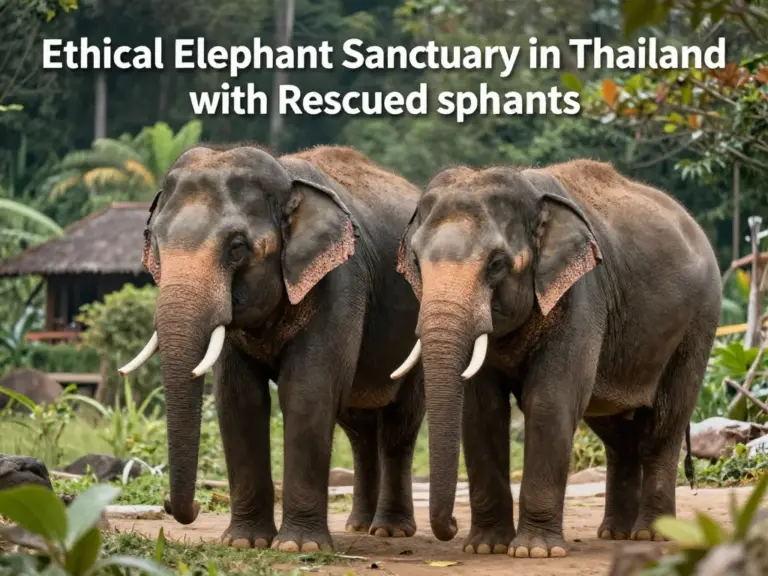
Ethical Elephant Sanctuaries in Thailand: A Complete Guide to Rescued Elephant Experiences
When planning a trip to the Land of Smiles, visiting Ethical Elephant Sanctuaries in Thailand is often at the top of every traveler’s bucket list. However, with growing awareness about animal welfare, it is crucial to distinguish between genuine rescue centers and those that exploit these majestic creatures. This guide aims to navigate the complexities of elephant tourism, helping you make responsible choices that support conservation rather than exploitation.
The Importance of Ethical Tourism
The shift towards sustainable travel has redefined the elephant experience in Thailand. Historically, many camps focused on riding and performing, which often involved harsh training methods. Today, ethical sanctuaries prioritize the physical and psychological well-being of the elephants. These centers operate on a ‘hands-off’ or ‘observation-only’ basis, allowing elephants to roam, socialize, and behave naturally in a protected environment.
What Defines an Ethical Sanctuary?
Identifying a reputable sanctuary requires research. An ethical facility generally exhibits the following characteristics:
- No Riding: Elephants are never ridden, as this causes long-term spinal damage.
- No Chains: Animals are allowed to roam free in large, naturalistic enclosures.
- Natural Behavior: Programs focus on observing elephants foraging, mud-bathing, and interacting with their herd.
- Transparency: The sanctuary is open about where their elephants come from and how they are funded.
Top Regions for Ethical Elephant Experiences
Northern Thailand, particularly around Chiang Mai and Chiang Rai, is the hub for many of the most reputable rescue organizations. These sanctuaries often work with indigenous communities to provide sustainable livelihoods that don’t rely on animal labor. Below is a table detailing what to look for when booking.
| Activity Type | Ethical Status | Impact on Elephant |
|---|---|---|
| Observation/Walking | High | Low stress, natural movement |
| Feeding (from a distance) | Moderate | Encourages natural foraging |
| Riding/Shows | Unethical | Harmful/Stressful |
How to Choose the Right Sanctuary
Before booking, visit the sanctuary’s website or check social media. Look for recent reviews and photos. Are visitors touching the elephants constantly, or are they observing from a respectful distance? Ethical sanctuaries will often have limited visitor numbers to ensure the animals aren’t overwhelmed by crowds.