Elephant-Friendly Tourism Checklist: How to Choose Ethical Sanctuaries and Activities
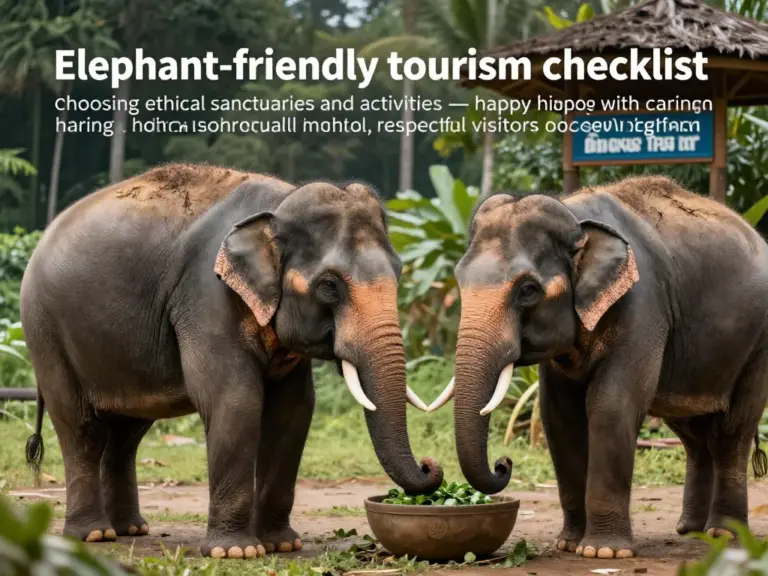
Thailand is synonymous with the majestic Asian elephant. For many travelers, meeting these gentle giants is a bucket-list experience. However, the rise of wildlife tourism has brought to light significant welfare concerns. To ensure your visit supports conservation rather than exploitation, using an Elephant-Friendly Tourism Checklist is essential. This guide will help you navigate the complex landscape of elephant tourism and choose ethical sanctuaries that prioritize animal well-being over profit .
Understanding Ethical Elephant Tourism in Thailand
The term ‘sanctuary’ is often used loosely in the tourism industry. To be truly ethical, a facility must provide a semi-wild environment where elephants can express natural behaviors. This means no performances, no chains, and no forced interaction. Ethical tourism focuses on observation and education, allowing visitors to learn about elephant biology and the history of the individual animals, many of whom have been rescued from the logging or trekking industries.
The Elephant-Friendly Tourism Checklist: 5 Must-Have Criteria
When researching a facility, use the following checklist to evaluate their commitment to animal welfare:
- No Riding or Shows: The facility strictly prohibits riding and any form of circus-style entertainment.
- Natural Socialization: Elephants are allowed to interact with one another freely in social groups.
- Limited Human Interaction: The focus is on ‘hands-off’ observation. While some ethical spots allow feeding, many are moving toward ‘observation-only’ models.
- Adequate Space and Diet: Elephants have access to large roaming areas, clean water, and a diverse range of natural fodder.
- Transparent Sourcing: The sanctuary can clearly explain where their elephants came from and does not engage in the trade of wild-caught animals.
Red Flags to Watch Out For
While many places claim to be ‘green’ or ‘ethical,’ certain signs indicate poor welfare standards. Be wary of venues where mahouts (handlers) use bullhooks or sharp nails to control the animals. Additionally, if elephants are kept on short chains for long periods or appear distressed (repetitive swaying or ‘weaving’), it is a clear sign of poor mental health. Truly ethical sanctuaries prioritize the elephant’s schedule, not the tourists’.
| Activity | Ethical Status | Reasoning |
|---|---|---|
| Observing from a distance | Highly Ethical | Allows natural behavior without stress. |
| Feeding prepared food | Acceptable | Provides nutrition but encourages dependency. |
| Elephant Bathing | Questionable | Can be stressful and unhygienic for the animals. |
| Elephant Riding | Unethical | Causes physical harm and involves ‘breaking’ the animal’s spirit. |
How to Research Before You Go
Before booking, check independent review sites and look for certifications from reputable animal welfare organizations like World Animal Protection. Look for recent photos from visitors—do the elephants look healthy? Are they interacting with each other? Avoid booking through large, generic tour agencies that don’t specialize in eco-tourism, as they often partner with high-volume, low-welfare venues.
คำถามที่พบบ่อย (FAQ)
Is elephant bathing ethical?
While often marketed as ethical, many experts now discourage bathing with elephants. It can be stressful for the animals to be surrounded by crowds in the water, and it can disrupt their natural skin-cleaning habits. Observation-only is the gold standard.
Why is elephant riding bad?
Riding causes long-term spinal damage. Furthermore, to allow humans to ride them, elephants undergo a traumatic training process known as ‘the crush’ (Phajaan), which involves physical and psychological abuse.
Where can I find truly ethical sanctuaries in Thailand?
Look for well-known projects like Elephant Nature Park in Chiang Mai or Phuket Elephant Sanctuary. Always verify their current practices against an Elephant-Friendly Tourism Checklist before visiting.